Description
Cedrus libani 'Glauca' Shrub 50-60 cm C3 | Cedar of Lebanon
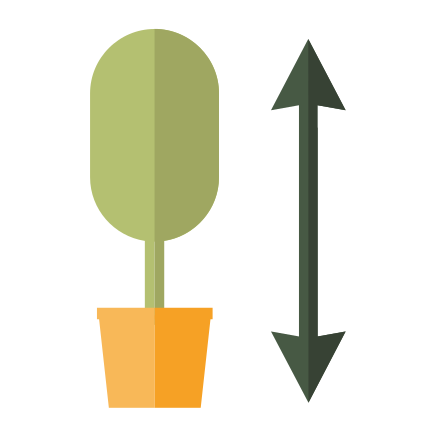
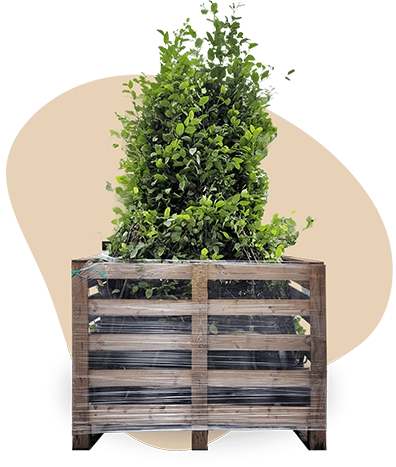
A Cedar of Lebanon standard tree brings the distinctive form of Cedrus libani 'Glauca' into a clear, elevated garden structure. Also known as Cedar of Lebanon, this Blue Cedar has a raised stem with an elevated crown, creating a defined silhouette and stronger vertical presence than a shrub form. Its upright framework develops broad branching, giving the tree an architectural shape that remains easy to see across a spacious garden or open landscape. The blue-grey to blue-green, needle-like foliage is the main ornamental feature and gives 'Glauca' its name and character. As an evergreen conifer, it provides colour and structure throughout the year. This is a substantial tree that may reach approximately 20 metres in height, although the final size is not guaranteed. It is not a compact garden plant and needs generous room for its crown and overall scale. The standard tree form makes it effective as a specimen, with a raised crown that creates a more open spatial effect around the trunk. Low maintenance adds to its practical value once it has a suitable position. Young trees can be vulnerable to strong winds, so a reasonably sheltered site is important. As part of the cedrus genus, it offers a strong evergreen presence for large gardens, parks and other open settings.
Key features of Cedar of Lebanon (Cedrus libani 'Glauca')
- Foliage: The blue-green to grey-green needles are needle-like and remain present throughout the year. Flowering is not a notable supplied feature, so this tree is valued mainly for its evergreen foliage, elevated form and structural presence.
- Position: Choose full sun or partial shade. A sheltered position is advisable because young trees can be sensitive to strong winds. The raised crown is best displayed where there is sufficient open space around the tree.
- Soil: This Cedar of Lebanon suits well-drained, neutral to lime-rich soil that is dry to slightly moist. The soil should remain airy and should not stay waterlogged, as prolonged wetness is unsuitable. Reliable drainage is especially important in the UK’s often wet climate.
- Growth and form: As a standard tree, it has a clear stem and raised crown, supported by an upright, broadly branching framework. This creates a strong architectural silhouette and a more elevated effect than a shrub form. It is a substantial, potentially very large tree, so allow generous space from the outset.
- Garden category: Its evergreen character and substantial structure make it a natural choice among standing trees for spacious gardens and open landscape settings. No specific wildlife value, toxicity information or suitability for planting near paving is supplied.
Uses of Cedar of Lebanon standard tree in the garden
- Specimen planting: Use this standard tree as a solitary feature in a large garden. The clear stem and elevated crown create a strong focal point, while the blue-grey needles provide year-round colour and a distinct silhouette.
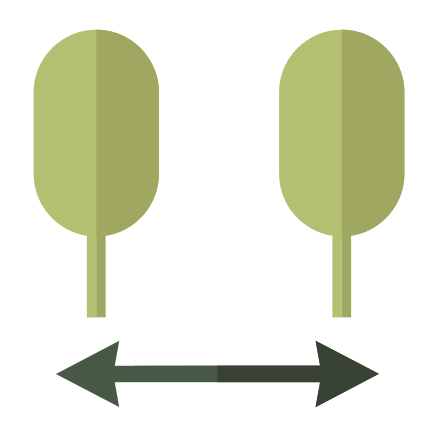
- Large landscapes: The Cedar of Lebanon is suited to park planting and other open landscape settings where its mature scale can be accommodated. It can also be used in group planting, provided that each tree has enough room for its broad branching crown.
- Hardiness: It is hardy to approximately -23.3°C to -17.8°C and is listed as USDA zone 6. This supports its use in many UK gardens, although local exposure, shelter and winter conditions can affect performance.
- Plant combinations: Combine it with plants that prefer similar sunny to partially shaded conditions and well-drained, neutral to lime-rich soil. Keep surrounding planting visually connected beneath and around the elevated crown, while allowing enough space for the tree’s mature scale.
- Structural value: The evergreen blue-grey needles, height and broadly branching crown give the tree a lasting role in the landscape. Its standard tree form creates clear vertical presence without losing the visual connection between the surrounding planting and the space beneath the crown.
This Cedar of Lebanon standard tree is best suited to a spacious garden or landscape where its evergreen colour, blue-grey needles and elevated crown can develop as a long-term structural feature.