Description
Hydrangea anomala subsp. petiolaris On standard | Climbing hydrangea on standard
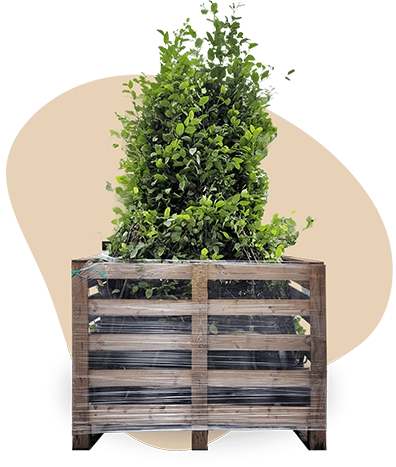
Climbing hydrangea on standard is the trained form of Hydrangea anomala subsp. Petiolaris, offered as a raised standard rather than as a conventional ground-level climber. This distinctive form creates an upright framework with climbing growth that can extend and slightly cascade above the main stem. It gives the plant a clear silhouette and strong ornamental presence in a sheltered UK garden, on a patio or balcony, or in a suitable container. The plant reaches an approximate mature height of 300 cm and needs suitable support for its climbing framework. Its green foliage forms a fresh backdrop for abundant white flowers and decorative flower heads from June to August. The foliage is deciduous, with attractive autumn colour before it falls. This seasonal change adds interest beyond the flowering period. The on-standard structure also raises the foliage and flowers above ground level, making the plant read more like a living garden feature than a standard shrub. It is suitable for containers, provided the raised growth has suitable support and the compost or soil does not dry out for long periods. This is the species in a trained on-standard form, not a separate cultivar. As part of the hydrangea genus, it combines a climbing habit with a decorative raised shape and winter hardiness for suitable UK conditions.
Key features of climbing hydrangea on standard (Hydrangea anomala subsp. Petiolaris)
- Flowering: The abundant, ornamental display consists of white decorative flower heads from June to August. The flowers are raised above the ground on the on-standard framework, so they remain a clear part of the plant’s vertical garden presence.
- Foliage and seasonal interest: The leaves are green during the growing season. This is a deciduous plant, and its attractive autumn colour provides a further seasonal feature before the foliage is lost.
- Aspect: Choose a position in partial shade to shade. A sheltered UK position is appropriate, especially where the raised framework could be exposed to drying conditions. No specific wildlife claim is made here; the main value described is the ornamental flower display.
- Soil: Use humus-rich, well-drained and lightly moist soil with an acidic to neutral pH. Good drainage and an open soil structure are important. Avoid prolonged dryness, while also avoiding waterlogged conditions.
- Growth and form: This is a climbing grower with an upright and overhanging habit. The standard carries a raised climbing framework, creating a structured silhouette rather than a conventional shrub shape. Suitable support remains necessary. Its height is approximately 300 cm.
- Garden grouping: The plant suits collections of shade climbing plants where the focus is on a supported climbing form for a partially shaded or shaded position. It is also suitable for a patio or balcony in a pot, rather than for paving itself.
Uses of climbing hydrangea on standard in the garden
- Specimen plant: The raised structure makes this climbing hydrangea on standard suitable as a specimen plant. It adds height and a defined vertical feature without presenting the same low, ground-level effect as a conventional climber.
- Pots, patios and balconies: The container suitability makes it useful for a patio or balcony where a climbing hydrangea tree can provide an elevated foliage and flower display. The container should be placed in partial shade to shade, with protection from prolonged drying out and with suitable support for the framework.
- Supported garden planting: Use it near a suitable wall or structure where the climbing growth can be supported. It can also form a supported feature for facade greenery where the position and structure are appropriate. The on-standard form keeps the main ornamental display above ground level.
- Winter hardiness: This is a hardy climbing hydrangea on standard with a supplied tolerance of approximately -28.9°C to -17.8°C, corresponding to USDA zones 5 to 8. In a UK garden, a sheltered position remains useful, particularly for a container-grown plant.
- Plant combinations: Combine the raised form with shade-tolerant, moisture-loving garden plants. Broad groups such as shade plants, woodland-style perennials and suitable container plants can support the same cool, lightly moist setting without competing with the elevated silhouette.
- Ornamental value: Its main garden value comes from the upright standard, the climbing and slightly overhanging framework, abundant white flower heads, green foliage and attractive autumn colour. Together, these features add height, structure and a raised flowering display.
This climbing hydrangea on standard is a distinctive choice for adding a raised flowering feature to a partially shaded or shaded UK garden, patio or balcony, provided that the climbing framework has support and the growing medium is protected from drying out.