Description
Humulus lupulus Staked | Common hop
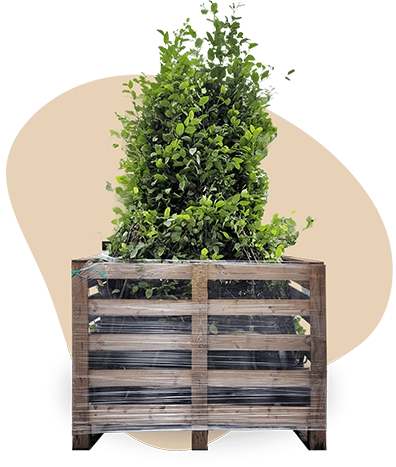
Stake-trained Common hop is the supplied, guided form of Humulus lupulus gestokt, also known as Hop. This presentation gives the vigorous climbing plant a clear starting structure, making it easier to guide against a suitable support. Common hop is a fast-growing, twining, deciduous climber with green foliage and aromatic hop cones. It can reach approximately 6 metres in height when established. The above-ground growth dies back in winter, so it is not an evergreen climber. Its green to yellow-green flowers are subtle, while the aromatic cones add further seasonal interest. This makes the plant useful for adding height and a natural vertical effect without relying on a showy display of flowers. The stake-trained form is well suited to a pergola, fence or trellis, where its growth can be guided upwards. It can also help create natural screening where there is enough room and support. Regular pruning and suitable support are needed to keep the growth in the desired shape. There is no mature width specified, so the available space should be considered mainly in relation to the support structure and the plant’s vigorous growth.
Key features of Common hop (Humulus lupulus gestokt)
- Growth and form: This stake-trained hop plant is supplied with a defined starting support. It is a vigorous, twining climber that can be guided upwards over a pergola, fence or trellis. Further support and regular pruning are necessary, while the growth above ground dies back in winter.
- Flowers and cones: The flowers are subtle rather than showy, with green to yellow-green flowers appearing from July to September. Aromatic hop cones provide additional interest later in the season and strengthen the plant’s ornamental character.
- Foliage: The plant has green, deciduous foliage. The leaves provide useful seasonal cover during the growing period, before the above-ground growth dies back in winter.
- Aspect and soil: Choose a position in full sun or partial shade. The soil should be humus-rich and fertile, with moisture-retentive conditions and reliable drainage. Avoid areas where water remains around the roots.
- Garden character: Common hop is fast-growing and vigorous, with a potentially strongly spreading habit. A position with suitable support and some shelter is helpful, especially where the climber will be guided over an exposed structure. It is a useful choice for gardens looking for a natural climbing plant with seasonal cover.
Uses of stake-trained Common hop in the garden
- Pergolas, fences and trellis: The supplied stake-trained structure helps establish a clear vertical climber from the start. Guide the plant onto a pergola, fence or trellis where suitable support is available. Its natural twining habit can soften hard garden structures.
- Natural screening: This form can be used for natural screening where the support is strong and the plant has room to develop. Its fast vertical growth can add height and seasonal privacy during the growing period. As the plant dies back above ground in winter, it should not be treated as an evergreen screen.
- Hardiness: Common hop is hardy to approximately -28.9 to -23.3°C, corresponding to USDA zone 5. This makes it a suitable hardy hop climber for many UK gardens, including locations where winter conditions can be severe.
- Seasonal ornamental value: The green foliage gives the climber a fresh appearance during the growing season. Green to yellow-green flowers from July to September are subtle, while the aromatic hop cones provide a distinctive seasonal feature.
- Plant combinations: The stake-trained form can be combined in general terms with structural perennials, ornamental grasses or other garden climbers. These combinations can balance the vertical growth with lower or contrasting planting, while keeping the focus on the natural climbing structure.
Stake-trained Common hop is a strong choice for gardeners seeking a fast-growing, hardy climber with seasonal screening value and aromatic hop cones. Its defined starting structure makes it especially suitable where a pergola, fence or trellis needs a natural vertical feature.