Description
Elaeagnus ebbingei 'Compacta' Standard | Ebbing's silverberry
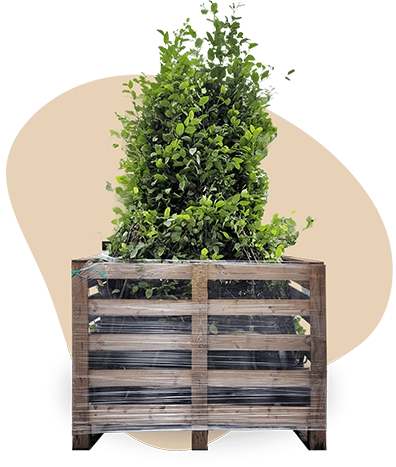
Ebbing's silverberry standard tree brings the evergreen character of Elaeagnus ebbingei 'Compacta' into a more elevated and structured garden form. Also known as Ebbing's eleagnus, this plant is supplied as a standard tree, with a clear stem and raised crown above the ground. This gives it a stronger vertical presence than the natural shrub form. The overall habit is compact, upright and bushy, while the crown creates an architectural silhouette for a border, patio or sheltered coastal setting. The leaves remain evergreen and combine green colouring with attractive silvery-grey tones. From September to November, fragrant creamy-white flowers add seasonal interest when many garden plants are becoming quieter. The plant reaches an approximate mature height of 300 cm. It also produces fruit, although this plant is mainly valued for its foliage, scented flowers and structured shape. It is generally low-maintenance and can provide year-round form in a UK garden. As part of the elaeagnus group, this 'Compacta' cultivar is especially useful when you want the compact presence of a shrub with the clearer height and silhouette of a standard tree.
Key features of Ebbing's silverberry standard tree (Elaeagnus ebbingei 'Compacta')
- Fragrant autumn flowers: Creamy-white flowers appear from September to November. Their fragrance is a notable feature and brings interest late in the growing season.
- Evergreen foliage: The leaves remain green throughout the year, with silvery-grey tones that add contrast and light to the garden. This lasting foliage helps maintain structure in borders and on patios.
- Light and soil: Choose a position in full sun or partial shade. The plant prefers well-drained, humus-rich soil that is dry to lightly moist. Avoid prolonged waterlogging, especially in the UK's often wet conditions, and use open soil with good drainage.
- Wind and salt tolerance: This is a salt-tolerant and wind-tolerant evergreen plant. It can therefore be relevant for exposed or coastal UK gardens, although local conditions and shelter should still be considered.
- Standard tree structure: The clear stem supports a raised crown, creating a more open vertical structure than the shrub form. Its compact and upright growth keeps the silhouette defined without losing the full, bushy character of the plant. It fits naturally within standing trees.
Uses for the Ebbing's silverberry standard tree in the garden
- Solitary feature: Use this standard tree as a single accent where its raised crown can be seen clearly. It brings height, evergreen presence and a defined silhouette without the visual spread of a natural shrub.
- Border and patio use: The compact form works well as a border accent or as a patio plant. It can also be placed in a suitable container, provided the position and growing conditions meet its needs.
- Coastal gardens: Its salt and wind tolerance make it relevant for a suitable coastal garden. Exposed sites may still need shelter depending on local conditions, and prolonged wet soil should always be avoided.
- Hardiness: The stated hardiness is approximately -17.8°C to -12.2°C, corresponding to USDA zone 7. This is limited hardiness, so it should not be treated as suitable for every UK location or every exposed site.
- Plant combinations: Combine it with evergreen shrubs, ornamental grasses and border perennials that appreciate similar sunny or partially shaded conditions and well-drained soil. These groups can support the raised crown while keeping the planting clear and balanced.
The evergreen foliage, silvery-grey tones, fragrant autumn flowers and raised crown provide year-round structure. The standard tree form is particularly useful where an evergreen, scented and salt-tolerant accent with a raised, structured silhouette is wanted, provided the soil is well drained.