Description
Ficus carica 'Gustis® TwoTimer®' Carrying bracket | Fig tree
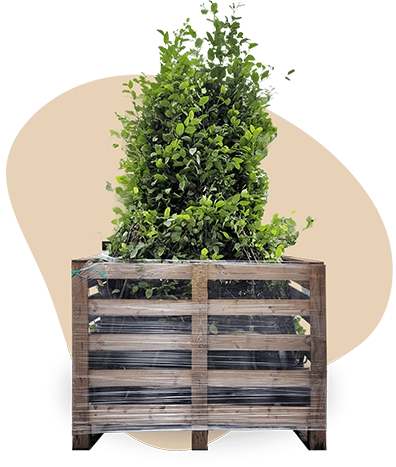
The support-bracket trained fig tree Ficus carica 'Gustis® TwoTimer®' is a distinctive form of Fig tree for a warm, sunny and preferably sheltered UK garden. The named cultivar is 'Gustis® TwoTimer®', presented in a support-bracket trained form that gives the plant a clear ornamental structure and a defined visual role. Instead of appearing as an untrained fig plant, it creates a more deliberate feature for a patio, terrace or garden focal point. It has an upright and bushy overall growth habit and can reach approximately 250 cm in height. Its green, decorative lobed leaves are broad and deciduous, so the plant is not evergreen. In May and June, it produces inconspicuous green flowers. The tree also offers edible fruit and the potential for two crops, although fruit ripening depends on sufficient warmth. A warm position helps the foliage, form and fruiting interest to be appreciated during the growing season. As part of the ficus genus, this Fig tree combines a recognisable leaf shape with a distinctive trained presentation. It suits gardeners looking for a support-bracket trained common fig with both ornamental structure and seasonal fruiting interest.
Key features of the Fig tree (Ficus carica 'Gustis® TwoTimer®')
- Flowers: The flowering is inconspicuous, with green flowers appearing in May and June. The flowers are not the main ornamental feature of this Fig tree, but they form part of its seasonal growth.
- Foliage: The leaves are green, decorative and lobed. They are broad deciduous leaves, giving the plant a strong leafy presence in the growing season before they fall.
- Position: Choose full sun and a warm, sheltered position. Protection from cold winds is important in a UK garden, particularly where winter conditions can be cold and wet.
- Soil: Well-drained, humus-rich and fertile soil is suitable. The soil should remain lightly moist, while good drainage is essential. This plant should not be placed in poorly drained ground.
- Growth and form: The tree has an upright, bushy growth habit within its support-bracket trained presentation. This defined ornamental structure distinguishes it from an untrained fig tree without adding alternative tree forms. It is also suitable for a patio or terrace when grown in a container. It can be considered alongside other Fig tree choices for a sunny garden setting.
Uses of a support-bracket trained fig tree in the garden
- Specimen planting: Use this support-bracket trained fig tree as a specimen plant in a pot, on a patio or terrace, or in a fruit garden. The defined presentation gives it a clear spatial role and makes it suitable as a garden focal point.
- Sun and warmth: Place it where it receives full sun and shelter from cold winds. Fruit ripening depends on sufficient warmth, so a sunny position is important for its fruiting potential. The supplied hardiness is approximately -15 to -12°C, USDA zone 7, but this should not be treated as guaranteed performance in every UK location.
- Plant combinations: Combine it with plants that suit a sunny, warm and well-drained position. Patio, terrace, container and sunny garden planting can all provide suitable planting partners without taking attention away from the trained form.
- Ornamental value: Its main garden interest comes from the support-bracket trained structure, green lobed foliage, edible fruit and potential for two crops. The presentation gives the tree a defined outline that works well where a clear feature is needed.
- Garden role: This Fig tree provides ornamental interest in a pot, on a terrace or patio, while also offering seasonal fruiting interest. Its form makes the plant more than a general fruit tree, as it contributes structure and visual focus to a carefully chosen position.
This support-bracket trained fig tree is most rewarding in a sunny, sheltered UK position where its ornamental form and fruiting potential can be appreciated.