Description
Euonymus planipes Half-standard | Flat-stalked spindle
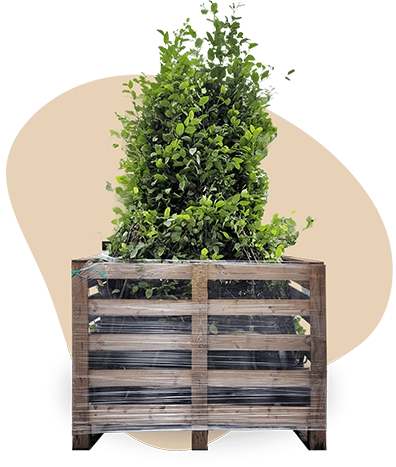
Flat-stalked spindle half-standard tree is a structured form of Euonymus planipes, also known in the UK as Flat-stalked spindle or Spindle tree. This product is offered as a half-standard tree, with a raised stem and an elevated crown. The upright, bushy growth creates a clear specimen-like silhouette, rather than a shrub shape that begins at ground level. It can bring height and structure to a UK garden while keeping the area below the crown visually open. The green foliage is deciduous, so the plant changes with the seasons instead of remaining leafy throughout winter. In autumn, the foliage develops a red colour, adding a strong seasonal feature. Green-white to yellow-green flowers appear in May and June, although flowering is a supplementary feature rather than the main ornamental highlight. Decorative fruits provide further interest later in the year. These fruits are poisonous if ingested, so they should be treated as a garden-safety concern. The plant grows to approximately 3 metres in height at maturity; no mature width is specified. As part of the euonymus group, this half-standard form is suited to gardeners looking for a defined ornamental plant with seasonal colour, a raised crown and a distinct garden presence.
Key features of Flat-stalked spindle (Euonymus planipes) as a half-standard tree
- Growth and form: The half-standard tree has a raised stem and an elevated crown. Its upright, bushy growth gives a more open and structured silhouette than a shrub growing from ground level. The clear crown makes the plant read as a defined specimen without inventing exact stem or crown dimensions.
- Flowers and foliage: Green-white to yellow-green flowers appear in May and June. They are a supplementary seasonal feature, while the green deciduous leaves offer a longer period of garden interest and develop a red autumn colour. The leaf shape is not specified.
- Position and soil: Choose full sun or partial shade. The soil should be well drained, humus rich and slightly moist. Good drainage is especially relevant in UK gardens, where wet winter conditions can affect the soil around plants.
- Garden value and safety: The flowers are bee-friendly and add useful seasonal interest. The decorative fruits are poisonous if ingested, so the plant should be considered with garden safety in mind. Its form also fits naturally among Container plants where a raised structure is wanted.
Uses of the Flat-stalked spindle half-standard tree in the garden
- Specimen planting: Use the Flat-stalked spindle half-standard tree as a specimen where its raised crown can be seen clearly. The elevated foliage creates a defined focal point and adds height without forming a dense shrub from ground level.
- Borders and group planting: In a border, the half-standard form can act as a raised structural accent. It can also be used in group planting, provided the arrangement allows the individual crowns and seasonal changes to remain visible.
- Containers: This form can be used as a container plant where a clear, upright feature is needed. The raised crown gives a container display more structure, while the green foliage, red autumn colour and decorative fruits provide changing interest through the seasons.
- Hardiness: The supplied hardiness rating is approximately -29 to -23.3°C, listed as USDA zone 4. This rating indicates a hardy spindle tree for UK gardens, but performance can still vary between gardens and local microclimates.
- Plant combinations: Combine it with lower planting, perennials or shrubs that leave the raised crown visible. Border plants, ornamental shrubs and seasonal planting can complement the green foliage, red autumn colour and decorative fruits without hiding the half-standard structure.
The strongest ornamental features are the elevated silhouette, decorative fruits and red autumn colour. In a mild, often wet UK climate, its clear structure helps seasonal interest remain easy to read in a border, container display, group planting or specimen setting. This half-standard tree brings together seasonal colour, fruit interest and a distinct garden framework.