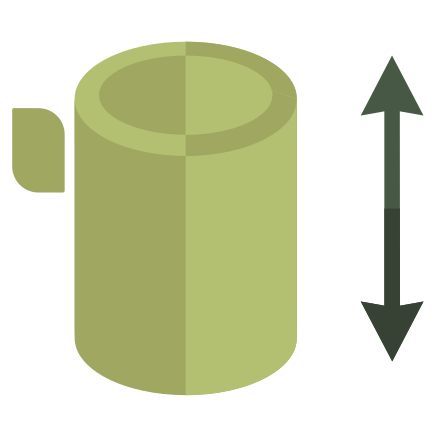
Description
Prunus triloba standard tree 120 cm C7,5 | Flowering almond
The standard flowering almond tree is Prunus triloba, known in the UK as flowering almond. This plant is supplied in a standard form, with its crown raised above a stem. That raised, upright profile gives it a clear tree-like silhouette, rather than the lower outline of a shrub form. It can make a defined focal point where space at ground level is limited. The tree grows to about 2 m tall. In early spring, its branches carry double pink flowers, followed by green foliage for the summer. It is deciduous, so it loses its leaves in winter. The product data states that it does not bear fruit. The standard form is the key feature to consider when choosing this plant: the crown sits above the stem, giving the planting a more open, elevated appearance. This can help distinguish it from surrounding low-growing plants without relying on a large stated height or an unspecified crown width. Flowering almond is part of the prunus genus, but this description is specifically about Prunus triloba on a standard.
Key features of the flowering almond (Prunus triloba) on a standard
- Flowers: The main seasonal display is a show of double pink flowers in early spring. Flowering takes place in March and April, giving the tree colour at the start of the garden year.
- Foliage: Green leaves follow the spring flowers and provide foliage through summer. The tree is deciduous and loses its leaves in winter. No particular leaf shape or autumn colour is specified.
- Aspect: Choose a position in full sun or partial shade. These are the stated aspect options for this flowering almond, so consider which one suits the space available in your garden or pot.
- Soil: It suits well-drained, humus-rich soil that remains lightly moist. Good drainage is important, while the soil should not be allowed to become dry according to the supplied growing conditions.
- Standard form: The crown is carried above a stem, creating a raised, upright profile. This gives the flowering almond a more defined tree-like presence than a shrub-form plant. Its stated mature height is about 2 m.
Uses for a standard flowering almond tree in the garden
- Small gardens: The standard form can serve as a specimen in a small garden. Its crown is raised above ground level, making it a distinct focal point without taking the form of a low shrub. The supplied mature height is about 2 m; no mature width is specified.
- Pots: The product data lists a pot as a suitable use. The raised crown gives the tree a clear outline in a container, while its double pink flowers provide the main seasonal display. No particular pot size is supplied.
- Spring interest: Double pink flowers appear in March and April. Their position above the stem makes them a visible feature of the standard form. Green summer foliage follows, before the deciduous tree loses its leaves in winter.
- Hardiness: The supplied hardiness range is −34°C to −12°C, corresponding to USDA zones 4–8. This is the stated range and should not be taken as a more precise guide to performance in a particular UK location.
- Plant combinations: Low-growing plants or other plants with spring interest can be considered alongside the raised crown. These broad groups may complement its form and flowering season; specific companion plants are not identified in the product data.
For a defined specimen in a small garden or pot, the standard flowering almond pairs its raised crown with double pink flowers in early spring.