Description
Corylus avellana 'Cosford' Support bracket | Hazel
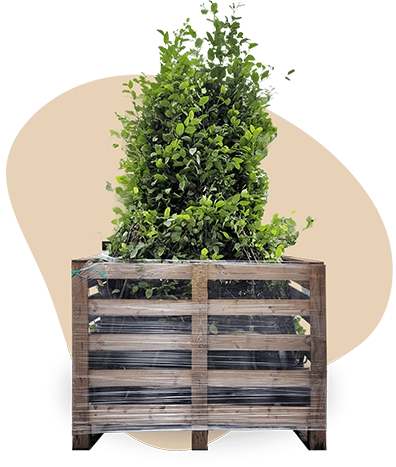
Hazel supported form brings the familiar character of Hazel, Corylus avellana 'Cosford', into the garden with a more deliberate and structured presentation. This is not an unspecified Hazel shrub in its naturally spreading shape, but a specific supported form that gives the plant a clear visual presence. It remains an upright and bushy, deciduous shrub with green foliage and an eventual height of approximately 4 m. The supported presentation makes it suitable as a distinctive structural plant in a UK garden, while still retaining the natural character of Common hazel. Early yellow and red flowers add seasonal interest from the start of the year. The shrub can also produce edible hazelnuts as part of its botanical character, without this being the main reason to choose it. As a deciduous plant, it changes with the seasons rather than remaining evergreen. Its combination of upright growth, bushy volume and structured presentation helps it stand out among other Corylus plants. The supported form should be viewed as a considered garden feature, rather than as a naturally growing Hazel shrub with an unrestricted habit.
Key features of Hazel (Corylus avellana 'Cosford')
- Early flowering: This Hazel is notable for its early flowering period from January to March. The yellow and red flowers bring colour and interest to the garden when many deciduous shrubs are still dormant.
- Foliage and growth: The leaves are green, and the plant is deciduous rather than evergreen. It grows as an upright, bushy shrub that can become broad, while the supported form gives it a more intentional structural appearance.
- Aspect and soil: Choose full sun or partial shade. The soil should be fertile and rich in organic matter, slightly moist and moisture-retentive, but never waterlogged. Good drainage and an open soil structure are important, especially in the mild, wet UK climate. Humus-rich, well-drained and calcareous soils are suitable.
- Wildlife and garden setting: Hazel is valuable for insects and birds. A sheltered position is worth considering because specific wind tolerance is not stated. It can be considered as part of a wider collection of hardy shrubs, provided the soil and aspect suit its needs.
Uses of Hazel supported form in the garden
- Structural specimen: The supported form works well as a distinctive specimen plant. Its deliberate presentation adds structure without claiming an exact architectural shape, stem arrangement or support design. It gives a border or open garden area a clear visual focus.
- Flexible planting: Use this Hazel in solitary planting, group planting, a hedge, a food forest or a naturalistic garden. The supported structure makes it especially useful where a more intentional plant presentation is wanted, while the bushy growth still gives the planting a natural character.
- Hardy choice: Corylus avellana 'Cosford' is hardy to approximately -28.9°C to -23.3°C, corresponding to USDA zones 4 to 5. This makes it a suitable option for many UK gardens, including areas where winter temperatures can be low.
- Natural combinations: Combine it with other hardy shrubs, flowering perennials, wildlife-friendly plants and naturalistic planting groups. These combinations can balance its structural presence with softer seasonal growth and support a varied garden design.
- Seasonal value: Its green foliage, very early yellow and red flowers and deciduous character create interest across different parts of the year. The supported presentation adds a deliberate structural accent, while the wildlife value gives the plant a practical role as well as ornamental appeal.
This supported-form Hazel is especially suitable for gardeners seeking a hardy, wildlife-friendly structural plant with early seasonal interest.