Description
Corylus avellana 'Webb's Prize Cob' Supporting frame | Hazel
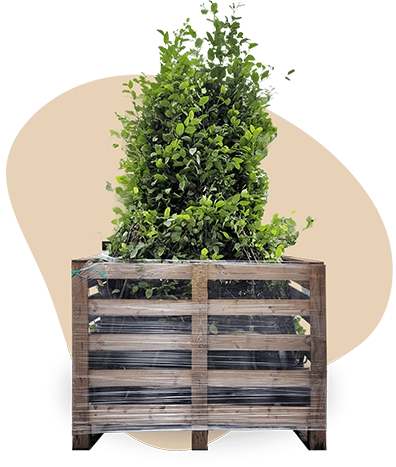
Bracket-trained hazel brings the character of Corylus avellana 'Webb's Prize Cob' to the garden in a distinctive, structured presentation. This plant is Hazel, a deciduous shrub with an upright and bushy growth background. The bracket-trained form gives it a clear visual role as a shaped hazel specimen, rather than the appearance of an unspecified naturally growing shrub. It can reach approximately 4 m at maturity, making it a noticeable feature in a larger UK garden. Its green leaves provide a fresh leafy display during the growing season before they fall in autumn. In late winter or early spring, attractive yellow and red catkins add colour and seasonal interest while many other garden plants are still quiet. The plant also produces edible hazelnuts, adding further garden value without taking the focus away from its ornamental form. As a member of Corylus, it combines the familiar character of Hazel with the more defined look of a bracket-trained product. This makes it suitable for gardeners who want a useful shrub with a stronger visual structure. In a sheltered position with well-drained soil, it can become a long-term feature with interest across several seasons.
Key features of Hazel (Corylus avellana 'Webb's Prize Cob')
- Early flowers and green foliage: This Hazel has notable early flowering, with attractive yellow and red flowers or catkins appearing in February and March. The green leaves follow and create a leafy summer display. As a deciduous shrub, it changes with the seasons rather than remaining evergreen.
- Aspect and soil: Plant it in full sun or partial shade. It performs best in fertile, humus-rich soil that remains lightly moist. Reliable drainage is important, especially in a wet UK climate, so the soil should not stay waterlogged. These conditions support the plant’s upright and bushy growth background.
- Structured bracket-trained form: The bracket-trained presentation gives this hazel a more defined and organised appearance than an unspecified naturally growing Hazel. It works as a structured specimen while keeping the upright and bushy character of the shrub. Its mature height is approximately 4 m, so it needs room to develop within the garden.
Uses of bracket-trained hazel in the garden
- Specimen planting: Use this bracket-trained hazel as a structured feature in a larger garden composition. Its defined presentation can provide a vertical or architectural accent without relying on an exact silhouette or construction detail. It is especially suited to a position where its form can be seen clearly.
- Group planting and hedging: The plant can be included in group planting or used as part of a hedge, provided the arrangement suits its trained presentation and the space available. Several shrubs can help create a stronger garden structure, while the early catkins add seasonal interest before the green foliage develops.
- Wildlife-friendly food forests: This Hazel can also form part of a wildlife-friendly food-forest setting. Its catkins, foliage and potential hazelnut production contribute to the character of a useful garden planting. The bracket-trained form adds order to a setting that may otherwise have a more informal appearance.
- Hardiness and combinations: It is hardy to approximately -28.8 to -23.3°C, corresponding to USDA zones 5 to 6. Combine it with other shrubs, woodland-style plants and wildlife-friendly garden planting. The green foliage and early yellow and red catkins provide seasonal contrast within these combinations.
The main ornamental value comes from the combination of the structured bracket-trained form, green foliage, early catkins and potential hazelnut production. It offers a distinctive Hazel feature with practical value in a wildlife-friendly garden. The bracket-trained form is a strong choice for gardeners seeking a structured hazel display with seasonal and wildlife value.