Description
Humulus lupulus 'Pioneer' Staked | Hop
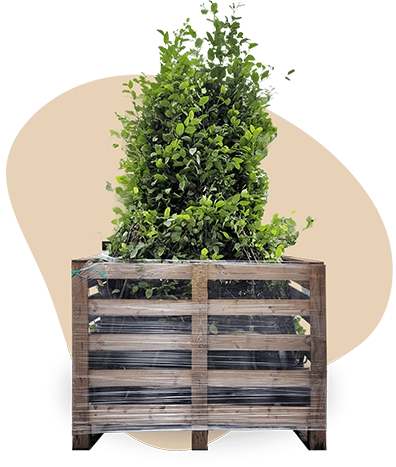
Hop trained on a stake gives Humulus lupulus 'Pioneer' an immediate upright presence in the garden. This Common hop is supplied as a vigorous, fast-growing, twining climber already trained on a stake, so it begins with a clear vertical framework rather than an unstructured spread. Its green, aromatic leaves create seasonal texture as the plant climbs, while yellow-green flowers appear from June to August. Green hop cones may also develop as part of its seasonal display. This is a deciduous plant: the above-ground growth dies back in winter and may be dormant or absent during wet UK winters until the following growing season. With suitable support and space to extend, it can reach approximately 6 m in mature height. The stake gives it a defined silhouette at the point of purchase, but the vigorous shoots still need appropriate support as they twine and spread. It is therefore well suited to pergolas, fences and trellises where vertical growth can be guided and managed. Use it as a structured feature in a UK garden, especially where green foliage, aromatic character and seasonal climbing interest are wanted.
Key features of Hop (Humulus lupulus 'Pioneer') trained on a stake
- Seasonal flowers and cones: Yellow-green flowers appear from June to August. They are a seasonal feature within the plant’s display, while the green hop cones add further texture as the climber develops.
- Green, aromatic foliage: The plant carries green foliage with an aromatic character during the growing season. As a deciduous climber, its above-ground growth dies back in winter rather than remaining evergreen.
- Light and soil: Position it in sun or partial shade. It grows best in fertile, humus-rich and well-drained soil that stays slightly moist, with consistent moisture but no waterlogged conditions. This suits many well-prepared UK garden soils.
- Growth and form: This is a fast-growing, vigorous climber with strongly twining shoots. The trained-on-a-stake form provides an initial upright framework and a defined vertical display, but the extending growth still needs suitable support as it spreads.
- Garden category: Hop is a natural choice for climbing plants when a seasonal, vertical feature is needed. Its rapid growth makes the available support an important part of the planting position.
Uses of Hop trained on a stake in the garden
- Vertical garden structure: Use Hop trained on a stake beside a pergola, fence, trellis or other supported garden framework. The stake gives the plant an immediate upright starting point and helps create vertical interest from the beginning.
- Containers and small spaces: This form is suitable for a container where adequate support is available. It can bring height and a clear climbing structure to a terrace or another compact garden position, while the vigorous shoots continue to need room and support.
- Seasonal height and texture: The rapid growth, green aromatic foliage, yellow-green summer flowers and green hop cones combine to give the plant strong seasonal interest. Above-ground growth dies back in winter, so the display changes with the seasons.
- Hardiness: The supplied hardiness range is approximately -28.9°C to -12.2°C, corresponding to USDA zones 4 to 8. This indicates a hardy Hop plant, although performance can vary between UK gardens, particularly with local exposure, soil and winter moisture.
- Plant combinations: Combine it with climbers, perennials or lower-growing planting that provides contrasting foliage, flowers or a lower layer. The upright starting structure helps the Hop sit clearly within a mixed planting without removing its need for continued support.
This trained-on-a-stake Hop is a strong choice for gardeners seeking seasonal vertical interest, aromatic foliage and a vigorous climber for a supported position.