Currently unable to ship orders to the United Kingdom

Updated on 7 April 2026

We regret to inform you that we are currently unable to ship orders to the United Kingdom. We apologise for the inconvenience.

Cupressus sempervirens 'Pyramidalis' Shrub

Italian cypress
Temporarily sold out

  • Temporarily sold out
Helpdesk
Benefits according to our specialist
  • Evergreen
  • Narrow, upright growth
  • Low maintenance
  • Suitable as a specimen plant
  • Suitable for containers
  • Sensitive to severe frost
  • Sensitive to cold winds

Plant features Cupressus sempervirens 'Pyramidalis' Shrub

Italian cypress


Description Cupressus sempervirens 'Pyramidalis' Shrub | Italian cypress

Italian cypress shrub Cupressus sempervirens 'Pyramidalis' is supplied as a shrub with a strong, upright and narrow pyramidal outline. It is known as Italian cypress and is also called Mediterranean cypress. The cultivar name ‘Pyramidalis’ reflects its clear vertical shape, which gives this shrub a more architectural presence than a broad-growing garden plant. Its dark green, aromatic foliage stays evergreen throughout the year and provides lasting structure in the garden. Yellow-green flowering or pollen-bearing structures appear in March and April, although flowering is not its main ornamental feature. The evergreen form and deep green foliage remain the main points of interest. Under suitable growing conditions and cultivation, the average mature height is approximately 15 metres, although eventual size can vary. This coniferous shrub is generally low maintenance when grown in full sun and well-drained soil. It is also described as fruit-bearing, but the fruit is not the main reason to grow it. In a UK garden, choose a sunny, sheltered position where winter wind and severe frost are reduced. The narrow silhouette works well in courtyards, on terraces and in Mediterranean-style planting. As a member of the Cupressus genus, this shrub offers a distinctive evergreen accent for specimen planting or a suitable container setting.

Key features of Italian cypress (Cupressus sempervirens 'Pyramidalis') shrub

  • Evergreen appearance: The shrub has dark green, aromatic conifer foliage that remains present throughout the year. This evergreen structure gives the plant steady visual interest, even when other garden plants are not in flower.
  • Flowering period: Yellow-green flowering or pollen-bearing structures appear in March and April. Flowering is not the main ornamental feature, as the upright form and dark green foliage provide the primary garden interest.
  • Sun and soil: Full sun is the best position. Use open, well-drained soil that is chalky or alkaline and dry to moderately moist. Good drainage is especially important in the UK, where winter rainfall can leave unsuitable ground persistently wet.
  • Growth and form: This Italian cypress shrub has an upright, narrow pyramidal silhouette and an evergreen structure. The shrub form creates a compact architectural feature with a strong vertical line, rather than a low or spreading planting shape.
  • Exposure: The plant is sensitive to cold winds, so a sheltered position is preferable. It should not be presented as strongly wind tolerant, especially in exposed UK gardens or locations affected by severe winter weather. Its full-sun requirements also make it suitable for Full-sun conifers.

Uses of the Italian cypress shrub in the garden

  • Specimen planting: Use the shrub as a specimen where its narrow, upright pyramidal outline can be seen clearly. It creates a strong vertical accent without depending on a broad planting habit, making it useful for a courtyard, terrace or sunny garden position.
  • Containers: The Italian cypress shrub can be used in a pot as a structured feature for a terrace or another suitable outdoor setting. Its evergreen foliage keeps the container display visually defined throughout the year, while the upright shape adds height and direction.
  • Mediterranean-style planting: This shrub suits a Mediterranean-style garden with full sun and well-drained soil. It can be combined in general terms with drought-tolerant, sun-loving planting where the conditions match. The dark green foliage supports a calm, architectural planting design.
  • Group planting: Several shrubs can be used in group planting where a repeated vertical form is wanted. The consistent narrow outline can help create rhythm and structure, while still keeping the planting more open than a broad evergreen mass.
  • Hardiness: The supplied tolerance range is approximately -17.8°C to -12.2°C, corresponding to USDA zones 7 to 10. Severe frost and cold winds can still cause damage, so a sheltered UK position is preferable. Performance may be less reliable in exposed or very cold locations.
  • Garden value: The main ornamental value lies in the evergreen dark green foliage and narrow upright pyramidal silhouette. This shrub is useful where gardeners want an architectural evergreen accent, a strong vertical line or Mediterranean character.

In a sunny, sheltered garden position, this evergreen Italian cypress shrub brings a distinctive vertical Mediterranean accent to UK gardens, terraces and courtyards.


Planting & care Cupressus sempervirens 'Pyramidalis' Shrub (Italian cypress)

We would like to provide some tips on how to plant and care for a Cupressus sempervirens 'Pyramidalis' Shrub. By following these tips, you can be sure to enjoy your Italian cypress for a long time.

Ideal placement of a Cupressus sempervirens 'Pyramidalis' Shrub (Italian cypress)

Plant Cupressus sempervirens 'Pyramidalis' Shrub in full sun for the best growth and most compact, upright shape. It prefers well-drained, moderately fertile soil and does not tolerate persistently waterlogged ground. A sheltered position protects it from strong, drying winds and helps reduce winter damage, especially when young.

How do I plant a Cupressus sempervirens 'Pyramidalis' Shrub (Italian cypress)?

Plant in spring or early autumn, when the soil is workable and not excessively wet or frozen. Dig a planting hole wider than the root ball, loosen the surrounding soil and plant at the same depth as it was previously growing. Water thoroughly after planting and keep the root zone watered during the first growing season; improve heavy clay soil with organic matter and ensure good drainage. In a pot, use a sturdy container with drainage holes and a free-draining compost.

Pruning a Cupressus sempervirens 'Pyramidalis' Shrub (Italian cypress)

This cultivar generally needs little pruning because it naturally forms a narrow, upright shape. Remove dead, damaged or badly positioned growth in late spring or early summer, using clean, sharp tools. Light trimming can maintain the outline, but avoid cutting deeply into old, leafless wood because cypresses may not regenerate well from it.

Watering a Cupressus sempervirens 'Pyramidalis' Shrub (Italian cypress)

Water thoroughly after planting and continue to water during dry spells in the first growing season. Once established in the ground, it usually tolerates short periods of dryness, but prolonged drought can cause browning and weak growth. Container-grown plants dry out more quickly and need regular checks, while excess water around the roots should always be avoided.

Fertilising a Cupressus sempervirens 'Pyramidalis' Shrub (Italian cypress)

Apply a balanced slow-release fertiliser in spring if the soil is poor or growth is weak. A mulch of well-rotted compost can help improve the soil and release nutrients gradually, but keep it away from direct contact with the stem. Avoid excessive nitrogen fertiliser, as it can produce soft, sappy growth and a less compact shape.

The characteristics of a Cupressus sempervirens 'Pyramidalis' Shrub (Italian cypress)

Cupressus sempervirens 'Pyramidalis' Shrub is an evergreen, columnar conifer with dark green, scale-like foliage and a strong architectural form. It works well as a specimen plant, focal point, screening plant or accent in a gravel garden, provided there is enough space for its eventual height. Its flowers are inconspicuous and it is grown mainly for its persistent foliage and narrow silhouette; it may need additional protection in exposed sites and in containers during severe winter weather.

Separating/dividing a Cupressus sempervirens 'Pyramidalis' Shrub (Italian cypress)

Dividing is not suitable for Cupressus sempervirens 'Pyramidalis' Shrub because it is a woody conifer with a single root system. Propagation is normally carried out by specialist growers using seeds or cuttings, rather than by home gardeners. Routine maintenance consists of watering, mulching and removing damaged growth rather than splitting the plant.

Frequently Asked Questions Cupressus sempervirens 'Pyramidalis' Shrub (Italian cypress)

What will be the height of Cupressus sempervirens 'Pyramidalis' Shrub?

Its eventual height varies with climate, soil, age and pruning, but it can become a tall, narrow conifer rather than remaining a small shrub. In gardens it may reach several metres, while container growth and regular shaping can keep it smaller.

What will be the width of Cupressus sempervirens 'Pyramidalis' Shrub?

It has a naturally narrow, columnar spread and is usually much narrower than it is tall. The mature width varies according to growing conditions and pruning, but it is well suited to spaces where a vertical accent is required.

Which soil type is most suitable for the Cupressus sempervirens 'Pyramidalis' Shrub?

A well-drained soil that is moderately fertile and preferably loamy or sandy is most suitable. It can tolerate some poorer soils once established, but heavy, persistently wet ground should be improved or avoided.

What is the ideal positioning for the Cupressus sempervirens 'Pyramidalis' Shrub?

Choose a sunny, sheltered position with good air circulation and protection from strong winds. Full sun helps it maintain its characteristic dense, upright form.

What is the flowering colour of the Cupressus sempervirens 'Pyramidalis' Shrub?

Its flowers are small and inconspicuous, with no significant ornamental flower colour. The plant is valued primarily for its evergreen foliage and architectural shape.

What is the flowering time of the Cupressus sempervirens 'Pyramidalis' Shrub?

It produces inconspicuous reproductive structures in spring, but flowering is not a notable ornamental feature. The precise timing can vary with local weather and growing conditions.

Is the Cupressus sempervirens 'Pyramidalis' Shrub hardy?

It is reasonably hardy in mild, sheltered parts of the UK, but severe frost, cold winds and prolonged wet conditions can cause damage. Young plants and specimens grown in pots are more vulnerable and may benefit from winter protection.

Is the Cupressus sempervirens 'Pyramidalis' Shrub evergreen?

Yes, it is an evergreen conifer that retains its scale-like foliage throughout the year. Foliage may brown after drought, root stress or harsh winter exposure.

What is the growth strength of the Cupressus sempervirens 'Pyramidalis' Shrub?

It has moderate to fairly vigorous growth when planted in full sun and well-drained soil. Growth is usually slower in containers, poor soil, shade or exposed sites.

What kind of bark does the Cupressus sempervirens 'Pyramidalis' Shrub have?

Older stems develop brown to grey-brown bark that becomes fibrous and shallowly fissured with age. The bark is not usually the main ornamental feature because the plant is grown chiefly for its evergreen, columnar form.

Is Cupressus sempervirens 'Pyramidalis' Shrub poisonous?

Warning: This plant may contain toxic substances. Ingestion of any part of the plant or contact with its sap may pose health risks, particularly to children and pets such as cats and dogs. We recommend keeping the plant out of reach of children and animals and wearing protective gloves when carrying out maintenance work, such as pruning or transplanting. If poisoning is suspected, seek immediate medical or veterinary advice. This information is provided as a general safety notice.

It can be grown in a large, stable pot for a period, particularly when young, but its eventual height means it is not ideal for permanent small-container cultivation. Use a free-draining compost, provide drainage holes and water regularly, and protect the pot and roots from severe winter conditions.
Packaged with love, for you! Our plant packaging

At Heijnen Plants, we value strong packaging just as much as strong plants. That’s why we use sustainable, water-resistant packaging made from rPET plastic: a lightweight, fully recyclable material that has already had a second life. These packages protect the plants during transport from damage and dehydration.

Learn more
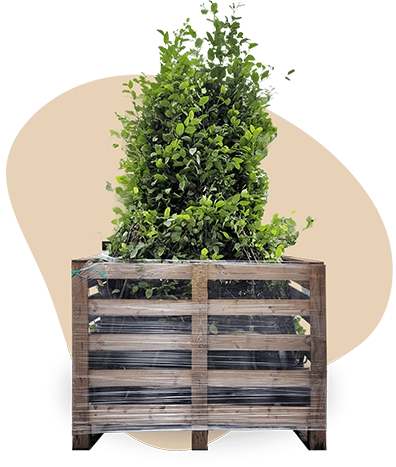
Pallet
Hedge plants, trees, large plants and grass

If you have ordered large-sized plants or trees, we deliver them on sealed pallets and place them around your house or driveway. The pallets are sturdy and provide optimal protection for large-sized plants.

Verpakkingen
Small to medium-sized plants

We deliver small or medium-sized plants in boxes. The size of the box depends on the size of the plant. We always make sure that the plant has enough space but still stands firmly in the box, so it cannot be damaged during transport.

The ideal variety for you

Buy Cupressus sempervirens 'Pyramidalis' Shrub

Order Italian cypress (Cupressus sempervirens 'Pyramidalis') as an evergreen shrub with a narrow, upright and pyramidal growth habit. This low-maintenance conifer is suitable as a solitary feature, in a pot or in a Mediterranean-style garden. Choose a sunny position with well-drained, lime-rich soil.
Personal advice from
our specialists?
We are happy to help you!
Helpdesk