Description
Cryptomeria japonica 'Globosa Nana' on stem | Japanese cedar
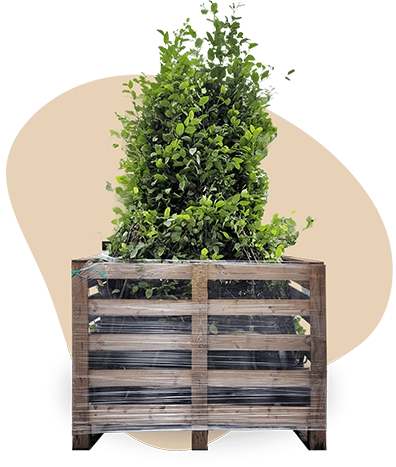
A Japanese cedar standard tree brings the compact form of Japanese cedar, Cryptomeria japonica ‘Globosa Nana’, into a clearly defined standard-trained shape. The cultivar ‘Globosa Nana’ has a compact, rounded habit, with its green evergreen crown carried above a clear stem. This raised form creates a stronger sense of height and structure than the same cultivar grown as a low shrub. The crown has a neat, globe-shaped outline and fine, short, needle-like or scale-like foliage, with a pleasant fragrance. At maturity, this product reaches an approximate height of 150 cm; no reliable mature width is supplied. As an evergreen conifer, it keeps its green character throughout the year and offers a steady architectural presence in the garden. The standard tree form is well suited to containers, making it useful on patios, balconies, near entrances and in sheltered garden spaces. It is also a low-maintenance ornamental plant when placed in conditions that suit its need for moisture and good drainage. The elevated crown gives a compact footprint while adding vertical structure to paved areas and small garden compositions. For more plants in the same genus, see cryptomeria.
Key features of Japanese cedar (Cryptomeria japonica ‘Globosa Nana’)
- Foliage and flowering: The foliage is green, evergreen and fine in appearance, with short, needle-like or scale-like leaves. It is also fragrant. Flowering is not a notable ornamental feature, and no flowering period or flower colour is supplied.
- Aspect and shelter: Choose full sun or partial shade. A sheltered position is advisable, especially where drying winds may occur. This plant is not suited to very dry or exposed windy positions.
- Soil and drainage: Use well-drained, humus-rich soil that remains lightly moist. Acidic to neutral soil is suitable. Good drainage and an open soil structure are important, while very dry conditions and waterlogged soil should be avoided.
- Growth and form: The growth is compact, with a rounded crown carried above a clear stem. This standard-trained form creates a raised, architectural silhouette rather than a low-growing shrub shape. It is suitable for containers on patios, balconies and other paved areas when adequate moisture can be maintained.
- Garden category: This plant fits naturally within standing trees, thanks to its elevated crown, clear stem and defined upright presence.
Uses for a Japanese cedar standard tree in the garden
- Container display: The Japanese cedar standard tree works well in a pot on a patio or balcony. Its compact footprint makes it useful where ground space is limited, while the raised crown adds height and definition to the display.
- Entrances and solitary positions: Place it as an entrance plant or as a solitary accent in a sheltered garden space. The clear stem and rounded crown create a distinct focal point without the wider, lower shape of a shrub.
- Evergreen structure: The green globe-shaped crown provides year-round structure and a clear vertical accent. It can also be combined with low-growing evergreens, container plants or seasonal bedding, provided these leave the rounded crown visible.
- Hardiness: The plant is hardy to approximately -23.3°C to -17.8°C, equivalent to USDA zone 6. In exposed or drying conditions, a sheltered position is still useful, particularly for a container display.
- Small garden compositions: The standard-trained form adds height and visual order without requiring a large footprint. This makes it practical for entrances, patios, balconies and compact garden arrangements.
This Japanese cedar standard tree is especially effective where an evergreen, rounded accent with a raised silhouette is wanted, provided the position does not become excessively dry or exposed.