Description
Ilex crenata 'Glory Gem' Bonsai | Japanese holly
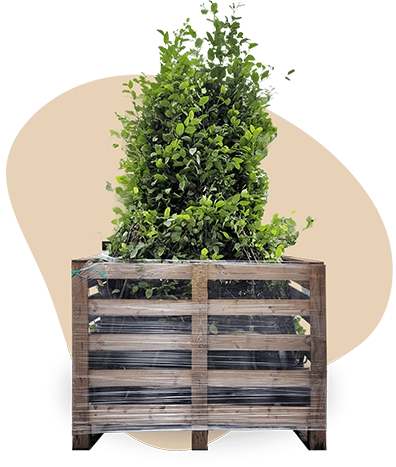
Japanese holly bonsai brings the neat, evergreen character of Japanese holly into a compact and carefully structured form. Ilex crenata 'Glory Gem' is also known locally as Japanese ilex. Presented as a bonsai, it has a contained silhouette that suits a pot, terrace, sheltered garden position or Japanese-style planting. Its green leaves remain evergreen, giving the plant a steady presence throughout the year. The growth is compact, bushy and upright, with a deliberately shaped appearance rather than the open form of an untrained shrub. Growth is slow, which suits its role as a carefully positioned specimen plant. The supplied average mature height is approximately 90 cm, although the delivered size may vary. Small white flowers can appear as a seasonal detail, but the main ornamental value comes from the foliage and the bonsai structure. This is a relatively low-maintenance plant that responds well to pruning. Berries should not be expected on every plant, as they occur only on female plants with suitable pollination. As a member of the ilex genus, this Japanese holly bonsai offers a refined evergreen shape for smaller garden spaces. In the UK's often wet conditions, good drainage is important, especially when the plant is grown in a container.
Key features of Japanese holly bonsai (Ilex crenata 'Glory Gem')
- Evergreen foliage: The plant keeps its green leaves throughout the year. The foliage gives the bonsai a calm, consistent appearance and supports its neat, structured silhouette.
- Modest flowering: Small white flowers appear in May and June. Flowering is modest rather than the main ornamental feature, so this bonsai is valued mainly for its evergreen form and foliage.
- Position: Choose full sun or partial shade. A sheltered position is suitable for a container-grown bonsai, particularly where the plant may be exposed to changing UK weather.
- Soil and drainage: Use well-drained, humus-rich, slightly acidic and lightly moist soil. The growing medium should remain open and well aerated. Avoid very wet soil and prolonged waterlogging, as free drainage is especially important in the UK's mild, wet conditions.
- Growth and form: Growth is slow. In bonsai form, the plant has a compact, bushy and upright presentation with a contained, deliberately structured appearance. This makes it suitable for a pot or paved garden setting. It can be included among container plants where its scale and form can be appreciated.
Uses of Japanese holly bonsai in the garden
- Pots and terraces: This Japanese holly bonsai is well suited to a pot, terrace or paved garden setting. Its contained scale makes it useful where a defined plant shape is wanted without filling a large area.
- Specimen planting: Place it as a specimen plant in a sheltered position or use it as a contained focal point. The compact, upright bonsai presentation gives the display a clear visual structure.
- Japanese-style gardens: The evergreen green foliage and carefully structured silhouette fit naturally into a Japanese-style garden. It can be combined with other pot plants, stones and restrained, architectural planting for a calm composition.
- Winter tolerance: The supplied hardiness range is approximately -23.3°C to -17.8°C, corresponding to USDA zone 6. In severe UK cold, container plants may need more protection because roots above ground are more exposed than roots in the garden soil.
- Year-round structure: The main garden value is the evergreen foliage, slow growth and compact bonsai shape. It provides a neat focal point in smaller spaces, on terraces and within carefully planned Japanese-inspired planting.
This evergreen bonsai is especially useful where a compact, structured focal plant is wanted in a pot, on a terrace or in a Japanese-style garden.