Description
Ilex crenata 'Stokes' Bonsai | Japanese holly bonsai
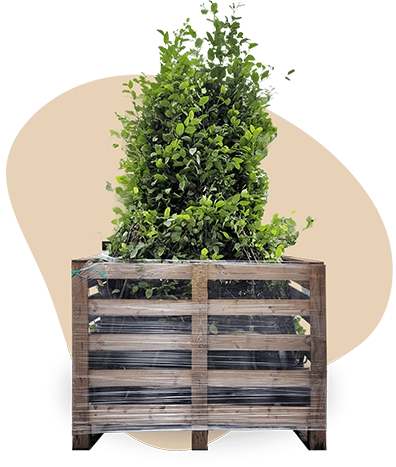
Japanese holly bonsai brings the evergreen character of Japanese holly into a compact, ornamental form. Supplied as Ilex crenata 'Stokes' bonsai, this plant is presented specifically as a bonsai rather than as an unrestricted shrub. It has a compact, bushy and upright growth habit, with green evergreen foliage and a clearly shaped silhouette. The small-scale structure gives it a strong visual presence in a container without taking up the space of a full-sized shrub. This makes the Japanese holly bonsai well suited to a patio, balcony or sheltered garden setting where its form can be viewed closely. White flowers may appear in May and June, although flowering is a secondary feature compared with the evergreen foliage and carefully shaped outline. The plant can also produce berries, adding another ornamental detail without changing its main role as a green specimen plant. It is relatively low-maintenance, but container-grown plants still need regular attention so that the growing medium does not dry out. As a member of the Ilex genus, it offers year-round green interest in a neat bonsai presentation. Its compact form also makes it a useful choice for a small outdoor space where a structured accent is wanted.
Key features of Japanese holly bonsai (Ilex crenata 'Stokes')
- Evergreen foliage: The foliage is green and remains evergreen, giving the plant a consistent appearance through the seasons. Its neat outline is central to the ornamental value of this bonsai.
- Flowers and berries: White flowers appear in May and June. Flowering is a secondary feature rather than the main reason to choose this plant, while possible berries provide additional ornamental interest.
- Position: Place the bonsai in full sun or partial shade. A sheltered position is sensible in the UK, particularly when the plant is grown in a container and exposed to changing weather.
- Growing medium: Use a well-drained, humus-rich and slightly acidic medium that stays lightly moist but drains freely. The soil should be open and airy, and must not remain waterlogged.
- Growth and form: The supplied bonsai has a compact, bushy and upright structure with a deliberately ornamental, small-scale silhouette. This presentation is the defining product feature and differs from the unrestricted form of a Japanese holly shrub.
- Container suitability: It can be displayed in a pot on a patio, balcony or other paved outdoor space. As with other container plants, the growing medium should not be allowed to dry out.
Uses of Japanese holly bonsai in the garden
- Patio and balcony display: Use this bonsai as a potted specimen on a patio, balcony or sheltered outdoor area. Its compact silhouette creates structure where space is limited.
- Solitary accent: The plant works well as a solitary specimen or as part of a bonsai display. Keep it visually prominent so that its upright, bushy outline remains the main feature.
- Hardiness: The supplied hardiness range is approximately -23.3°C to -6.7°C, corresponding to USDA zones 6-9. Container-grown plants can be more vulnerable to cold and drying than plants established in the ground, so protection is advisable during severe UK cold.
- Combining plants: Combine it with container plants or low-growing evergreen and seasonal planting that prefers a well-drained, humus-rich and slightly acidic medium. These companions should support the bonsai without hiding its compact form.
- Ornamental value: Green evergreen foliage, year-round structure and the shaped bonsai silhouette are the main attractions. White flowers in May and June and possible berries are secondary details.
This Japanese holly bonsai is useful where a small, structured evergreen accent is wanted without the visual scale of a full-sized shrub. It is a practical choice for adding evergreen structure and a compact specimen accent to a patio, balcony or sheltered garden setting.