Description
Acer palmatum 'Shin-deshojo' on stem | Japanese maple
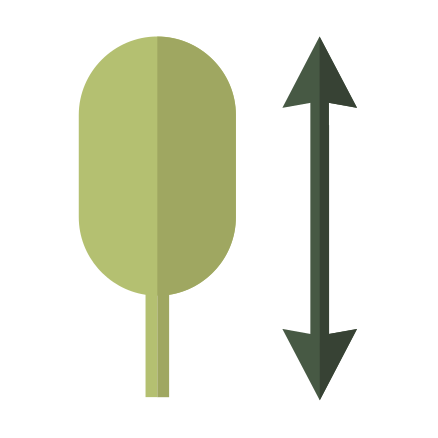
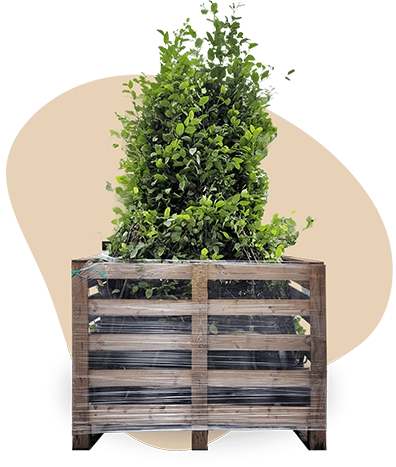
A Japanese maple standard tree brings a clear focal point to a garden, patio or container. Acer palmatum 'Shin-deshojo' is a Japanese maple supplied in standard tree form, with a raised stem and a compact, rounded crown above it. This gives the plant a defined silhouette and a stronger vertical presence than a low-growing maple form. The new foliage appears vivid red before developing green tones later in the season, followed by an attractive orange autumn display. The leaves are deciduous, so this is not an evergreen plant. Its upright, compact growth makes it suitable where space is limited, while the raised crown keeps the form visually open. The tree reaches approximately 200 cm in height according to the product data. Red flowers may appear in May, although the foliage remains the main ornamental feature. As part of the acer genus, this cultivar has the refined seasonal character associated with a Japanese maple. It can be used in a pot or as a compact feature in a UK garden. Choose a sheltered position and protect the plant from drying out and strong winds.
Key features of the Japanese maple (Acer palmatum 'Shin-deshojo')
- Distinctive standard tree form: The raised stem carries a compact, rounded crown above the ground. This creates a clear accent and separates the plant from a shrub or low-branched maple. Its upright, compact habit suits smaller garden spaces, patios and containers.
- Seasonal foliage and flowers: New foliage is red and develops green tones later in the season. In autumn, the leaves provide orange colour. Red flowers appear in May, but flowering is secondary to the foliage display.
- Position and wind protection: This Japanese maple grows in sun or partial shade. A sheltered position is preferable because the plant is sensitive to strong wind. It is also sensitive to drying out, so the soil should remain lightly moist.
- Soil and garden setting: Use humus-rich, well-drained soil that is acidic to neutral. Good drainage is important, while the soil should not become dry. Its pot and patio suitability also makes it a useful choice within standing trees for a structured UK garden display.
Uses of the Japanese maple standard tree in the garden
- Solitary feature: Placed on its own, the raised crown gives this standard tree a strong focal point. It adds height and structure without taking up the space of a broad, low-growing form. The clear crown remains easy to appreciate from different viewpoints.
- Pot and patio use: The compact form works well in a pot or on a patio. It brings seasonal colour to a defined outdoor space, while the raised stem gives the plant a formal and tidy outline. Protect it from drying out, particularly in exposed positions.
- Japanese-style garden: This Japanese maple suits a Japanese-style garden where foliage, shape and seasonal change are important. The red new foliage, later green colouring and orange autumn display provide interest through the growing season.
- Winter hardiness: The plant is winter hardy to approximately -23.3°C to -17.8°C, corresponding to USDA zone 6. Even with this hardiness, a sheltered position is useful because strong wind and drying conditions can affect the plant.
- Plant combinations: Combine it with compact ornamental plants, ground-cover planting or understated Japanese-style planting. Keep surrounding growth low enough to avoid hiding the raised crown. This allows the rounded form and seasonal foliage to remain the main focus.
The main ornamental value comes from the vivid red new foliage, green summer colouring, orange autumn colour and clearly raised rounded crown. This compact Japanese maple standard tree is a distinctive choice for adding seasonal colour and structure to a patio, pot or sheltered garden position.