Description
Acer palmatum 'Skeeter's Broom' Screen | Japanese maple
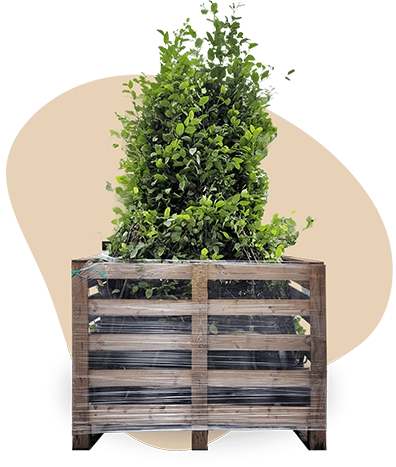
Japanese maple umbrella form Acer palmatum 'Skeeter's Broom' is a compact deciduous shrub with a distinctive umbrella-like silhouette. This product is offered in an umbrella form, giving the plant a spreading visual outline while keeping a clear, structured presence in the garden. Its growth is compact, upright and columnar, with the umbrella-shaped upper form adding a strong horizontal effect. The plant reaches approximately 200 cm at maturity. No exact mature width is provided, but its compact size makes it suitable for a smaller garden, patio or container. The red, green and orange foliage gives this Japanese maple seasonal colour and an attractive autumn display, without being limited to one fixed shade. Reddish purple flowers appear as a secondary feature. The leaves are deciduous, so the plant changes with the seasons rather than remaining green throughout the year. Its manageable size can make it easier to place in a small garden or container. Protection from strong wind and drying conditions is important, especially in exposed UK gardens. As a member of acer, it brings the refined garden character associated with Japanese maple planting while remaining clearly different from other trained forms of the cultivar.
Key features of Japanese maple (Acer palmatum 'Skeeter's Broom')
- Flowers: Reddish purple flowers appear in May and June. Flowering is a secondary ornamental feature, while the foliage and umbrella form remain the main points of interest.
- Colourful foliage: The deciduous leaves appear in red, green and orange tones. They provide changing seasonal colour and attractive autumn colour without promising one fixed autumn shade.
- Growth and form: This is a compact Japanese maple with a structured umbrella-like outline. The form creates a clear horizontal visual presence while remaining suitable for a smaller garden, pot or patio setting.
- Aspect and shelter: Grow it in partial shade or sun, preferably in a sheltered position. The plant is sensitive to strong wind and excessive drying, so protection is important in the UK climate. This plant can be included among container plants where its form can be viewed clearly.
- Soil: Humus-rich, well-drained and lightly moist soil is suitable. Acidic to neutral conditions are preferred, with good drainage and an open soil structure to prevent excess water while avoiding soil that dries out quickly.
Uses of the Japanese maple umbrella form in the garden
- Solitary feature: The umbrella form works well as a solitary feature plant. Its spreading outline gives a distinct shape and visual structure, allowing the colourful foliage to remain the main focus.
- Patio and container: This compact Japanese maple is suitable for a pot or patio setting. A container can highlight the umbrella-like silhouette and make the plant a strong accent in a smaller outdoor space.
- Japanese-style planting: Use it as an accent in a Japanese-style garden. Restrained planting around it can support the form without obscuring the red, green and orange foliage or its seasonal changes.
- Small gardens: The compact growth and approximately 200 cm mature height make it an option for a small garden. It provides a clear feature without requiring the visual space of a larger garden plant.
- Hardiness: The supplied tolerance is approximately -28.9°C to -6.7°C, corresponding to USDA zones 5 to 8. Local exposure and shelter still matter, particularly where strong wind or drying conditions occur.
- Plant combinations: Combine it with restrained woodland or Japanese-style planting that does not hide its outline. Compatible groups include selected shrubs, ferns, grasses and ground-cover plants used in a balanced way.
The greatest ornamental value comes from the combination of colourful foliage, attractive autumn colour and the distinctive umbrella-form silhouette. This shape provides a strong solitary accent and useful structure while remaining suitable for a sheltered patio, a Japanese-style planting scheme or a small garden where foliage colour and form are important.