Description
Chaenomeles superba 'Nicoline' Stooled | Japanese quince
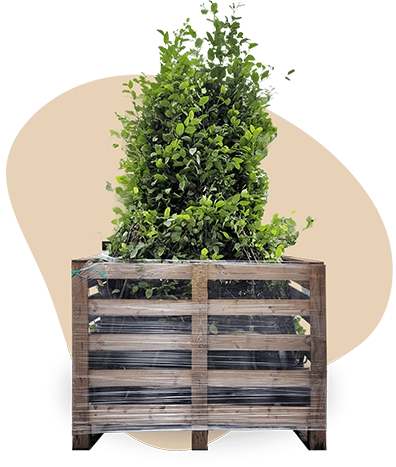
A standard Japanese quince brings the character of Chaenomeles superba 'Nicoline' into the garden in a raised, clearly defined form. This Japanese quince is a deciduous, hardy shrub with green leaves, striking red flowers and ornamental fruits. The shrub has an upright, bushy growth habit, but it is trained in standard form so that the main planting is raised above the ground. This gives it a stronger vertical silhouette and added height than a low, naturally spreading shrub. The plant reaches approximately 150 cm in height. Its raised structure creates a clear focal point in a border, on a patio or in a container, while taking up less ground space than a broad shrub. The red flowers appear early in the season, bringing strong colour from March to May. After flowering, the ornamental fruits add further seasonal interest. The thorny branches are an important feature to consider when choosing its position. As a practical ornamental garden plant, it offers structure as well as seasonal colour. This cultivar belongs to the wider group of Cydonia plants often associated with quince in garden collections.
Key features of Japanese quince (Chaenomeles superba 'Nicoline') in standard form
- Early red flowering: This flowering quince produces showy red flowers from March to May, with the main interest in early spring. The strong flower colour stands out clearly above the raised structure of the standard form.
- Green deciduous foliage and fruits: The plant carries green leaves during the growing season and is deciduous. Ornamental fruits follow the flowering period and extend the plant’s decorative value. The branches are thorny, so a little care is needed when choosing a position.
- Position and soil: Plant it in full sun or partial shade. A sheltered position is sensible in a UK garden, especially where the site is exposed. The soil should be fertile, humus-rich and lightly moist, while remaining well drained. Avoid poorly drained or waterlogged ground.
- Growth and garden setting: The shrub is naturally upright and bushy, but this product is presented in standard form on a raised structure. It creates a more vertical presence and a defined focal point than a low shrub. It works well as a container plant on a patio, provided the container has good drainage, and is also suitable for red-flowering shrubs collections.
Uses of standard Japanese quince in the garden
- Raised focal plant: Use this standard Japanese quince as a specimen in a border or as a raised feature in a small garden. Its added height gives the planting clear structure without needing the ground space of a broad shrub.
- Patio and container display: The standard form is well suited to a pot or container on a patio. It brings the flowers and foliage closer to eye level and gives a terrace or paved garden area a stronger ornamental focus. Good drainage remains important.
- Hardy garden shrub: Japanese quince is hardy to approximately -28.9 to -23.3°C and USDA zone 5. This should be viewed as a guide rather than a guarantee for every UK microclimate. A sheltered position can still be a sensible choice in a mild, wet climate.
- Combining with other plants: Combine it with ornamental plants that suit full sun or partial shade and well-drained soil. Ornamental grasses, spring bulbs and other flowering shrubs can provide useful contrast around the raised form without hiding its silhouette.
- Seasonal ornamental value: The main features are the early red flowers, green foliage, ornamental fruits and the elevated structure. Together, they give the plant interest across more than one season while keeping the outline of the standard shrub easy to see.
This standard Japanese quince is a useful choice for adding early colour and a raised ornamental focal point to a UK garden, patio or container display.