Description
Campsis tagliabuana 'Mme Galen' Stab | Trumpet vine
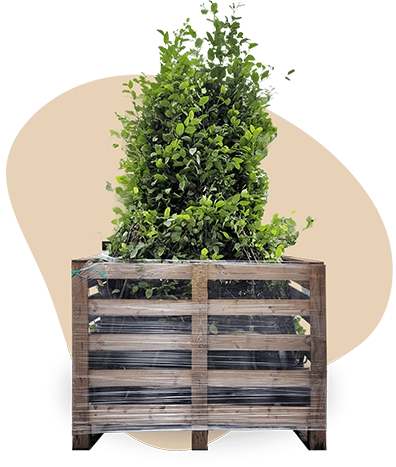
A standard trumpet vine brings the distinctive character of Campsis tagliabuana 'Mme Galen' into a raised, structured form. Known in the UK as Trumpet vine, this standard-trained plant presents an upright, climbing silhouette that creates a clear focal point in the garden. Its developing shoots still need suitable support as they grow, so the raised form does not remove the climbing nature of the plant. Green pinnate foliage forms the leafy framework, while orange-red, trumpet-shaped flowers add strong seasonal colour. The foliage is deciduous, so the plant remains substantial in its garden role while changing with the seasons. At maturity, it has the potential to reach approximately 8 m, making it important to allow enough space for its vigorous growth. The main care considerations are support, space and a warm, sheltered position. In a mild but often wet UK climate, good drainage is also important. The raised presentation gives this Trumpet vine a more defined vertical effect than a freely climbing plant, making it suitable for a prominent position near a pergola, wall or trellis. As part of the campsis genus, it combines climbing growth with the strong ornamental presence expected from this flowering plant form.
Key features of Trumpet vine (Campsis tagliabuana 'Mme Galen')
- Abundant summer flowering: This is a highly ornamental flowering climber with orange-red, trumpet-shaped flowers from July to September. The flowers bring a clear, warm colour accent during the height of summer.
- Green deciduous foliage: The leaves are green and pinnate, creating a fresh leafy display during the growing season. As a deciduous plant, the foliage is not present all year.
- Position in a UK garden: Full sun or partial shade is suitable, with the best flowering in a warm, bright and sheltered position. Avoid exposed, windy sites, especially as the plant can become vigorous and needs suitable support.
- Soil and drainage: Choose well-drained, humus-rich and fertile soil that remains lightly moist without becoming waterlogged. The soil should be open and well drained, which is especially important in the UK's mild but often wet conditions.
- Growth and garden value: The standard-trained form places the climbing plant on a raised framework, giving it a more defined vertical focal-point effect than a plant allowed to climb freely. The shoots still require support as they develop, and the plant can become substantial.
- For flowering planting schemes: With its orange-red flowers and attraction to bees, this plant fits naturally within flowering climbing plants. It adds seasonal interest while retaining a strong structural presence.
Uses of the standard trumpet vine in the garden
- Raised focal point: Use the standard trumpet vine as a focal or structural plant near a pergola, wall, fence or trellis. Suitable climbing support is still needed for the developing shoots, but the raised presentation gives the plant a clearer starting height and a more defined garden presence.
- Warm, sheltered positions: A warm and sheltered UK position is preferable, even though the plant is hardy to approximately -23.3°C to -17.8°C, corresponding to USDA zones 6 to 7. Protection from exposed conditions also suits its vigorous growth and support needs.
- Border combinations: Combine it with plants that tolerate full sun to partial shade and well-drained, fertile soil. It works with structural shrubs, flowering perennials and other plants suited to a warm, well-drained border, without turning the planting into a formal hedge.
- Height and structure: The standard-trained form adds height and a clear focal-point effect, while the climber's growth brings seasonal movement and colour. This makes it useful where a wall, pergola, fence or trellis needs a stronger vertical feature.
- Seasonal ornamental value: The main appeal comes from the combination of a raised, structured presentation, green foliage and abundant orange-red trumpet-shaped flowers from July to September. The deciduous habit adds a changing seasonal character rather than an evergreen display.
This standard trumpet vine is well suited to a warm, sheltered UK garden where its raised structure, climbing growth and late-summer flowering can be appreciated.