Description
Cedrus libani 'Glauca Pendula' Shrub | Weeping blue cedar
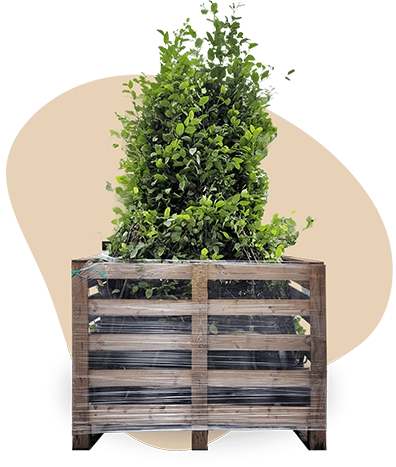
The weeping blue cedar shrub is Cedrus libani 'Glauca Pendula' supplied in shrub form, known in the UK as Weeping blue cedar or Weeping blue Lebanon cedar. Unlike an upright standard tree, this form develops a low, spreading and weeping shape with overhanging growth. It creates a broad, three-dimensional silhouette and needs enough room to show its natural outline. The plant can reach an approximate mature height of 400 cm, but no fixed mature width is supplied. Its blue-green to grey-green, needle-like foliage remains evergreen throughout the year and gives the shrub a steady colour in the garden. The main ornamental interest comes from the combination of these evergreen needles and the distinctive hanging growth. Flowering is not the reason to choose this plant. It is an ornamental conifer with a generally low-maintenance character, although a sheltered position and sufficient space are important for good garden presence. Young growth is slow, so its development is measured rather than fast. This shrub form works especially well as a specimen plant, where its unusual outline can be seen clearly. It belongs to Cedrus, a genus valued here for its evergreen conifer character and strong visual form.
Key features of Weeping blue cedar (Cedrus libani 'Glauca Pendula')
- Evergreen foliage: The plant carries blue-green to grey-green, needle-like foliage. The needles stay on the plant through the year, making this a blue evergreen conifer with interest in every season.
- Ornamental form: Flowering is not a notable ornamental feature. The shrub is valued for its foliage and its spreading, weeping growth, with overhanging branches that create a broad spatial effect rather than an upright tree shape.
- Position and wind: Choose full sun or partial shade, preferably in a sheltered position. The plant is sensitive to strong winds, so protection is relevant in a UK garden, especially where exposed conditions may affect its overhanging outline.
- Soil and drainage: Use well-drained, dry to normal soil with an open structure. Sandy or loamy soil is suitable, and calcareous soil is tolerated. Avoid persistently wet ground, as good drainage is important for this conifer.
- Growth and care: Young growth is slow, giving the plant a measured rate of establishment and development. The shrub form is generally low maintenance, although formative pruning or support may sometimes be needed to retain the desired shape. It is a suitable choice for a collection of conifers where its spreading habit can be given room.
Uses of the weeping blue cedar shrub in the garden
- Specimen planting: The weeping blue cedar shrub is suited to a specimen position where its blue-green needles and overhanging silhouette can be seen from different angles. Its low, spreading form creates a strong evergreen accent close to the ground and is clearly different from a conventional upright tree.
- Rock garden or large pot: This shrub form can be used in a rock garden or in a large pot, provided there is sufficient space for its spreading growth. It can also suit a city garden where a sheltered position and well-drained soil are available. It is not a compact choice for every small garden.
- Hardiness: The supplied hardiness indication is approximately -23.3 to -17.8°C, corresponding to USDA hardiness zone 6. This is a general guide rather than a guarantee for every UK microclimate. Shelter remains important, particularly in areas exposed to strong winds.
- Plant combinations: Combine it with low-growing, drought-tolerant planting that prefers well-drained, relatively dry soil. Rock-garden plants, low-growing evergreens and other plants for free-draining soil can support the setting without hiding the blue-green needles or spreading outline.
- Ornamental value: Its main garden value is the balance between evergreen colour and a distinctive weeping shrub silhouette. The overhanging growth gives a specimen planting a clear three-dimensional outline, while the plant still provides structure outside the main growing season.
This shrub-form Weeping blue cedar is most effective as a distinctive evergreen specimen where its overhanging silhouette has room to develop. A sunny to partially shaded, sheltered position with good drainage will show its form at its best. It is better suited to an open, well-drained setting than to a persistently wet or exposed position.