Description
Euonymus alatus 'Compactus' Parasol | Winged spindle tree
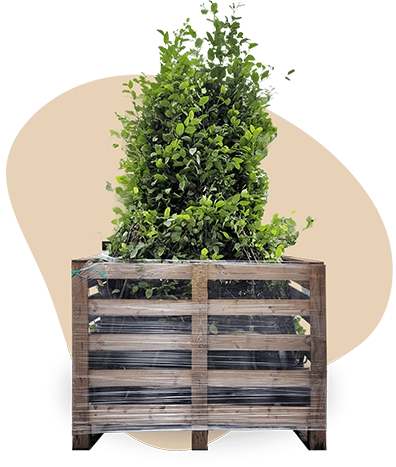
The winged spindle tree parasol is Euonymus alatus 'Compactus', a compact form of the winged spindle tree offered in a distinctive parasol form. Its broad, umbrella-like presentation gives the plant a clear spreading silhouette, while the growth remains bushy and upright. It reaches approximately 200 cm in height and brings useful structure to a UK garden without looking like a generic shrub. The green foliage changes to a striking red in autumn, giving the plant strong seasonal interest. Its decorative winged branches add another feature, especially when the outline can be viewed clearly. Green flowers appear in May and June. They are modest and are not the main ornamental feature of this deciduous shrub. The plant is generally low-maintenance and works well as a focal point where its shape and autumn colour can be appreciated. It also produces fruits, and its fruits and plant parts are toxic if ingested, so a suitable position is important in gardens used by children or pets. As a member of the euonymus genus, this Euonymus alatus 'Compactus' parasol form is offered specifically for its trained parasol presentation, not as another growth form of the cultivar.
Key features of the winged spindle tree (Euonymus alatus 'Compactus') in parasol form
- The flowering period is modest. Green flowers appear in May and June, but the main ornamental value comes from the green foliage, the vivid red autumn colour and the decorative winged branches.
- Choose a position in full sun or partial shade. In a UK garden, a sheltered site can help the parasol silhouette remain easy to see. The plant is deciduous, so it changes character through the seasons.
- The soil should be well drained, humus-rich and lightly moist. Good drainage is especially important in often wet conditions, while an open soil structure helps prevent the roots from standing in water. It is suitable for all soil types when these conditions are provided.
- Growth is compact, bushy and upright, with a mature height of approximately 200 cm. In parasol form, the plant develops a spreading, umbrella-like visual outline, giving both height and horizontal presence while retaining its winged branch structure. Fruits and plant parts are toxic if ingested. This hardy character also makes it relevant among container plants, provided the form can be viewed clearly.
Uses of the winged spindle tree parasol in the garden
- Use this winged spindle tree parasol as a specimen or focal plant in a border. Its umbrella-like outline gives the planting a defined centre, while the winged branches and red autumn colour add seasonal structure.
- The parasol form can also be used in group planting or as a border plant. Allow enough visual space around each plant so the spreading outline is not hidden by surrounding growth. This is particularly useful in smaller gardens where a clear structural accent is needed.
- It can be grown in a pot as a strong feature for a terrace or another suitable garden space. The compact presentation gives height and width in one plant, without requiring the space of a broad, untrained shrub. Position the pot where the silhouette can be seen from different viewpoints.
- For combinations, use lower-growing perennials, ornamental grasses or compact shrubs that tolerate full sun or partial shade. Border plants, ornamental grasses and compact shrubs should complement the shape rather than cover the parasol outline.
- The supplied hardiness information is approximately -28.9°C to -6.7°C, corresponding to USDA zones 4 to 8. This indicates a hardy winged spindle tree, although local exposure, shelter and garden conditions still matter in the UK.
The strongest reasons to choose this parasol-form winged spindle tree are its seasonal colour, decorative branch structure and clearly defined shape. It suits gardeners looking for a focal plant with both vertical and horizontal presence in a border, pot or smaller garden. This winged spindle tree parasol is a strong choice for a UK garden where seasonal colour, distinctive branches and a clearly defined focal plant are wanted.