Description
Euonymus alatus Parasol | Winged spindle tree
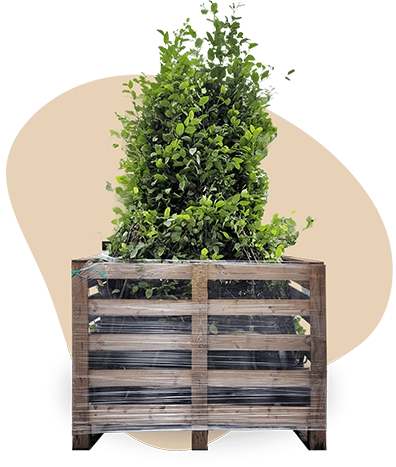
The winged spindle tree parasol is a distinctive specimen shrub with a broad, umbrella-like outline. Known as the winged spindle tree, it is supplied in the parasol form to create a clear ornamental silhouette rather than a naturally untrained shape. Euonymus alatus parasol has upright, bushy and spreading growth, and can reach approximately 200 cm in height. Its green foliage provides a fresh display during the growing season before changing to vivid red in autumn. This spectacular autumn colour is one of its main ornamental features. Modest greenish-yellow flowers appear in May and June, but flowering is not the main reason to grow this plant. Decorative winged branches add structure and remain an attractive feature when the shrub is bare. As a deciduous shrub, it loses its leaves in winter. The plant is generally low maintenance and can develop a broad spread, giving it a strong presence in a border, container or specimen position. It also produces berries which are poisonous if eaten, so it should be placed with garden safety in mind. The winged spindle tree belongs to the euonymus genus and is a strong choice where form and seasonal colour are more important than showy flowers.
Key features of the winged spindle tree (Euonymus alatus parasol)
- Flowers and foliage: Greenish-yellow flowers appear in May and June. The flowering is modest, while the green leaves turning red in autumn provide the strongest seasonal display. The plant has leaves, not needles, and is deciduous.
- Growth and form: This shrub grows upright, bushy and spreading. The parasol form gives it a broad, umbrella-like silhouette and a visible visual spread, making it a structured specimen rather than an ordinary untrained shrub. The decorative winged branches add interest in winter and give the plant a strong framework.
- Aspect and soil: Choose full sun or partial shade. It grows in all soil types when the soil is well drained, humus-rich and lightly moist. Good drainage is important, particularly in the often wet UK climate, so avoid conditions where water remains around the roots.
- Garden character and safety: The winged spindle tree is generally low maintenance and suits a reasonably sheltered position where its broad silhouette can be seen clearly. Its berries are poisonous if eaten. Use it as part of considered garden planting rather than selecting it for any edible feature. It fits naturally within container plants as well as wider shrub planting.
Uses of the winged spindle tree parasol in the garden
- Specimen planting: Use the parasol form as a specimen plant where its umbrella-like silhouette can act as a focal point. Its defined outline brings structure to a border and gives the shrub a clear presence through the seasons.
- Borders and group planting: It can be placed in a border, group planting or mass planting. In a group, the broad form helps create a strong visual rhythm, while in a border it offers a distinct shape between lower planting and other structural shrubs.
- Containers: The winged spindle tree parasol can also be used as a container plant. Its form works well in a container display where the plant can provide height, structure and seasonal interest without relying on flowering as its main feature.
- Hardiness and combinations: It is hardy from approximately -34.4°C to -12.2°C, corresponding to USDA zones 4 to 8. Combine it with lower-growing or contrasting planting that leaves the parasol silhouette, red autumn colour and winged branches visible. Border planting, group planting and container displays are suitable combinations.
The main garden value of this parasol-form winged spindle tree comes from its broad outline, decorative winged branches and vivid red autumn colour. It is especially suitable for gardeners seeking autumn colour, seasonal structure and a distinctive specimen shape.