Description
Cedrus atlantica 'Glauca Pendula' standard stem height 120-140 cm C230 | Weeping blue Atlas cedar
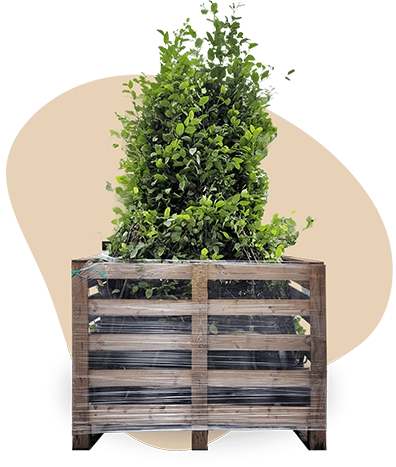
The weeping blue Atlas cedar on a standard is a distinctive form of Cedrus atlantica 'Glauca Pendula', known in the UK as the weeping blue Atlas cedar. This standard-trained tree has a raised stem that carries the pendulous crown above the ground, creating a strong architectural silhouette. The cultivar name 'Glauca Pendula' refers to its blue-grey colouring and weeping habit. Its fine, needle-like foliage is blue to blue-grey, evergreen and naturally scented. The downward-flowing branches give this blue Atlas cedar standard tree a sculptural appearance in a garden, patio or container. It can reach an approximate mature height of 300 cm, although the final height depends on the height of the supplied standard and ongoing training. No exact mature width is provided. Flowering is not the main ornamental feature, while the evergreen needles provide lasting structure throughout the year. As a conifer, it may produce cones, but its main value lies in its foliage and form. It is generally low maintenance once established. As a distinctive member of the cedrus genus, this standard-trained weeping conifer is suited to gardeners seeking a raised crown with a clearly pendulous outline.
Key features of the weeping blue Atlas cedar on a standard (Cedrus atlantica 'Glauca Pendula')
- Evergreen foliage: The blue to blue-grey needles have a fine coniferous appearance and remain evergreen. They also have a natural scent, adding another point of interest beyond the plant’s strong shape.
- Flowering: Flowering is not the main ornamental feature of this plant, and no flowering period is specified. Its garden value comes mainly from the evergreen needles, elevated stem and pendulous crown rather than from flowers.
- Position and soil: Choose a position in full sun. It prefers well-drained, dry to lightly moist soil that is neutral to alkaline, including calcareous soils. In the UK’s often wet climate, free-draining, aerated soil is important, and persistently waterlogged conditions should be avoided.
- Growth and form: This is a standard-trained weeping form, not a naturally low-growing specimen. The stem elevates the crown above the ground, while the pendulous branches create a distinctive downward-flowing silhouette. Final growth depends on the standard height and ongoing training.
- Wind exposure: The plant is sensitive to strong winds. A sheltered position is beneficial, especially because its elevated crown and weeping growth are held above ground level. Its low-maintenance character is most useful once the plant is established in a suitable site.
- Plant category: This evergreen blue-grey conifer is a natural choice within conifers, particularly for gardeners looking for a specimen with a clear vertical stem and a soft, pendulous outline.
Uses of the weeping blue Atlas cedar on a standard in the garden
- Solitary planting: The weeping blue Atlas cedar on a standard works well as a solitary specimen. The raised crown gives it a strong focal-point effect and creates visual separation from surrounding planting. Its form is especially useful where a single architectural plant is preferred.
- Pot and patio use: This standard-trained form can be used in a pot or on a patio, where the elevated stem and downward-flowing branches can be viewed clearly. It brings vertical structure without presenting the same low-growing outline as an untrained specimen.
- Rock garden setting: The plant can also be used in a rock garden. Its blue-grey evergreen needles provide contrast with low-growing rock-garden plants, while the raised crown gives height and keeps the pendulous outline visible.
- Winter hardiness: The supplied hardiness range is approximately -20.6 to -17.8°C, corresponding to USDA zone 6. Local exposure, strong winds and winter wetness still matter in UK gardens, so this range should not be treated as a guarantee for every microclimate.
- Plant combinations: Pair it with restrained, low-growing planting that supports rather than hides the silhouette. Grasses, low-growing rock-garden plants or restrained evergreen planting can work where they suit a sunny, well-drained position.
- Ornamental value: Its strongest feature is the contrast between blue-grey evergreen needles, the elevated stem and the distinctive weeping crown. It provides year-round structure and a sculptural focal point without relying on flowers.
This standard-trained weeping blue Atlas cedar suits gardeners seeking an evergreen architectural accent for a sunny, well-drained and reasonably sheltered position.