Description
Diervilla splendens 'Diva' half-standard 90 cm C10 | Bush honeysuckle
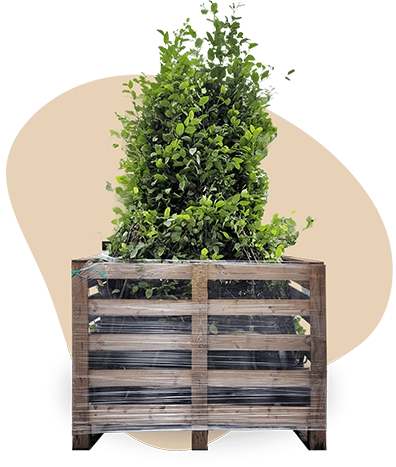
Half-standard bush honeysuckle brings the character of Diervilla splendens 'Diva' to the garden in a raised, compact form. This bush honeysuckle is supplied as a half-standard plant, with a clear stem carrying an upright, bushy crown above it. The raised stem gives the plant a distinct elevated silhouette, so it looks different from the same cultivar grown as a naturally low shrub. It can reach approximately 150 cm in height. The green foliage has red tones, adding interest before and after the yellow flowers appear. Flowering takes place in summer, while the foliage develops attractive autumn colour later in the season. As a deciduous shrub, it loses its leaves in winter and is non-fragrant. The plant is hardy and low maintenance, making it a practical choice for UK gardens. Its compact crown can add structure without taking up the visual space of a tree. In a border, container, specimen position or group planting, this Northern bush honeysuckle offers a clear shape and seasonal interest. No fruit is expected, so the main ornamental value comes from the raised form, foliage, summer flowers and autumn colour.
Key features of bush honeysuckle (Diervilla splendens 'Diva')
- Summer flowering: This is a floriferous shrub with a seasonal display of yellow flowers from June to August. The flowers bring a bright colour to the raised crown during the warmer months.
- Foliage: The deciduous leaves are green with red tones. These colours give the plant interest during the growing season, followed by attractive autumn colour before the leaves fall.
- Aspect: Choose a position in sun or partial shade. This makes the half-standard form useful in different parts of a UK garden, from an open border to a suitable container position.
- Soil: It grows best in well-drained, humus-rich and slightly moist soil. Good drainage is important, especially in the often wet UK climate, so avoid conditions where water remains around the roots. The soil should not be allowed to remain dry for long periods.
- Growth and form: The growth is upright, bushy and compact. In this half-standard form, the compact crown develops above a clear stem, creating a raised and structured silhouette. Its appearance is therefore different from a plant grown as a low shrub.
- Garden category: With its yellow summer flowers, it fits naturally within yellow-flowering shrubs. Its compact shape also suits practical planting in a border or container.
Uses of half-standard bush honeysuckle in the garden
- Raised accent: The half-standard bush honeysuckle can be used as a raised accent in a border. Its clear stem lifts the compact crown above lower planting and adds structure without presenting the plant as a full-sized tree.
- Containers and specimen planting: The compact footprint makes this form suitable for a container or a specimen position. It gives a pot or border a defined vertical shape, while the crown remains bushy and manageable in appearance.
- Group planting: Several plants can be used in group planting where a repeated raised silhouette is wanted. The form can also be placed among border plants, compact shrubs or low planting to create contrast in height and shape.
- Hardiness: This is a very hardy shrub, rated to approximately -40°C and listed as USDA zone 3. For UK gardens, it is still sensible to choose a suitable position with good drainage and avoid exposed sites where practical.
- Plant combinations: The raised crown can be combined with contrasting foliage, flowering perennials or low planting. It works with broad groups such as border plants, compact shrubs and other container planting, without needing a large planting area.
- Ornamental value: Its main interest comes from the combination of a raised compact crown, yellow flowers from June to August, green and red foliage, and attractive autumn colour. This gives the plant several seasonal features within one clear form.
This half-standard bush honeysuckle combines a compact raised shape with summer flowers and attractive autumn colour, making it a structured choice for borders, containers, specimen planting and group planting.