Description
Actinidia chinensis 'Atlas' standard 50 cm C2 | Kiwifruit
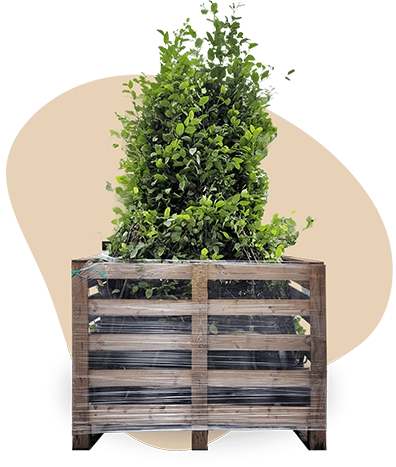
This stake-trained kiwifruit plant, Actinidia chinensis 'Atlas', gives a vigorous climber a clear upright starting structure before it develops across a suitable support. Known locally as Kiwifruit, it is a male, non-fruiting cultivar used as a pollinator for compatible female kiwifruit plants. It is not a fruit-bearing plant, so its main value is its ornamental foliage, flowering display and role in the garden. The large green leaves create a full, leafy appearance during the growing season. In May and June, it produces fragrant white flowers that add interest around a pergola, trellis or suitable wall. This is a deciduous plant rather than an evergreen, so it loses its leaves in autumn. When supported, it can reach approximately 5 metres in height. As a vigorous climbing plant, it needs a suitable climbing support as it develops and should not be treated as a self-supporting tree shape. Regular pruning is needed to keep its strong growth under control and maintain a manageable framework. Choose a sunny or partially shaded position in a UK garden, with shelter from exposed conditions. Late frosts can affect the plant, so a protected aspect is useful. As part of the actinidia genus, it suits gardeners looking for a structured, flowering climber with a clear trained form.
Key features of Kiwifruit (Actinidia chinensis 'Atlas')
- Flowering: This plant is richly flowering, with fragrant white flowers appearing in May and June. The flowers bring a clear ornamental feature to the upright framework and later climbing growth.
- Foliage: The large green leaves give the climber a leafy appearance through the growing season. The foliage is deciduous, so it is not evergreen.
- Position: Full sun or partial shade is suitable. A sheltered position is preferred in UK gardens, as exposed sites can leave the climber and its young growth more vulnerable to wind and late frosts.
- Soil: Use rich, fertile, humus-rich soil that stays lightly moist without becoming waterlogged. Good drainage and an open soil structure are important, while the soil should remain moisture-retentive during the growing season.
- Growth and support: Supplied in a stake-trained form, it has an upright initial presentation rather than the appearance of an untrained climber. It must then be guided onto a pergola, trellis or similar strong support. Regular pruning is needed to maintain a manageable framework. This makes it a useful choice within climbing plants for a suitable UK garden.
- Pollination role: 'Atlas' is a male cultivar and does not produce fruit. Its purpose is to act as a pollinator for compatible female kiwifruit plants, where the garden has enough space and suitable support for vigorous growth.
Uses of the stake-trained kiwifruit plant in the garden
- Pergolas and trellises: The upright starting structure gives this stake-trained kiwifruit plant a clear base from which its vigorous growth can be guided. With a strong climbing support installed, it can develop across a pergola or trellis and create a leafy garden feature.
- Walls and specimen planting: A suitable wall can provide a useful setting when the plant has proper support for climbing. It can also be used as a specimen climber, where the trained upright start is easy to see before the plant spreads across its support.
- Fruit gardens: As a male, non-fruiting plant, 'Atlas' can be included in a fruit garden to provide pollination for compatible female kiwifruit plants. It should be given sufficient space and a strong framework to accommodate its vigorous growth.
- Hardiness: The supplied hardiness information is approximately -15 to -12°C, with USDA zone 7. Late frosts can still be damaging, particularly in exposed positions, so shelter remains important in UK gardens even where winter temperatures are within this range.
- Plant combinations: It can be combined with compatible female kiwifruit cultivars where pollination is required. Other suitable climbers and structural garden planting may also be considered, provided there is enough room, light and support for each plant.
- Ornamental value: Its largest visual appeal comes from the combination of large green leaves, fragrant white flowers and the clear upright start created by the stake-trained presentation. It provides a strong climbing structure as well as a male pollinator role.
This stake-trained form is suited to gardeners seeking a long-lived, flowering climber with a pollinator role and a clear starting structure for training over a suitable pergola, trellis or wall support.