Description
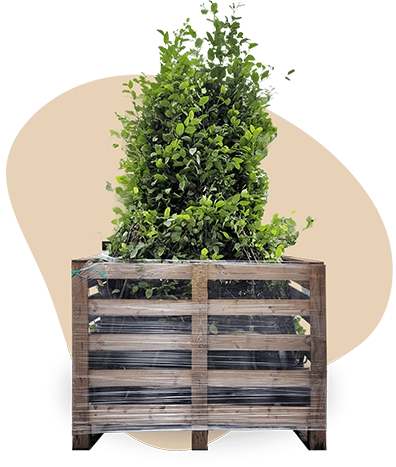
Cercis chinensis 'Avondale' shrub 150-175 cm C55 | Chinese redbud
The Chinese redbud shrub, Chinese redbud (Cercis chinensis) ‘Avondale’, is the shrub form of this flowering plant. It has an upright, bushy habit and creates a full shrub silhouette rather than a raised tree crown. At maturity, it reaches approximately 4 m in height. In spring, the bare branches carry rich pink to purplish-pink flowers, giving the plant a strong seasonal presence. These flowers are followed by decorative green, heart-shaped leaves. As a deciduous shrub, it changes with the seasons and does not remain in leaf throughout the year. The dense, bushy outline keeps the flowers and foliage at shrub level, so it works well as a visible garden feature without the open space created by a standard form. It is a low-maintenance choice for a sheltered part of a UK garden, where it can receive full sun or partial shade. Choose a position protected from strong winds and late frosts. The plant also produces fruit, which is a normal botanical feature but not a reason to grow it. As a member of the cercis genus, this ‘Avondale’ shrub combines a distinctive spring display with a clear, upright garden presence.
Key features of Chinese redbud (Cercis chinensis)
- Profuse spring flowering: This is a highly ornamental, spring-flowering shrub with abundant pink to purplish-pink flowers in April and May. The rich colour stands out clearly before and around the emergence of the green foliage.
- Decorative foliage: After flowering, the plant develops green, heart-shaped leaves. The broad deciduous leaves add a fresh, leafy appearance and help maintain the full shrub silhouette through the growing season.
- Light and position: Grow the Chinese redbud shrub in full sun or partial shade. A sheltered position is preferable in UK gardens, especially where late frosts or strong winds are common. The shrub is sensitive to strong winds, so an exposed site should be avoided.
- Soil and drainage: It prefers well-drained, humus-rich, lime-containing soil that remains lightly moist. The soil should not be compacted, persistently wet or waterlogged. Reliable drainage is especially important in the mild, often wet UK climate.
- Growth and garden category: The ‘Avondale’ shrub has an upright, bushy growth habit and reaches approximately 4 m at maturity. Its branching creates a complete shrub form, with flowers and foliage carried through the plant rather than on a raised standard stem. It is a natural choice for flowering shrubs.
Uses of the Chinese redbud shrub in the garden
- Specimen planting: Use this upright, bushy shrub as a specimen in a border or as a solitary feature. Its full outline gives the plant visual weight at shrub level, while the spring flowers provide a clear focal point.
- Small gardens: With an expected mature height of approximately 4 m, the shrub form can suit a small garden where a raised tree crown is not wanted. It creates a defined, leafy presence without relying on a standard or elevated stem.
- Group planting: The Chinese redbud shrub can also be used as part of a group planting. Several compatible shrubs or herbaceous border plants can provide a broader display, provided they prefer sun or partial shade and well-drained, humus-rich soil.
- Hardiness and shelter: It is hardy to approximately -23.3°C to -17.8°C, corresponding to USDA zone 6. In the UK, choose a sheltered position with good drainage and provide protection from late frosts where necessary.
- Seasonal value: Its greatest ornamental value comes from the abundant pink to purplish-pink flowers in spring, followed by green, heart-shaped leaves. The full upright shrub silhouette keeps this seasonal display clearly visible in a border or small garden.
The shrub can be combined with other shrubs and herbaceous border plants that enjoy sun or partial shade and well-drained soil. Its upright, bushy form gives structure to a planting while the spring flowering adds colour at an important point in the garden year. In a suitable sheltered UK position, the Chinese redbud shrub offers a strong flowering specimen with a distinctive full silhouette.