
Currently unable to ship orders to the United Kingdom

Updated on 10 September 2025

We regret to inform you that we are currently unable to ship orders to the United Kingdom. We anticipate being able to resume shipments at the beginning of 2026.

Wisteria sinensis

Chinese wisteria
Temporarily sold out

Size: Total height including pot
  • Temporarily sold out
Helpdesk
Benefits according to our specialist
  • Fast grower
  • Beautiful flower clusters
  • Perfect climber for against wall or pergola

Description Wisteria sinensis | Chinese wisteria

Wisteria sinensis, commonly known as Chinese Wisteria, is a captivating climber known for its enchanting cascades of purple flowers. Native to China, this plant graces many gardens with its vigorous growth and stunning floral displays in the spring. The Purple Wisteria is a sight to behold and a favorite among gardeners who wish to add a touch of exotic elegance to their landscapes.

Key Features

  • Wisteria is notable for its ability to thrive in a variety of soil types, provided they are well-drained.
  • The voluminous blooms of Purple Wisteria appear in May and June, presenting a breathtaking display of purple-blue flowers that are a feast for the eyes.
  • This species is fully hardy, enduring winter temperatures down to -20.5°C (USDA zone 6b), showing resilience in a range of climates.
  • The foliage of the Chinese Wisteria emerges a vibrant green in the spring, maintaining its lush appearance throughout the summer.
  • While it does not bear fruit, the plant's ornamental value is undisputed, with its flowers being the main attraction.

Tips

  • To enjoy the full splendor of Wisteria sinensis, plant it in a location that receives full sun.
  • Regular watering will keep this deciduous climber healthy, especially during dry spells. However, avoid overwatering as it may not be drought-resistant.
  • Pruning twice per year, once in the summer and once in the winter, will encourage more prolific blooming and manage growth.
  • Propagation of the Chinese Wisteria can be achieved through various methods like layering, softwood cuttings, hardwood cuttings, and grafting, allowing gardeners to expand their collection or share with others.
  • Always provide a sturdy support structure for Wisteria sinensis to climb, as its stems can become quite heavy with age.

Wisteria sinensis

Planting & care Wisteria sinensis (Chinese wisteria)

We would like to provide some tips on how to plant and care for a Standing trees. By following these tips, you can be sure to enjoy your Standing trees for a long time.

Ideal placement of a Wisteria sinensis (Chinese wisteria)

Wisteria sinensis prospers best when planted in a location that receives full sun, as this exposure encourages prolific flowering. This species is quite adaptable to various soil types, provided they are {S. well-drained soils}. It is imperative to offer this plant ample sunlight to ensure the full development of its striking purple blooms in the spring. While the Wisteria can tolerate some light shade, its flowering potential is maximized in sun-drenched settings, making it an excellent choice for a standout solitary display in spacious gardens.

How do I plant a Wisteria sinensis (Chinese wisteria)?

Planting Wisteria sinensis requires a sunny location with well-drained soil to flourish. When planting, ensure the hole is twice as wide as the root ball and of equal depth. Position the plant carefully, backfilling with soil and watering thoroughly to settle the roots. It is crucial to provide a sturdy structure for support, as this species will climb vigorously. Regular watering at intervals is essential, especially during dry spells, to encourage strong growth and abundant flowering in the spring. Adequate space is vital for its widespread growth habit, allowing for a striking display of its purple-blue blossoms.

Pruning a Wisteria sinensis (Chinese wisteria)

Pruning is vital for Wisteria sinensis to maintain its stunning floral display. This species requires cutting back twice a year. The first pruning should occur in late winter before growth commences, cutting back the previous year's growth to two or three buds. The second pruning is done in midsummer, where you should trim back the new growth leaving just a few leaves on each shoot. This rigorous pruning regime not only helps to control the size of the plant but also encourages the development of short, flowering spurs that produce blooms in spring.

Watering a Wisteria sinensis (Chinese wisteria)

To maintain the vigor and floral abundance of Wisteria sinensis, consistent watering is essential, particularly during growth periods in spring and summer. Watering should be done at regular intervals, ensuring that the soil remains moist but well-drained. During the establishment phase, after planting or repotting, vigilant hydration is critical to support the development of a robust root system. Once established, this species can tolerate occasional dry spells but should not be left to endure prolonged periods without moisture, as it is not drought resistant. In the heat of summer, an increased frequency of watering may be necessary to sustain its lush foliage and prolific blooms.

Fertilising a Wisteria sinensis (Chinese wisteria)

For the vigorous and enchanting blooms of Wisteria sinensis, it's essential to provide adequate nutrients through fertilization. Commence fertilizing early in the spring, as growth emerges, and again in mid-summer to support the plant's energy needs during its flowering phase. A balanced, granular fertilizer rich in phosphorus can promote robust blooms; apply according to the manufacturer's guidelines, ensuring even distribution around the base of the plant.

In regions with fertile soil, it may only be necessary to fertilize once annually. However, in poorer soils, more frequent feeding may be required. Avoid over-fertilizing, as this can lead to excessive foliage growth at the expense of flowers. Regular watering after applying fertilizer will help dissolve nutrients, allowing them to be absorbed by the plant's root system more effectively.

The characteristics of a Wisteria sinensis (Chinese wisteria)

Cultivated in a pot, Wisteria sinensis requires a sturdy support structure to accommodate its vigorous twining vines. This species is renowned for its longevity, often gracing structures for decades with its cascades of purple flowers. To enhance blooming, apply phosphorus-rich fertilizer in spring and consider root pruning every couple of years to prevent the plant from becoming root-bound and to stimulate flower production. These practices ensure the impressive display of blooms for which Wisteria sinensis is celebrated.

Wisteria sinensis

Frequently Asked Questions Wisteria sinensis (Chinese wisteria)

Which soil type is most suitable for the Wisteria sinensis?

Wisteria sinensis can thrive in a variety of soil types, but it particularly favors well-drained soil. Ensuring proper drainage will contribute to the overall health and vigor of the plant.

What is the ideal positioning for the Wisteria sinensis?

The ideal location for Wisteria sinensis is in a spot where it can receive abundant sunlight. This plant thrives best in a sunny environment, which promotes healthy growth and prolific flowering.

What is the flowering colour of the Wisteria sinensis?

The blossoms of Wisteria sinensis display a delightful purple-blue hue, adding a captivating touch to the plant's appearance.

Is the Wisteria sinensis hardy?

Yes, Wisteria sinensis is considered to be winter hardy. It can endure temperatures as low as -17.8°C to -20.5°C, placing it within the USDA's 6b hardiness zone. This indicates that Wisteria sinensis is well-equipped to thrive in regions with typical winter conditions and can withstand moderately cold temperatures.

Is the Wisteria sinensis evergreen?

Wisteria sinensis is not evergreen. The plant is deciduous, which means it sheds its leaves in the autumn and regrows them in the spring.

What is the growth strength of the Wisteria sinensis?

Wisteria sinensis is a plant known for its gradual growth, taking between 10 and 20 years to reach its full height. This suggests a patient and steady progression towards its ultimate stature.

Is Wisteria sinensis poisonous?

Attention: This plant may contain toxic substances. Ingestion or contact with its sap may pose health risks, especially for children and pets such as cats and dogs. We recommend keeping the plant out of reach of children and animals and wearing gloves when repotting or pruning. In case of exposure, contact a doctor or veterinarian if necessary. This information is intended as a general safety warning.

Packaged with love, for you! Our plant packaging

At Heijnen Plants, we value strong packaging just as much as strong plants. That’s why we use sustainable, water-resistant packaging made from rPET plastic: a lightweight, fully recyclable material that has already had a second life. These packages protect the plants during transport from damage and dehydration.

Learn more
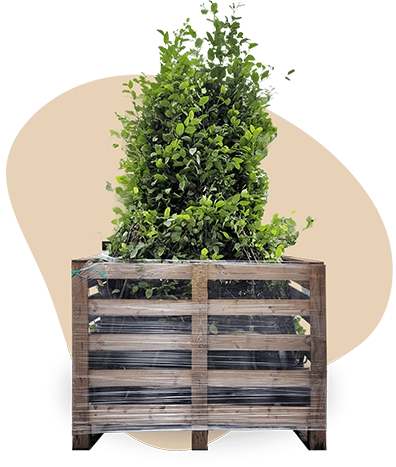
Pallet
Hedge plants, trees, large plants and grass

If you have ordered large-sized plants or trees, we deliver them on sealed pallets and place them around your house or driveway. The pallets are sturdy and provide optimal protection for large-sized plants.
Verpakkingen
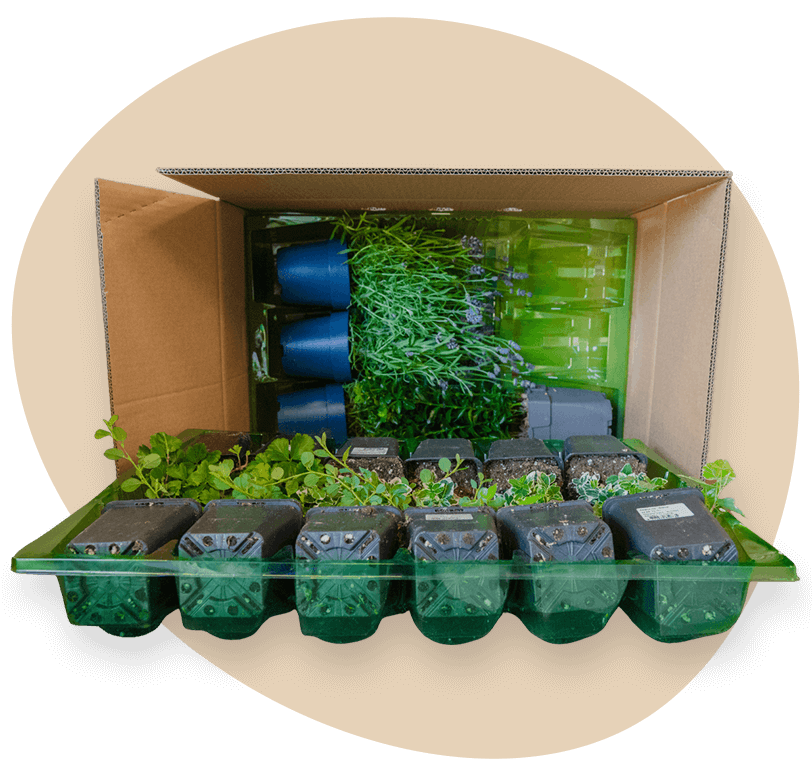
Small to medium-sized plants

We deliver small or medium-sized plants in boxes. The size of the box depends on the size of the plant. We always make sure that the plant has enough space but still stands firmly in the box, so it cannot be damaged during transport.

The ideal variety for you

Buy Wisteria sinensis

Embrace the enchanting charm of Wisteria sinensis, a plant renowned for its cascading clusters of fragrant, violet-blue flowers. This climber adds a touch of splendor to any garden, effortlessly transforming arbors and walls into stunning floral displays. Its robust growth and perennial beauty make it an unrivaled choice for garden enthusiasts.

Personal advice from
our specialists?
We are happy to help you!
Helpdesk