Description
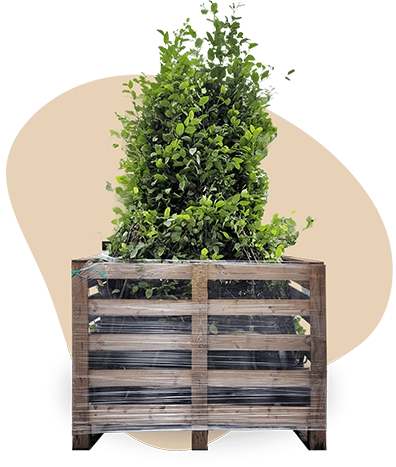
Hydrangea anomala subsp. petiolaris staked 100-125 cm C13 | Climbing hydrangea
A standard climbing hydrangea brings the familiar climbing hydrangea into the garden in a raised, trained form. Hydrangea anomala subsp. Petiolaris is supplied as a standard form rather than as a conventional climbing plant growing directly over a wall or support. This elevated presentation gives the plant a distinctive silhouette and a stronger garden presence. Its natural habit is still climbing and spreading, with self-clinging growth and green, deciduous foliage. In summer, it produces white flowers, followed later by decorative autumn colour. The listed potential mature size is approximately 1000 cm, although this refers to the plant’s possible mature growth and not to the standard stem itself. The plant is not evergreen, so its seasonal changes remain part of its ornamental value. It is especially suited to a partially shaded or shaded position, where the raised display can add interest without relying on a sunny setting. The self-clinging habit is one of its useful strengths, while the standard presentation makes it visually different from an ordinary ground-level climber. As part of the hydrangea genus, it offers a distinctive way to enjoy the character of a climbing hydrangea in a UK garden.
Key features of the climbing hydrangea (Hydrangea anomala subsp. Petiolaris) in standard form
- Flowering: The flowering is rich and noticeable, with white flowers appearing in June and July. The raised presentation places the summer display at a more prominent level in the garden.
- Foliage: The foliage is green and deciduous. It remains part of the plant’s seasonal display before developing decorative autumn colour later in the year.
- Position and soil: Choose partial shade to shade. The soil should be humus-rich, acidic to neutral, well drained and lightly moist. Reliable moisture is useful, but waterlogged ground should be avoided. Good air-filled soil structure supports drainage and helps prevent stagnant conditions around the roots.
- Growth and form: Initial development is slow, followed by climbing and spreading growth. Although it retains the natural habit of a self-clinging climbing hydrangea, the trained standard form gives the foliage and flowers a stronger focal presence than an ordinary ground-level climber. It is a suitable choice for a shade climbing plant selection.
Uses of the standard climbing hydrangea in the garden
- Garden use: Use this standard climbing hydrangea as a distinctive accent near a wall, fence or pergola. It can also add structure to a woodland-edge setting. The plant does not need to be described as an ordinary climber spreading directly over one support; its elevated presentation is central to its visual effect.
- Height and structure: The raised display adds vertical interest and creates a clear focal point. This can give more immediate visual impact than a conventional ground-level climber, especially in partial shade or shade.
- Seasonal interest: White flowers in June and July stand out against the green foliage. Decorative autumn colour extends the ornamental value beyond the flowering period, while the deciduous habit brings a clear seasonal rhythm to the garden.
- Hardiness and combinations: The supplied hardiness indication is approximately -34.4°C to -12.2°C, corresponding to USDA zones 4–8. Local exposure and soil conditions still matter, particularly in the generally mild and often wet UK climate. Combine it with shade-tolerant perennials, ferns or other woodland-style planting where suitable, without suggesting that these companion groups are supplied with the plant.
The standard climbing hydrangea combines a distinctive elevated garden presence with shade tolerance, white summer flowers and seasonal foliage interest.