Description
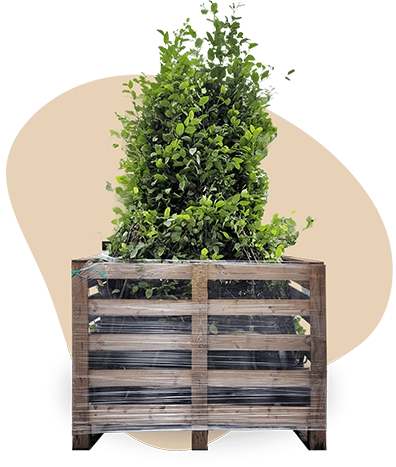
Corylus avellana 'Contorta' standard tree 150 cm trunk C10 | Corkscrew hazel on stem
Corkscrew hazel on stem brings the distinctive character of Corylus avellana 'Contorta' into a compact, raised form. Also known as contorted hazel, it has an upright and compact habit, with the crown lifted above a clear stem. This makes the twisted branches easy to see and gives the plant a strong feature quality in a UK garden. The name ‘Contorta’ refers to the contorted, corkscrew-like branches that form its main ornamental appeal. The green leaves appear during the growing season, while yellow flowers provide early seasonal interest in January and February. As a deciduous broadleaved shrub, it loses its leaves in winter. This open winter crown allows the unusual branches to remain clearly visible when the garden has less colour and structure. The plant reaches an average mature height of approximately 250 cm. Fruiting can occur, but it is often limited. Generally low maintenance, this on-stem form is suitable for a pot, a patio, a border or a sheltered garden position. It belongs to the corylus genus and offers a compact alternative to a naturally grown shrub, with a raised silhouette that works well as a feature plant.
Key features of corkscrew hazel on stem (Corylus avellana 'Contorta')
- Early yellow flowers: Yellow flowers appear in January and February. The flowering is modest, but it adds useful seasonal interest early in the year, before the green foliage develops fully.
- Green deciduous foliage: The plant carries green foliage during the growing season. It is deciduous, so the leaves fall in winter and leave the contorted branches open and easy to appreciate.
- Aspect and garden position: Choose full sun or partial shade. A sheltered position is recommended, especially in typical wet UK winters, so the raised crown has a protected setting.
- Soil and drainage: Use rich, humus-rich, well-drained and lightly moist soil. Good drainage is important, as is an open soil structure that does not remain heavy and waterlogged.
- Compact on-stem structure: The growth is upright, compact and contorted rather than broad or spreading. The raised crown sits above the stem, making this form visually distinct from a naturally grown shrub and giving the twisting branches greater presence.
- Suitable for containers: Its compact silhouette makes it suitable for pots and containers, including use on a patio. It is also a useful choice for a Container plant collection where its form can be clearly seen.
Uses of corkscrew hazel on stem in the garden
- Feature plant: Use it as a solitary feature in a sheltered garden position, where the raised crown can be viewed from different angles. The compact upright shape creates a clear focal point without the broad footprint of a naturally grown shrub.
- Patio or pot display: The on-stem form works well in a pot on a patio. It adds height and structure to a smaller outdoor space while keeping the contorted branches above the container and easy to notice.
- Border structure: Place it in a mixed border as a raised, compact feature plant. It adds vertical interest without taking up the same ground space as a low, spreading shrub, making it practical for smaller borders.
- Winter interest: The strongest ornamental value is the conspicuous contorted branching. In winter, the deciduous crown is open, so the twisting branches provide clear structure and a distinctive silhouette.
- Hardy garden choice: It is hardy to approximately -28.9°C to -23.3°C, corresponding to USDA zone 4. A suitable position and well-drained soil remain important, particularly in the wet conditions that can occur during UK winters.
- Plant combinations: Combine it with lower perennials, ornamental grasses or evergreen garden plants. Choose companions that leave the contorted branches visible rather than hiding the raised crown.
This on-stem form is especially suited to gardeners who want the distinctive winter character of a corkscrew hazel in a compact feature plant for a patio, pot, border or solitary position.