Description
Hedera helix 60-80 cm C2 | English ivy
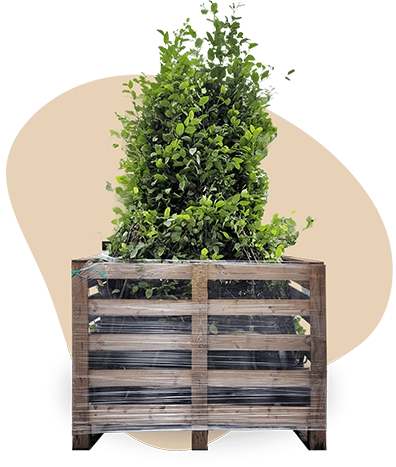
Stake-trained English ivy, Hedera helix gestokt, brings the familiar evergreen character of English ivy into a more upright and organised form. English ivy is naturally a climbing and spreading plant, but the supporting stake guides this growth into a defined presentation. This gives the plant a clearer vertical shape than untrained ivy and makes it well suited to pots and containers in UK gardens. Its green leaves remain evergreen, providing reliable foliage through the seasons. The plant can grow in full sun, partial shade or shade, provided the soil is well drained and lightly moist. Flowering is not its main feature, but it can produce modest greenish-yellow flowers in September and October. Berries may also develop, and these are poisonous. As a low-maintenance climber, it offers useful evergreen structure without demanding attention. The supported form is especially helpful where a more upright plant is preferred, rather than a trailing or spreading display. As part of the hedera range, this stake-trained English ivy combines the recognised qualities of Common ivy with a more structured garden presence.
Key features of English ivy (Hedera helix gestokt)
- Evergreen foliage: The plant has green evergreen leaves that keep their colour throughout the year. The foliage is the main ornamental feature, while the flowers are modest and secondary.
- Flowering period: Greenish-yellow flowers can appear in September and October. This late flowering adds seasonal interest, although flowering is not the main reason to choose this plant.
- Aspect and soil: This ivy suits full sun, partial shade or shade in a UK garden. Choose soil that is humus-rich, well drained and lightly moist. Good drainage is important, especially in containers where excess water can remain around the roots.
- Growth and trained form: Ivy can grow vigorously and may spread strongly, so its position should be considered carefully. The stake supports its natural climbing and spreading habit, creating a more upright and defined silhouette than untrained ivy. This makes the plant useful as an evergreen plant for a pot or garden setting.
- Safety: The berries are poisonous and should not be consumed. This is worth noting when choosing a position in the garden.
Uses of stake-trained English ivy in the garden
- Containers and pots: The supported upright presentation makes this English ivy suitable for a pot, container or terrace setting. It adds height and visual order where ordinary climbing or spreading growth would look less defined.
- Garden structure: Use the stake-trained form as a structured evergreen accent in a border or beside a fence. It can also be used for climbing purposes, ground cover or fence planting, while the support keeps the plant’s presentation more upright.
- Shade planting: English ivy suits full sun, partial shade and shade. Its green evergreen foliage can be combined with shade-tolerant or partial-shade plants in containers, borders or a wider shade planting.
- Hardiness: This is a hardy ivy plant, listed as hardy to -28.9°C and suitable for USDA zones 5–10. This gives it a useful place in many UK garden settings, including sheltered positions with well-drained soil.
- Evergreen accent: The main ornamental value lies in the green foliage held in a supported, upright structure. The form adds vertical interest and a defined accent while remaining suitable for low-maintenance planting.
Stake-trained English ivy is a practical choice when you want the evergreen character of English ivy with a clearer shape. It works well in a pot, beside a fence or in a shaded garden area where hardy foliage can provide structure through the year.