Description
Hedera helix 'Thorndale' 60-80 cm C2 | English ivy
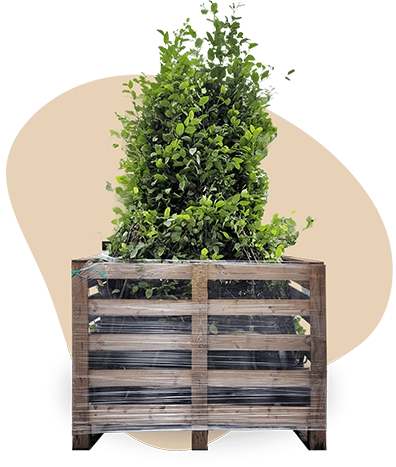
Standard English ivy is a raised, compact form of English ivy, also known as Common ivy, with the botanical name Hedera helix 'Thorndale'. This trained standard-form plant has its foliage carried above the container or ground level, creating a clear focal silhouette rather than the usual low-growing or climbing presentation. Its dark green leaves remain evergreen throughout the year, giving the plant lasting structure in a UK garden. The growth is still attaching and spreading, so the plant retains the character of a climbing plant while the raised stem gives it a more defined shape. The trained form can reach an approximate mature height of 1000 cm as a plant, although this figure should not be read as the height of the retail specimen. No exact mature width is provided. Flowering is modest, with greenish-yellow flowers appearing in September and October. The flowers are not the main feature, but they add seasonal interest late in the year. This English ivy is low maintenance and can tolerate sun, partial shade and shade. It also produces berries, which are poisonous. As a member of the hedera genus, it combines the familiar evergreen character of ivy with the raised structure of a standard plant.
Key features of English ivy (Hedera helix 'Thorndale')
- Evergreen foliage: The dark green leaves stay on the plant throughout the year. Their colour gives the raised crown a steady, leafy appearance and provides structure during every season.
- Modest flowering: Greenish-yellow flowers appear in September and October. Flowering is not the main ornamental feature of this standard ivy plant, but it brings a small amount of late-season interest.
- Site and soil: The plant is suitable for full sun, partial shade and shade. It grows in all soil types, with a preference for humus-rich, well-drained and lightly moist soil. Good drainage and an open soil structure are important, especially in the wet UK climate.
- Raised and vigorous growth: The standard form carries evergreen foliage above the container or ground level, creating a compact elevated silhouette. The plant can grow vigorously and spread strongly, while a sheltered position is sensible where a container or raised form may be exposed. It is also suitable around paved areas and fits well within the range of evergreen climbing plants.
- Berries: Berries develop after flowering. They are poisonous, so the plant should be positioned with this feature in mind, particularly in areas used by children or pets.
Uses of standard English ivy in the garden
- Container and patio use: Standard English ivy works well as a container plant on a patio, near an entrance or in a sheltered garden position. The raised stem lifts the foliage into view and creates more visual height than a conventional ground-level ivy plant.
- Climbing and wall planting: Hedera helix 'Thorndale' remains a climbing plant with attaching and spreading growth. It can be used with a climbing support, for wall planting, as groundcover or in a planted area. In its standard presentation, the evergreen crown adds an elevated accent while retaining the plant’s natural growth character.
- Hardiness and aspect: The plant is hardy to approximately -28.9°C to -23.3°C, corresponding to USDA zone 5. This indicates strong hardiness for many UK gardens, although exposed containers can still experience more difficult winter conditions. Its tolerance of shade and partial shade makes it useful where brighter planting is less suitable.
- Plant combinations: Combine this raised ivy with shade-tolerant evergreen or seasonal planting that prefers similar well-drained, humus-rich and lightly moist conditions. Suitable categories include container plants, shade-tolerant perennials, groundcover plants and climbing supports.
- Ornamental value: The main attraction is the dark green evergreen foliage carried in a raised standard silhouette. It gives structure and height throughout the year and offers a low-maintenance focal point for shaded or partly shaded spaces. The form is especially useful where ordinary ground-level ivy would be less visually distinct.
This standard-form English ivy is particularly useful when an evergreen raised accent is wanted in a UK garden or container.