Description
Ficus carica 'Brown Turkey' shrub 80 cm C5 | Fig tree
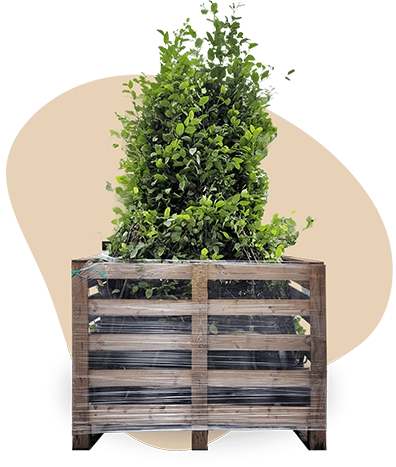
The Brown Turkey fig shrub is Ficus carica 'Brown Turkey', a Fig tree supplied in a broad, bushy shrub form. Unlike a raised standard tree, this form develops from lower branches and creates a fuller, more grounded garden silhouette. Its growth is upright, bushy and spreading, with a substantial presence that works well as a feature plant. The green leaves are broad and deeply lobed, giving the plant a distinctive and decorative appearance through the growing season. This is a deciduous shrub, so it does not remain in leaf all year. The flowers are green and inconspicuous, while the plant also has a fruiting habit that adds further garden interest. At maturity, it can reach approximately 4 metres in height. No reliable mature width is specified, but the spreading habit gives it a strong presence in the garden. A sunny, sheltered position suits this Fig tree best, with protection from cold winds in UK gardens. The shrub form can be used in a border, on a patio or in a large container, provided it has suitable conditions. It is a manageable garden shrub for those who want distinctive foliage, a full outline and the character of a Common fig. As a member of the ficus genus, it brings a clear Mediterranean-style feel to a productive or ornamental planting scheme.
Key features of the Fig tree (Ficus carica 'Brown Turkey')
- Growth and form: This Brown Turkey fig shrub has an upright, bushy and spreading habit. Its lower branching creates a broad shrub silhouette rather than the raised shape of a standard tree. It can reach approximately 4 metres at maturity.
- Leaves and flowering: The green leaves are decorative and deeply lobed. Green flowers appear from May to August, but they are inconspicuous and are not the main ornamental feature. The plant is deciduous and does not keep its leaves through winter.
- Position and soil: Choose full sun in a sheltered part of the garden. The soil should be well drained, humus-rich and lime-rich, with an open structure around the roots. It should not remain waterlogged, as free drainage is important for this shrub.
- Patio suitability: The full shrub form works well on a sunny, sheltered patio or terrace when grown in a container. It provides a more substantial, grounded appearance than a raised tree form and can also be used as a feature in a border.
- Garden category: With its fruiting habit and strong shrub structure, it fits naturally among fruit plants. It also offers ornamental value through its green, lobed foliage and broad outline.
Uses of the Brown Turkey fig shrub in the garden
- Feature planting: Use the Brown Turkey fig shrub as a feature plant in a sunny border or a sheltered part of a fruit or kitchen garden. Its upright, bushy and spreading growth gives the planting a full, lower and more grounded focal point.
- Patio or terrace container: The shrub form is suitable for a large container on a sunny patio or terrace. Its broad outline gives outdoor spaces a clear structural plant without relying on the raised shape of a standard tree.
- Winter conditions: The supplied hardiness information is approximately -15 to -18°C, corresponding to USDA zone 7. In the UK, choose a sheltered position and protect the plant from cold winds, as the plant is frost sensitive.
- Plant combinations: Combine it with other sun-loving plants that prefer well-drained soil. It can also sit well within drought-tolerant or Mediterranean-style planting, provided the position remains sunny, sheltered and free draining.
- Ornamental value: The main visual interest comes from the decorative green, lobed foliage, the full shrub silhouette and the fruiting habit. Together, these features give the plant value in both ornamental and productive garden settings.
The Brown Turkey fig shrub is a strong choice for a sunny, sheltered UK garden or patio where its full form, distinctive foliage and fruiting habit can be appreciated. Its lower branching and spreading shape make it especially useful when a fuller feature plant is preferred over a raised tree form.