Description
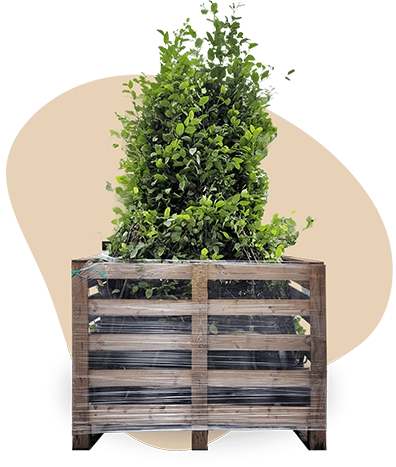
Ficus carica half-standard 120 cm trunk C10 | Common fig
A half-standard common fig tree brings a clear tree shape and Mediterranean character to a UK garden. This is Ficus carica, the Common fig, also commonly called a Fig tree, supplied in its half-standard form. The raised trunk supports an elevated crown, creating an open and recognisable tree silhouette. Its growth is upright and spreading, rather than forming a low bush or a multi-stem shape. At maturity, it can reach approximately 4 metres. The green, decorative lobed leaves add strong foliage interest during the growing season. Green flowers are recorded in May and June, although they are not the main ornamental feature. The tree is deciduous, so it loses its leaves for part of the year. It also produces edible fruits, which are an important horticultural feature of this plant. The spreading crown gives the tree presence without losing the visual clarity created by the raised trunk. This makes it suitable as a focal point where the form of the tree can be seen clearly. For the best effect, choose a sunny, sheltered position that suits its Mediterranean appearance while allowing for its frost-sensitive nature. It can be used in a garden border, on a patio or in a container, depending on the available space and growing conditions.
Key features of the Common fig (Ficus carica) half-standard tree
- Distinctive half-standard structure: The raised trunk and elevated crown create a clear tree silhouette. Upright and spreading growth gives the canopy a broad, characterful outline while keeping the lower part of the plant visually open.
- Green foliage and seasonal flowering: The leaves are green and decorative, with a lobed shape that adds texture to the crown. Green flowers are recorded in May and June, but flowering is not the main ornamental feature of this Common fig.
- Sunny, sheltered position: Full sun is required, preferably in a sheltered part of the garden. This is especially relevant in the UK, where exposed locations and wet winter conditions can be more challenging for a frost-sensitive tree.
- Well-drained soil: The tree suits humus-rich and chalky soil that remains lightly moist but well drained. Good drainage and an open soil structure are important, so avoid soil that stays persistently waterlogged. This makes it a useful choice among Mediterranean plants for a suitable UK position.
Uses of the half-standard common fig tree in the garden
- Specimen tree: Use this half-standard common fig tree as a specimen in a sunny, sheltered border. The raised trunk and elevated crown add height and create a strong focal point without the lower, fuller shape of a bush form.
- Patio or container feature: The clear trunk and spreading crown give structure to a patio or container display. Its Mediterranean appearance works well where the tree can be viewed from different angles and protected from exposed conditions.
- Hardiness: The supplied hardiness range is approximately -12°C to -15°C, corresponding to USDA zones 7b–10. Protection may still be needed in colder or exposed UK locations, particularly where frost and wet winter conditions are more severe.
- Kitchen garden use: In a sunny, sheltered kitchen garden, the tree combines practical garden value with a strong ornamental form. Its green lobed leaves, elevated crown and edible fruits provide interest through the growing season.
- Plant combinations: Combine it with low-growing perennials, ornamental grasses or other sun-loving patio and Mediterranean-style plants. Choose planting that also suits a sunny, well-drained position, so the surrounding design matches the tree’s conditions.
The elevated crown, spreading outline and green lobed leaves give this half-standard Common fig a strong sense of form. It adds vertical structure to a border, patio or container while keeping a light, open space beneath the crown. As a characterful specimen, it suits a sunny, sheltered UK garden, patio or container.