Description
Chaenomeles speciosa 'Nivalis' Staked | Flowering quince
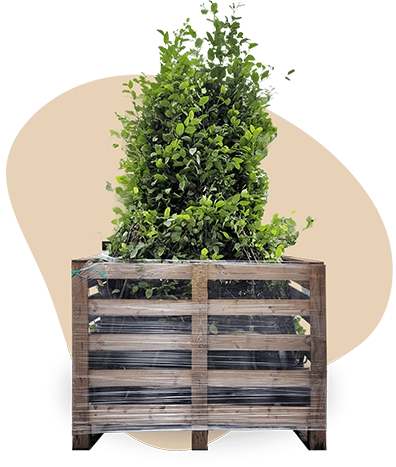
Standard flowering quince brings the distinctive character of flowering quince into a clear, elevated form. Chaenomeles speciosa 'Nivalis' is the cultivar, supplied as a standard-trained plant with a clear stem and raised crown. This gives it a more structured silhouette than the naturally bushy form, with upright and bushy growth beneath the crown. It reaches an approximate height of 200 cm, making it a strong focal plant for a UK garden, patio or border. The green leaves are deciduous, so the plant changes with the seasons rather than remaining evergreen. White flowers appear early in spring, adding colour when many garden shrubs are only just coming into growth. Thorny branches give the plant a distinct structure, while the ornamental fruits extend its seasonal interest. The standard form also allows lower planting around the stem to remain visible, instead of being covered by a low, wide shrub. It is suitable for growing in a pot as well as in the open garden. As a flowering quince, this is a generally straightforward ornamental shrub for gardeners who want early flowers, green summer foliage and a raised presence. It is a hardy choice for a range of UK garden settings.
Key features of flowering quince (Chaenomeles speciosa 'Nivalis') in standard form
- Distinctive early flowering: White flowers open in March and April. This early display gives the standard flowering quince clear seasonal interest before many other shrubs are fully in flower.
- Deciduous green foliage: The plant carries green leaves during the growing season and is deciduous. The foliage forms a fresh backdrop for the white flowers and ornamental fruits.
- Light and soil: Choose full sun or partial shade. It grows in all soil types when the ground is well drained and humus-rich. Good drainage is especially important in the UK’s mild, wet climate, so avoid waterlogged conditions.
- Structured growth: The standard-trained form has a clear stem and raised crown, creating an upright silhouette above surrounding planting. Its branches are thorny, adding to the character of this white flowering quince standard.
- Hardy garden shrub: This plant is hardy to approximately -29°C to -12°C and is listed for USDA zones 4 to 8. It can be used in a white flowering shrubs collection where its raised form can be appreciated.
Uses of standard flowering quince in the garden
- Border focal plant: Use the standard flowering quince as a specimen in a border or as a raised focal plant in group planting. The clear stem lifts the crown above nearby planting and gives the border extra structure.
- Suitable for pots: This flowering quince is also suitable for growing in a pot. Its elevated crown creates a defined feature on a patio, where the form can be viewed from different angles without taking up the visual space of a low, bushy shrub.
- Seasonal interest: The early white flowers in March and April are followed by green deciduous foliage and ornamental fruits. Together, these features give the plant interest across more than one season.
- Hardiness: Chaenomeles speciosa 'Nivalis' is hardy to approximately -29°C to -12°C and is listed as USDA zones 4 to 8. This makes the standard-trained form suitable for many UK gardens, including those with a mild, wet climate.
- Plant combinations: Combine it with lower border plants, perennials or compact shrubs. These partners can fill the space around the stem while leaving the raised crown and early white flowers visible.
The elevated silhouette is the main garden benefit of this standard-trained flowering quince. It adds height and a clear vertical structure while occupying less visual space at ground level than a low, bushy form. The white spring flowers stand out above lower planting, while the green foliage and ornamental fruits continue the display later in the year. In a border, specimen position or patio pot, it is a practical choice for adding early colour and structured height.