Description
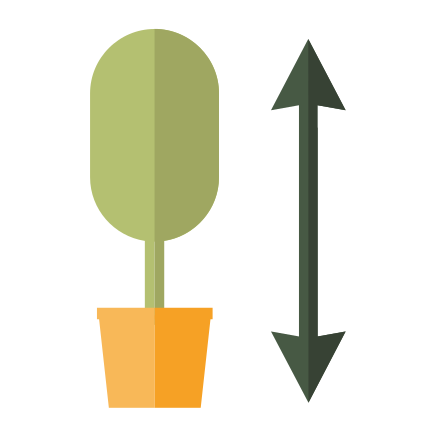
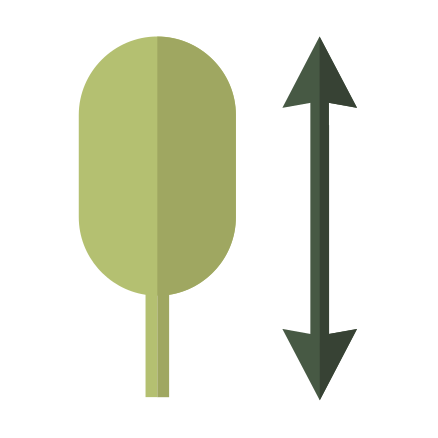
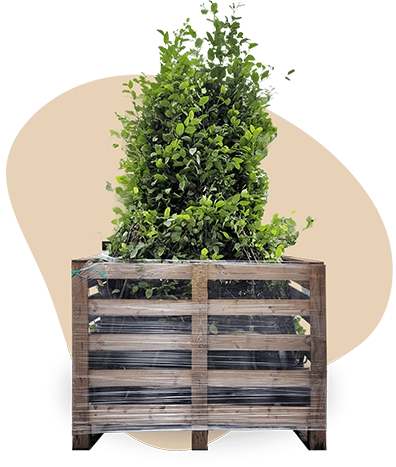
Chaenomeles superba 'Crimson and Gold' standard 70 cm C2 | Japanese quince
Standard Japanese quince Chaenomeles superba 'Crimson and Gold' is Japanese quince, also known in the UK as flowering quince. This plant is supplied in a standard-trained form, with the shrub grown on a clear stem and its flowering growth carried above it. The result is an upright, bushy crown with a raised silhouette, rather than a low plant spreading from ground level. Green, deciduous leaves provide a fresh backdrop for the red flowers that appear early in the season. Golden-yellow fruits may follow the flowering period. They are hard and sour and are presented here as an ornamental feature only. The branches are thorny, adding to the plant’s clear structural character. With a mature height of approximately 150 cm, this standard Japanese quince brings its crown into view above a border, patio or container. Its elevated shape makes it easy to appreciate as a feature plant in a UK garden, especially where the stem and flowering canopy can be seen clearly. It is a shrub with a formal, vertical presence, while still retaining the full, bushy appearance associated with the cultivar name ‘Crimson and Gold’.
Key features of Japanese quince (Chaenomeles superba 'Crimson and Gold')
- This plant is highly floriferous and particularly noticeable for its early spring display. Red flowers are produced from March to May, bringing strong colour at the start of the gardening season.
- The foliage is green and deciduous. The leaves form a simple green background for the flowers and the later golden-yellow fruits, while the plant’s thorny branches add definition to the raised crown.
- The standard-trained structure is a key feature. A clear stem lifts the bushy flowering crown above ground level, giving the plant a more formal and vertical presence than a plant grown from the base.
- Choose full sun or partial shade. The soil should be well drained, humus-rich and lightly moist. All soil types are suitable when these conditions are met, but persistently waterlogged ground should be avoided.
- This standard flowering quince can be used as part of a selection of red-flowering shrubs. Its raised form adds a different outline from plants that flower close to the ground.
Uses of standard Japanese quince in the garden
- Use this standard Japanese quince as a specimen plant, in a border, in group planting or as a pot plant. It can also be used as a hedge element where appropriate. The raised crown keeps the flowers visible and gives the plant a clear focal role.
- The plant is hardy to approximately -28.8°C to -23.3°C, USDA zone 5. This makes it suitable for gardens where winter temperatures can vary, including many UK garden settings.
- Combine it with lower-growing perennials, grasses or other shrubs that leave the elevated crown visible. These broad plant groups can frame the clear stem without hiding the flowering canopy.
- Its main ornamental value comes from the combination of red early flowers, green foliage and golden-yellow fruits. The standard form adds height and structure without relying on a broad, low shrub habit.
- A clear stem and raised canopy provide vertical interest in a border or on a patio. This compact, upright presence can help create a more structured garden silhouette.
Full sun or partial shade and well-drained, humus-rich soil suit this plant in a UK garden. The standard Japanese quince is a useful choice for gardeners seeking early colour and a structured ornamental feature.