Description
Forsythia intermedia 'Week End' half-standard 120 cm C10 | Forsythia
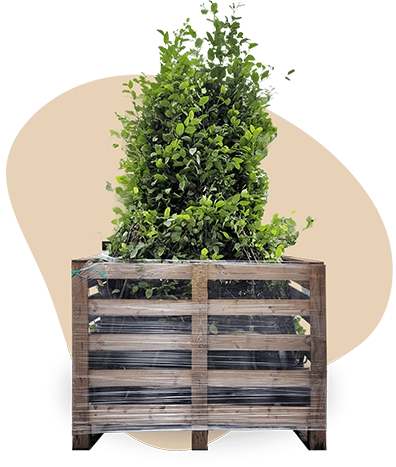
A half-standard Forsythia brings the early spring colour of Forsythia intermedia ‘Week End’ into a clear, raised form. Also known as Forsythia or Golden bells, this shrub is supplied as a half-standard plant, with a raised stem and an elevated crown. This gives it a distinct silhouette compared with a bush-grown Forsythia. The upright, bushy crown is held above ground level, adding height and structure while leaving visual space beneath it. At maturity, the plant reaches approximately 200 cm. No exact mature width is supplied. Bright yellow flowers appear in early spring and create a strong seasonal display. The green leaves are deciduous, so the plant loses its leaves in winter. In summer, the foliage supports the rounded, bushy outline of the crown. The half-standard shape makes this plant easy to use as a feature in a UK border, patio setting or as a specimen plant. It can also bring height to a planting area without filling the same low space as a shrub grown from ground level. This Forsythia is generally low-maintenance and is not fruit-bearing. For related plants, explore forsythia.
Key features of Forsythia (Forsythia intermedia ‘Week End’) in half-standard form
- Early spring flowering: Bright yellow flowers open in March and April. The flowering is prominent and gives the garden a clear seasonal display at the start of the growing year.
- Raised growth form: The half-standard form has a clear stem with the crown held above ground level. Its upright, bushy habit creates a raised, compact focal silhouette rather than the low, spreading outline of a bush-grown Forsythia.
- Deciduous green foliage: The plant carries green leaves during the growing season. It is deciduous and loses its leaves in winter, so the raised crown has a changing appearance through the seasons.
- Position and soil: Choose full sun or partial shade. It suits all soil types when the soil is well drained, humus-rich and lightly moist. Good drainage is important in UK gardens, and persistently waterlogged conditions should be avoided.
- Garden performance: The shrub is upright and bushy, while its final visual effect is shaped by the half-standard training. A reasonably sheltered position is appropriate where a garden is exposed. It is generally low-maintenance and fits well among yellow-flowering shrubs.
Uses for a half-standard Forsythia in the garden
- Specimen feature: Use this half-standard Forsythia as a specimen plant where the raised crown can be seen clearly. The elevated form creates a distinct focal point in a border or open planting area.
- Structure in borders and groups: The clear stem and upright crown add vertical structure to a border or group planting. It provides seasonal colour without occupying the same low, bushy space as a shrub planted from ground level.
- Patio container: The raised silhouette can also suit a suitable patio container. In a container display, the crown provides height and structure, while the space beneath it helps keep the composition open.
- Hardy garden plant: The plant is hardy to approximately -23.3°C to -17.8°C and is rated as USDA zone 6. Local exposure and garden conditions still matter, especially in a wet or exposed UK position.
- Combinations: Combine it with lower spring plants or with evergreen and perennial planting that leaves the yellow flowers and raised crown visible. Border plants, low planting and container displays can all benefit from this elevated form.
The main ornamental value is the striking bright yellow flowering in March and April, enhanced by the added height of the half-standard crown. It works well where seasonal colour, vertical structure and visual space beneath the crown are wanted together. This half-standard Forsythia is particularly useful in a UK garden that needs early yellow blossom with an elevated structural accent.