Description
Actinidia arguta 'Bayern' 70 cm C2 | Hardy kiwi
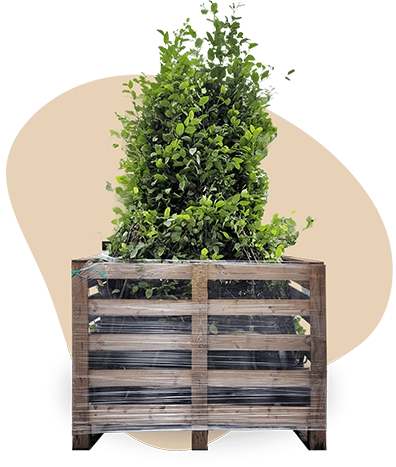
Stake-trained hardy kiwi is Actinidia arguta ‘Bayern’, a hardy kiwi also known as baby kiwi or grape kiwi. This plant is supplied in a stake-trained form, giving it an upright and supported starting structure. The stake creates a clear initial silhouette, but it does not change the plant’s natural habit. This is a vigorous, deciduous climber that will need a suitable trellis, pergola or similar climbing support as it develops. With the right support, it can reach up to approximately 6 metres in height. No exact mature width is supplied, as the final spread depends on the support and growing space available. The broad green leaves create a fresh leafy appearance during the growing season. White flowers appear in May and June, followed by edible fruits. In autumn, the leaves fall, so this hardy kiwi is not evergreen. Regular pruning is necessary to manage its vigorous growth, meaning it is not a fully low-maintenance plant. Choose a position in full sun or partial shade, preferably in a sheltered part of the garden. The climbing plants category offers further options for gardens that need a plant with height, foliage and a supported climbing habit.
Key features of the stake-trained hardy kiwi (Actinidia arguta ‘Bayern’)
- White flowers and green foliage: The white flowers in May and June provide a seasonal ornamental feature without dominating the plant. During the growing season, the plant carries broad green leaves that give the supported framework a full, leafy look. In winter, it is deciduous and has no leaves.
- Aspect and soil: Plant this hardy kiwi in full sun or partial shade. A sheltered position is useful in a UK garden, especially where strong winds can affect climbing plants and their supports. The soil should be humus-rich, fertile, well drained and slightly moist. It must retain some moisture while allowing excess water to drain away, with an open structure around the roots.
- Vigorous climbing growth: The plant grows strongly and needs a suitable climbing support, such as a trellis or pergola. Regular pruning is necessary to keep its growth manageable. The stake-trained presentation gives the young plant an upright, supported structure, but its mature habit remains that of a vigorous climber that spreads across the support.
Uses of the stake-trained hardy kiwi in the garden
- Structured garden use: The stake-trained hardy kiwi offers a clear starting point for training against a trellis, pergola, wall or other suitable climbing support. It can bring height and leafy structure to a fruit garden or form a distinctive solitary feature. The plant is not a self-supporting tree, so a strong support remains important as it grows.
- Suitable for containers: This form can also be considered for a patio pot where there is enough space and a suitable climbing support is available. The upright start helps create a more organised silhouette in a smaller garden setting. The eventual vigorous growth still needs room to develop and regular pruning to keep the plant in shape.
- Hardiness for UK gardens: The plant has an approximate winter hardiness of -30°C to -12°C and is suited to USDA zones 4–8. This should not be treated as a guarantee for every UK microclimate. A sheltered position is useful, particularly in areas where late spring frosts may occur while the plant is flowering.
- Combining with other planting: Combine it with compatible ornamental or fruiting climbers and with structural garden plants around the base, provided that the planting does not restrict the required support. The green foliage, white flowers and later climbing framework can add changing seasonal interest without relying on an evergreen form.
The stake-trained hardy kiwi gives gardeners a structured way to introduce Actinidia arguta ‘Bayern’ into a garden. Its upright beginning is useful beside a pergola, trellis, wall or patio support, while its later growth provides the strong presence of a vigorous climber. It is a distinctive choice for gardeners seeking a structured climbing plant with ornamental value and fruiting potential.