Description
Carpinus betulus pleached tree 120 cm C45 | Common hornbeam
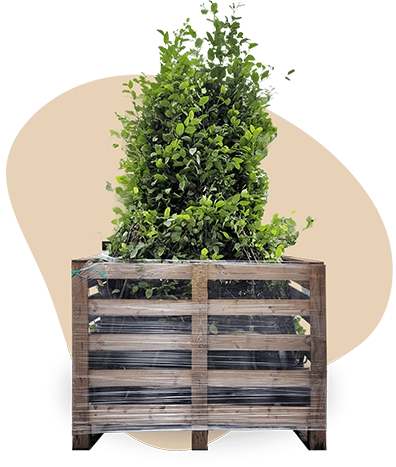
A screen hornbeam is a trained screen tree form of Common hornbeam, Carpinus betulus, supplied with a maintained, upright structure rather than the shape of an ordinary untrained hornbeam. Its screen-like framework creates a defined visual barrier and a clear architectural silhouette in a UK garden. This makes it useful where you want to divide garden areas or add structure along a boundary. The tree has green, deciduous broad leaves, which change to yellow-brown in autumn before falling in winter. Its winter outline is therefore different from its leafy summer appearance. In spring, subtle green to yellow-green flowers appear. The form is upright and screen-shaped, with a maintained appearance that responds to regular pruning. It is not a fully maintenance-free choice, as pruning is needed to retain the defined screen shape. The tree is fruit-bearing, but its value in the garden is mainly its structure, foliage and seasonal interest. As a member of the Carpinus genus, this Common hornbeam offers the familiar character of the species in a prepared screen tree form. It is a considered choice for gardeners seeking a structured boundary or garden division, rather than a naturally growing specimen with an untrained outline.
Key features of Common hornbeam (Carpinus betulus)
- Screen tree form: The defining feature is the maintained screen structure. Its upright silhouette creates a clear vertical garden element and a firm visual boundary. This is a prepared screen tree form, not simply an untrained Common hornbeam.
- Foliage and flowering: The leaves are green during the growing season and turn yellow-brown in autumn. The tree is deciduous and loses its leaves in winter. Subtle green to yellow-green flowers appear in April and May.
- Aspect: This screen-form hornbeam suits full sun or partial shade. In UK gardens, a sheltered position can be useful where the screen structure needs to remain part of a composed garden setting.
- Soil: It is suitable for all soil types, including clay, when the soil is humus-rich, well drained and slightly moist. Good drainage is important, particularly in a mild, wet climate, so avoid soil that remains waterlogged.
- Growth and maintenance: The tree grows with an upright form and responds to pruning. Regular pruning is required to retain the maintained silhouette and the clear screen effect.
- Garden category: Its strong vertical presence makes it a natural choice among standing trees for gardens where structure and screening are important.
Uses of a screen hornbeam in the garden
- Screening and boundaries: Use the screen hornbeam to create a defined garden screen or to give a boundary a more structured appearance. Its prepared framework helps form a clear visual division between different parts of the garden.
- Garden division: The upright screen tree form can separate a seating area, border or garden room without relying only on a solid wall or fence. It adds height and order while keeping the planting design visually connected.
- Specimen value: This form can also stand as a specimen tree where a strong architectural element is wanted. The maintained silhouette, green summer foliage and yellow-brown autumn colour provide interest through several seasons.
- Plant combinations: Combine it with structural shrubs, perennials or ornamental grasses. These planting groups can soften the base of the screen and create a balanced transition between the upright tree form and lower garden planting.
- Hardiness: Common hornbeam is hardy to approximately -28.9°C to -23.3°C, corresponding to USDA zone 4. This makes it suitable for many UK garden conditions, including gardens with clay soil, full sun or partial shade.
- Ongoing form: The tree is deciduous, so its screen has a leafy summer appearance and a more open winter outline. Regular pruning is needed to retain the screen shape and its architectural role.
This screen hornbeam is a strong choice for gardeners seeking a hardy, structured garden screen with seasonal foliage interest.