Description
Hedera helix 'Glacier' on stake 60-80 cm C2 | English ivy
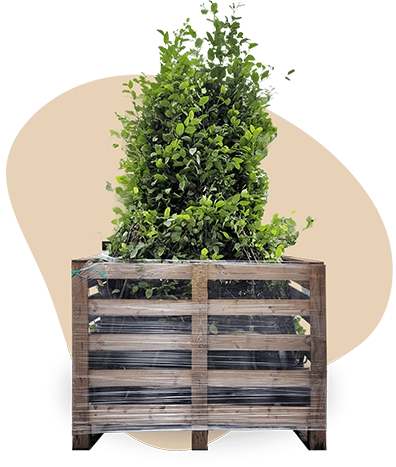
Standard English ivy is Hedera helix 'Glacier' presented in the standard ivy form. Also known as English ivy, Variegated ivy or Common ivy, it has evergreen foliage in green, white and grey. The leaves are displayed above a stem, creating an elevated and structured silhouette rather than only a trailing or climbing display. This gives the plant a clear vertical presence in a pot, garden border or other suitable position. The cultivar itself keeps its climbing and spreading growth habit, so it can develop strongly when left unmanaged. Its foliage brings year-round colour contrast, while the standard form gives that foliage a raised and more controlled visual structure. Hedera helix 'Glacier' is a climbing plant with a low-maintenance character and is well suited to pot displays. It can also add interest near a wall or fence, where its natural growth habit can be appreciated while the stem-trained presentation remains the main feature. As part of the hedera genus, this plant combines the familiar character of English ivy with a distinct standard form for a more formal garden effect.
Key features of English ivy (Hedera helix 'Glacier')
- The foliage is evergreen and variegated in green, white and grey. This makes the plant useful for colour contrast throughout the year. In the standard form, the foliage is held above the stem for a raised display.
- Flowering is a secondary feature rather than the main ornamental value. Greenish-yellow flowers appear in September and October, adding seasonal interest late in the year.
- Choose full sun, partial shade or shade. The plant can suit different aspects in a UK garden, although the appearance of the variegated foliage may vary with the position.
- Use humus-rich, well-drained and lightly moist soil. Good drainage is important, particularly in the mild, wet UK climate, and waterlogged conditions should be avoided. It is suitable for all soil types when these conditions are met.
- Hedera helix 'Glacier' is capable of strong growth. The standard ivy presentation gives it a more controlled visual structure, but the cultivar retains its climbing and spreading habit and can grow strongly if not managed.
- Its evergreen foliage and climbing character make it a natural choice for evergreen climbing plants. The stem-trained form, however, offers a more defined vertical accent than ordinary trailing ivy.
Uses of standard English ivy in the garden
- Use standard English ivy in a pot as a raised accent or structured container display. The foliage sits above the stem, helping to create height and visual order where a trailing plant might otherwise spread across the ground.
- It can also be used as a climbing plant, for ground cover, or for planting by a wall or fence. These uses reflect the cultivar’s natural climbing and spreading habit, while the standard form keeps the main foliage display elevated.
- The plant is winter hardy to approximately -28.9°C to -23.3°C according to the supplied data. This supports its use in a UK garden, subject to choosing a suitable position and avoiding persistently waterlogged soil.
- Combine it with plants that complement green, white and grey foliage. It works naturally alongside broad categories such as pots, evergreen planting, border plants and structural garden planting.
- Its strongest ornamental value is the evergreen variegated foliage shown above a stem. This gives year-round colour contrast, a tidy elevated focal effect and vertical interest in a pot or suitable garden position.
- Keep its vigorous growth within bounds. If left unmanaged, ivy can overrun walls or trees, so its strong climbing and spreading habit should be considered when selecting its place in the garden.
Standard English ivy is a strong choice for adding evergreen variegation and an elevated focal point to a pot or suitable garden position. The stem-trained form creates a more structured silhouette than ordinary trailing or climbing ivy, while the green, white and grey foliage remains the main feature throughout the year. Its vigorous growth should be kept within bounds so that the plant remains suited to its chosen display.