Description
Hedera helix 'Woerner' Staked | Ivy
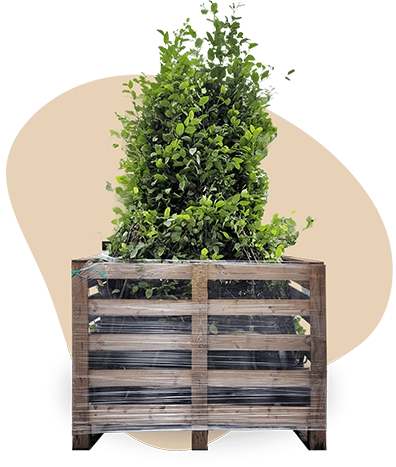
Standard ivy is Hedera helix 'Woerner' supplied in standard form, giving this evergreen plant a raised visual presence in the garden. Also known as English ivy or Common ivy, it has green evergreen foliage that is displayed above ground level rather than only spreading across the soil or climbing from a low position. This creates a distinct elevated silhouette and adds year-round structure to UK gardens, including suitable shaded areas. The plant remains a vigorous climber with a trailing and spreading growth habit, so it can develop beyond its original standard outline if it is not kept under control. Its potential mature growth can reach approximately 10 m, although this does not describe the initial height of the supplied standard presentation. Green to yellow-green flowers may appear in September and October, but the foliage is the main ornamental feature. The plant is generally hardy and low maintenance, while its strong growth may need occasional control. It can also produce berries, which are toxic if ingested. As a member of hedera, this particular 'Woerner' form combines the familiar character of ivy with a raised and more prominent garden presentation.
Key features of Ivy (Hedera helix 'Woerner')
- Evergreen foliage: The green leaves provide a lasting garden feature throughout the year. The raised stem places the foliage higher than standard ground-covering or climbing ivy, making it easier to use as a visual focal point.
- Flowering period: Flowering is not the main ornamental feature, as the evergreen foliage gives the strongest year-round effect. Green to yellow-green flowers can appear in September and October.
- Aspect and soil: This standard ivy is suitable for full sun, partial shade or shade. It prefers humus-rich, well-drained and slightly moist soil with a good open structure, rather than soil that remains waterlogged.
- Growth and form: The plant is trained on a raised stem, but it does not form a naturally compact tree crown. It keeps the climbing, trailing and spreading habits of ivy and can expand strongly if not kept under control.
- Garden safety: The plant can produce berries, and these berries are toxic if ingested. Its evergreen character, shade tolerance and generally low-maintenance nature make it a practical choice for evergreen plants in a UK garden.
Uses of standard ivy in the garden
- Raised garden accent: Standard ivy gives the green foliage a higher focal position, adding vertical interest without removing the plant’s natural spreading and climbing character. It can suit a container display, border or mixed planting where its vigorous growth can be accommodated.
- Flexible garden use: The plant can be used as an evergreen container plant, border accent, ground-covering subject or wall-planting subject. In the standard presentation, these uses are viewed differently because the main foliage is lifted above ground level while the underlying ivy can still trail or spread.
- Hardiness: Hedera helix 'Woerner' has a general hardiness indication of approximately -28.9 to -23.3°C, corresponding to USDA zones 5 to 6. This gives a useful guide for UK gardens, although local exposure and microclimate can affect winter conditions.
- Plant combinations: Combine the raised evergreen foliage with lower-growing shade-tolerant or evergreen planting that complements its elevated position. It can work in mixed container displays, borders and structured evergreen planting schemes when companion plants do not compete excessively with its vigorous growth.
- Ornamental value: The main appeal is the combination of green evergreen foliage and the standard presentation. Gardeners may choose this form for a hardy, low-maintenance accent that can perform in full sun, partial shade or shade.
Standard ivy combines evergreen garden structure with an elevated focal effect, while its vigorous growth should be allowed for when positioning it.