Description
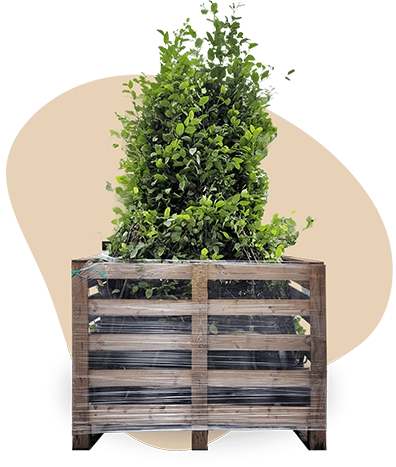
Ilex crenata 'Ellipta Convex' bonsai 150-160 cm C130 | Japanese holly
Japanese holly bonsai Ilex crenata 'Ellipta Convex' brings the character of Japanese holly into a compact, carefully presented ornamental form. Supplied as a bonsai, it has a structured appearance that is clearly different from an untrained Japanese holly shrub or hedge plant. The plant forms a compact, bushy and upright shape, with green evergreen leaves that provide lasting colour throughout the year. Its contained form makes it well suited to pots, patios, balconies and other outdoor container displays in UK gardens. Small white flowers add a seasonal feature in May and June, although the main ornamental value comes from the evergreen foliage and refined bonsai silhouette. This shrub responds well to pruning, which supports its neat, shaped appearance over time. The plant is fruit-bearing, and its berries are toxic if eaten, so it should be positioned with appropriate care. Container growing makes good drainage especially important in the UK climate. As a cultivated form of the genus ilex, this Ilex crenata 'Ellipta Convex' bonsai offers the visual structure of a miniature specimen rather than the open growth of a standard shrub.
Key features of Japanese holly (Ilex crenata 'Ellipta Convex') bonsai
- Evergreen foliage: The bonsai carries green leaves that remain part of its ornamental display throughout the year. The foliage gives the compact form a consistent, structured appearance in a pot or container.
- Flowers and berries: White flowers appear in May and June. They are a seasonal detail rather than the main feature of this Japanese holly bonsai. The plant is fruit-bearing, but its berries are toxic if eaten.
- Growth and form: The bonsai presentation gives this Japanese holly a compact, bushy and upright habit with a deliberately ornamental structure. This distinguishes it from a standard shrub or hedge form, while its growth responds well to pruning.
- Aspect and soil: Position it in full sun or partial shade. Use well-drained, humus-rich soil that is slightly moist and acidic to neutral. The compost should remain lightly moist but drain freely, without compacted or persistently wet conditions.
- Container suitability: This Japanese holly bonsai is suitable for pots and container displays, making it a useful choice for patios and balconies. In container growing, free drainage is particularly important for the plant’s growing conditions.
Uses of Japanese holly bonsai in the garden
- Pot and bonsai display: Use this Japanese holly bonsai in a pot as a solitary ornamental plant. Its compact, upright silhouette creates a contained focal point without the wider presence of an untrained shrub or hedge plant.
- Patios and balconies: The evergreen form suits UK patios, terraces and balconies where a year-round green feature is wanted. Container growing allows the plant to be displayed as a refined accent in a smaller outdoor space.
- Hardiness: The supplied hardiness range is -23.3°C to -17.8°C, corresponding to USDA zones 6 to 8. This information can help with planning, but it does not provide an unsupported guarantee for every UK location or exposed site.
- Combinations: Combine it with container plants, evergreen structure plants and other ornamental patio plants that prefer well-drained, humus-rich, acidic to neutral soil. Keeping similar soil needs together can help create a consistent container display.
- Year-round structure: Green evergreen foliage and the compact bonsai silhouette provide lasting visual structure. The plant gives a smaller garden, patio or balcony a defined ornamental point without relying on seasonal flowering alone.
This evergreen Japanese holly bonsai is a refined choice for a pot, patio or balcony where a compact, structured focal point with year-round green interest is wanted.