Description
Ilex crenata 'Fructu Luteo' bonsai 100-120 cm C110 | Japanese holly bonsai
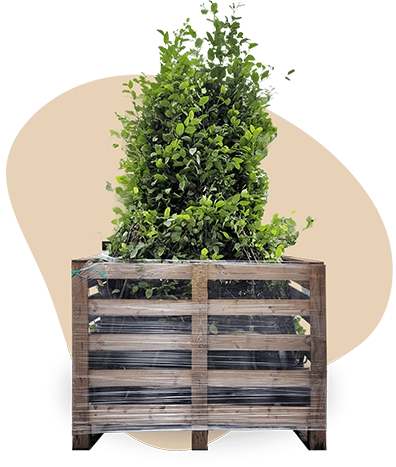
Japanese holly bonsai brings the character of Ilex crenata 'Fructu Luteo' into a compact, shaped form. This bonsai develops a bushy and upright silhouette, making it well suited to display in a container. Its dark green evergreen leaves provide colour throughout the year, while white flowers appear in May and June. Yellow berries may develop, but berry production depends on the plant being female. The flowers and berries add seasonal detail, while the main ornamental value comes from the controlled shape and evergreen foliage. This Japanese holly bonsai is suitable for a pot, patio or balcony, and it can also be used as a specimen display in a suitable UK garden. A sheltered position is sensible where winter conditions are severe. The plant is well suited to shaping and pruning, allowing its compact outline to remain the main visual focus. It belongs to the ilex genus and is specifically the cultivar 'Fructu Luteo' presented in bonsai form. Its evergreen habit and neat, upright structure make it useful where a full-sized shrub would take up too much visual or physical space.
Key features of Japanese holly bonsai (Ilex crenata 'Fructu Luteo')
- Evergreen foliage: The bonsai has dark green evergreen leaves that give the plant a steady presence throughout the year. The foliage supports the shaped outline and keeps the display visually defined outside the flowering season.
- Flowers and berries: Small white flowers appear in May and June. Flowering is a supporting feature rather than the main ornamental value. Yellow berries are possible only when the plant is female.
- Position: Place the Japanese holly bonsai in sun or partial shade. A sheltered position is preferable in exposed UK locations, where severe winter weather may be more challenging.
- Growing medium: Use humus-rich, slightly acidic soil that is slightly moist but well drained. The medium should retain some moisture while remaining open and non-compacted. Avoid persistently waterlogged conditions.
- Form and display: The compact, bushy and upright bonsai structure creates a controlled silhouette in a container. It is suitable for display on a patio or balcony when the container provides good drainage, and fits naturally within a range of container plants.
Uses of Japanese holly bonsai in the garden
- Container specimen: Use this Japanese holly bonsai in a pot as a refined specimen display. Its compact, shaped silhouette gives a clear focal point without the visual scale of a full-sized shrub.
- Patio or balcony: The bonsai is suited to patios and balconies where an evergreen plant is wanted in a container. Its controlled form works well when the plant can be viewed closely and kept as a defined feature.
- Winter hardiness: The supplied hardiness range is approximately -23.3°C to -17.8°C, corresponding to USDA zone 6. Severe UK winters can still be challenging, so a sheltered position is sensible, especially in exposed locations.
- Combining with other plants: Combine it with understated container plants or low-growing border planting that does not hide its compact outline. Compatible potted plants can support the display while leaving the shaped bonsai form clearly visible.
- Ornamental value: The strongest visual effect comes from the shaped compact silhouette, dark green evergreen foliage and possible yellow berries. The plant provides year-round structure and a refined focal point where a larger planting would be too dominant.
This Japanese holly bonsai suits gardeners looking for an evergreen, shaped specimen for a pot, patio or balcony.