Description
Acer palmatum 'Shaina' Standard tree 120 cm C35 | Japanese maple
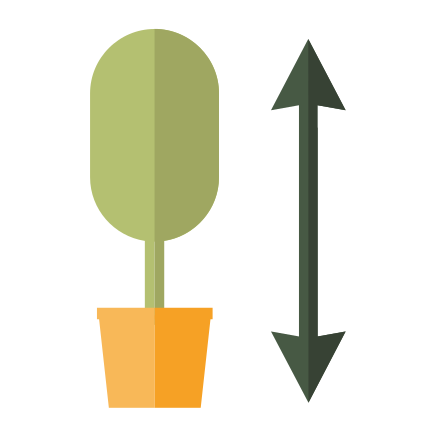
Japanese maple standard tree Acer palmatum 'Shaina' brings a refined, upright shape to the garden. This Japanese maple is presented in a standard tree form, with a raised stem supporting a compact, rounded crown. The elevated crown creates a clear focal point and gives the plant an elegant silhouette, rather than the lower outline of a shrub. It reaches an approximate mature height of 200 cm. Its deciduous foliage develops in dark red, purplish-red and orange-red tones, giving the plant strong colour through the growing season and attractive autumn colour later in the year. The compact, upright growth makes it suitable for a container, patio or balcony, as well as for a carefully chosen position in a Japanese-style garden. Red flowers can appear in April and May, although the foliage and raised crown are the main ornamental features. This plant bears fruit, but its value in the garden comes from its form and foliage. For a suitable botanical category, see Acer. Place the Japanese maple standard tree in a sheltered UK garden position, as its foliage is sensitive to drying out and strong wind.
Key features of Japanese maple (Acer palmatum 'Shaina')
- Distinctive standard tree form: A raised stem carries the compact, rounded crown above ground level. This gives the plant a neat, elegant silhouette and a clear structural presence, making it easy to use as a focal point.
- Colourful deciduous foliage: The foliage is dark red to purplish-red, with orange-red tones also present. No detailed leaf-shape description is assigned here. The foliage is the main ornamental feature, supported by attractive autumn colour.
- Flowers and seasonal interest: Red flowers appear in April and May. Flowering is a secondary feature, while the rich foliage and the elevated crown remain the strongest reasons to choose this Japanese maple.
- Position and soil: Grow in partial shade or sun, preferably in a sheltered position because the plant is sensitive to strong wind. It prefers humus-rich, well-drained soil that remains lightly moist, with an acidic to neutral pH. Good drainage is important, while prolonged dryness and waterlogging should both be avoided. This makes it a suitable choice for standing trees in a suitable container or garden setting.
Uses of a Japanese maple standard tree in the garden
- Specimen plant: The Japanese maple standard tree works well as a specimen plant. Its raised, rounded crown adds height and structure, while the compact growth keeps the overall image refined and suitable for a carefully chosen focal position.
- Patio, balcony and pot use: This form is suitable for a pot on a patio or balcony. The elevated crown remains visible above the container, helping the plant create a strong ornamental silhouette even where garden space is limited.
- Japanese-style planting: The dark red foliage and rounded crown fit naturally into a Japanese-style garden. Use restrained, low-growing planting around it so that the raised stem and crown remain clear and are not visually obscured.
- Hardiness: The supplied hardiness range is -28.9°C to -6.7°C, corresponding to USDA zones 5 to 8. For UK gardens, a sheltered position remains important because the foliage is sensitive to strong wind and drying out.
- Ornamental value: Its strongest appeal comes from the dark red to purplish-red foliage, attractive autumn colour and elegant crown carried above the stem. These features give the plant a calm, structured presence without requiring a wide planting area.
This compact Japanese maple standard tree combines strong red foliage and autumn colour with an elegant raised crown. It provides height, structure and a distinctive focal point in a pot, on a patio, on a balcony or in a Japanese-style garden.