Description
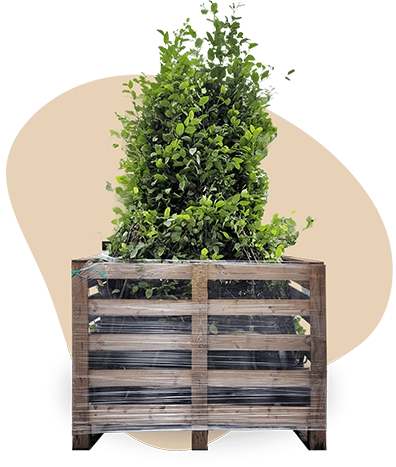
Acer palmatum shrub 300-350 cm C1040 | Japanese maple
This Japanese maple shrub is Acer palmatum, also known as the Japanese maple or Palmate maple. It is supplied in a shrub form, rather than as a standard or another trained form. The plant develops a bushy, upright and spreading habit, creating a fuller garden silhouette with a natural shrub presence. It can reach approximately 5 metres at maturity. Its decorative, hand-shaped leaves bring changing colour through the growing season, with green, red, orange and yellow tones. As a deciduous plant, it is not evergreen, so the foliage changes with the seasons before falling. Conspicuous autumn colour is one of its main ornamental features, especially where red, orange and yellow tones can be seen clearly. Red to purplish-red flowers appear in April and May, although the foliage and autumn display provide the strongest garden appeal. Fruit is also produced, adding another seasonal detail without taking attention away from the leaves. In suitable conditions, this plant is generally straightforward to enjoy. For UK gardens, choose a sheltered position and protect it from drying winds and consistently dry soil. The plant belongs to the acer genus and offers the character expected from a decorative Japanese maple shrub.
Key features of the Japanese maple (Acer palmatum) shrub
- The flowers are a secondary feature, appearing in April and May in red to purplish-red tones. The main ornamental value comes from the hand-shaped foliage and its seasonal colour changes. This gives the shrub interest beyond the flowering period.
- The leaves are decorative and palmate, with green, red, orange and yellow tones across the growing season. In autumn, these colours can become especially noticeable. The plant is deciduous, so it is not suitable where evergreen foliage is required.
- Partial shade or sun can suit this Japanese maple shrub, but a sheltered position is important in UK gardens. Avoid exposed sites with strong winds, as the foliage and structure are sensitive to drying conditions. Protection is also useful during periods when the soil becomes consistently dry.
- Use humus-rich, well-drained and lightly moist soil. The soil may be acidic to neutral and should hold some moisture without becoming waterlogged. Good drainage and an open, well-aerated structure are important, particularly in the mild, wet UK climate.
- The shrub form develops a bushy, upright and spreading structure with a lower, fuller presence than a raised standard silhouette. This makes it suitable for a position where the plant’s natural shape can be seen. It can also be considered alongside other shrubs for a sheltered, partially shaded garden setting.
Uses of the Japanese maple shrub in the garden
- Use this Japanese maple shrub as a specimen plant in a border or as a focal point in a Japanese-style garden. Its fuller, spreading outline gives a stronger shrub presence than a raised tree form. This helps define the shape and character of a planting area.
- The plant is also suitable for a pot or patio setting. As a Japanese maple for pots, it can bring hand-shaped foliage and seasonal colour to a carefully chosen outdoor space. A sheltered position remains helpful, especially on exposed UK patios and terraces.
- The supplied hardiness indication is approximately -28.9°C to -12.2°C, corresponding to USDA zones 5 to 8. This should be treated as a general indication rather than a guarantee for every UK garden. In exposed areas, a sheltered position can help protect the shrub from strong winds and drying conditions.
- Combine it with shade-tolerant or woodland-style planting where suitable. Ferns, woodland perennials, ornamental grasses and shade-tolerant ground cover can provide a useful setting. Plants with contrasting foliage can also help highlight the palmate leaves and changing colours.
- The strongest ornamental value comes from the hand-shaped leaves, the shift between green, red, orange and yellow tones, and the striking autumn display. Red to purplish-red flowers in spring add a secondary detail. Fruit is produced, but the foliage remains the main garden feature.
With its bushy, upright and spreading structure, this Japanese maple shrub creates a fuller focal silhouette for a sheltered UK garden, border, patio or container display. It is a decorative choice where seasonal foliage and autumn colour are valued.