Description
Acer palmatum 'Stella Rossa' Standard tree 100 cm C180 | Japanese maple
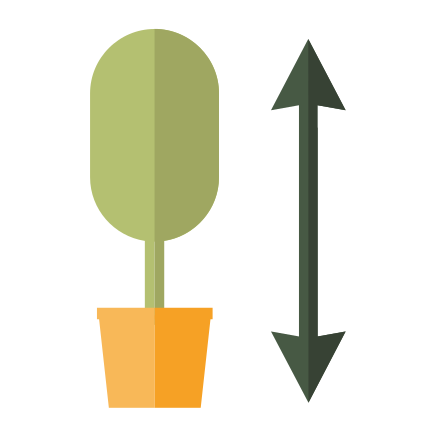
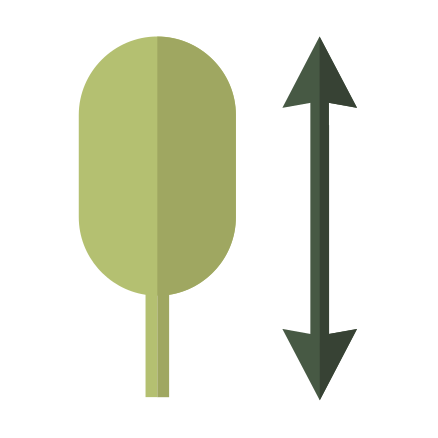
Japanese maple standard Acer palmatum 'Stella Rossa' brings the character of a red Japanese maple into a raised, clearly defined form. This named cultivar is supplied in standard form, with an upright stem carrying a compact, rounded crown. The result is an ornamental silhouette above ground level rather than a low shrub habit. It reaches an average mature height of approximately 200 cm, although the final size is not guaranteed. The deciduous, broadleaved tree is grown for its ornamental leaves, which can show red, green and orange colour variation. Its spectacular autumn colour adds seasonal interest, while the compact and upright growth suits containers, patios, balconies and smaller UK gardens. Red flowers may appear in May, but flowering is a minor feature compared with the foliage and autumn display. As a deciduous plant, it loses its leaves in winter and is not evergreen. The defined stem keeps the crown visually separate from surrounding planting, making it useful as a specimen or raised focal point. It is sensitive to drying out and harsh winds, so a sheltered position is important, especially in exposed gardens. For related plants, explore acer selections for further garden use.
Key features of Japanese maple (Acer palmatum 'Stella Rossa')
- Foliage and flowers: The ornamental leaves may show red, green and orange tones, giving this Japanese maple changing seasonal colour. Red flowers can appear in May, but flowering is a minor ornamental feature compared with the foliage and spectacular autumn colour.
- Growth and form: This standard-form Japanese maple has compact, upright growth and an approximate average mature height of 200 cm. An upright stem supports a compact, rounded crown, creating a raised and clearly defined silhouette rather than a shrub-like base.
- Aspect and wind: Choose partial shade or sun in a sheltered position. The plant is sensitive to strong or exposed winds and to excessive drying, so protection is especially useful in UK gardens where conditions can change quickly.
- Soil and moisture: It prefers humus-rich, open and well-drained soil that is acidic to neutral and lightly moist. Keep moisture consistent without allowing the soil to become waterlogged, and avoid compacted ground. Its container suitability also makes it a useful choice for terrace and balcony plants.
Uses of a Japanese maple standard in the garden
- Specimen planting: Use this Japanese maple standard as a specimen in a small garden or as a focal point near a patio. The defined stem lifts the compact crown above nearby planting, adding vertical structure without creating a low, spreading base.
- Containers and patios: The compact form is suitable for a container on a patio or balcony. The raised crown remains visually distinct from the pot and surrounding space, allowing the red foliage and seasonal autumn colour to stand out.
- Hardiness: The supplied hardiness range is USDA zones 5–8, approximately -28.9°C to -12.2°C. Local exposure still matters in the UK. A sheltered position remains important because drying winds and strong winds can affect the plant.
- Combinations: Combine it with plants that suit a similar sheltered aspect, humus-rich well-drained soil and light moisture. Compatible shade or partial-shade container and underplanting choices can help frame the raised crown without hiding its clear stem-and-crown structure.
The main garden value of this standard-form Japanese maple lies in the balance between compact size and strong visual structure. Its red, green and orange foliage brings colour, while the rounded crown gives a clear focal point above surrounding planting. This compact standard-form Japanese maple is a strong choice for adding colour and structure to a sheltered patio, balcony or small garden.