Currently unable to ship orders to the United Kingdom

Updated on 7 April 2026

We regret to inform you that we are currently unable to ship orders to the United Kingdom. We apologise for the inconvenience.

Acer palmatum 'Sumi-nagashi' shrub 200-250 cm C70

Japanese maple
Temporarily sold out

  • 200-250cm
    |
    Pot C70
    |
    Temporarily sold out
Helpdesk
Benefits according to our specialist
  • Decorative deeply dissected foliage
  • Striking red spring colour
  • Attractive autumn colour
  • Suitable as a specimen plant
  • Suitable for growing in pots
  • Sensitive to intense midday sun
  • Sensitive to drying out and strong winds

Plant features Acer palmatum 'Sumi-nagashi' shrub 200-250 cm C70

Japanese maple


Description Acer palmatum 'Sumi-nagashi' shrub 200-250 cm C70 | Japanese maple

A Japanese maple shrub such as Acer palmatum 'Sumi-nagashi' brings a full, graceful presence to the garden without the raised crown of a tree. This plant is offered in shrub form, with an upright, bushy and spreading habit that creates a naturally rounded silhouette. It can reach an average mature height of approximately 4 m. The ornamental leaves are deeply dissected and show a changing range of red, green, orange and yellow through the seasons. Red spring colour gives the shrub early interest, while its attractive autumn colour extends its display later in the year. Small red-purple flowers appear in May, but these are a secondary feature compared with the decorative foliage. As a deciduous shrub, it loses its leaves in winter. A sheltered position suits this plant well, especially in a UK garden where strong wind and harsh afternoon sun can affect its appearance. It can be used as a specimen shrub, in a Japanese-style planting or as a container feature on a patio. This shrub form offers a grounded, full outline rather than a raised tree crown. For more plants from the same genus, explore Acer.

Key features of Japanese maple (Acer palmatum 'Sumi-nagashi')

  • Deeply dissected foliage: The leaves are finely divided and highly decorative. Their colour changes through the seasons, moving between red, green, orange and yellow tones. This makes the foliage the main ornamental feature of the plant.
  • Secondary flowering display: Red-purple flowers appear in May. They add a small seasonal detail, although the flowers are not the main reason to grow this Japanese maple shrub.
  • Position and wind protection: Choose partial shade or sun, while protecting the plant from harsh afternoon sun where possible. It is sensitive to strong wind, so a sheltered position is important for UK gardens, patios and container settings.
  • Soil requirements: Use humus-rich, well-drained and lightly moist soil. The soil should remain open enough to prevent waterlogging, while consistent moisture is important. Acidic to neutral soil is suitable, and the soil should not be allowed to dry out.
  • Growth and shrub form: Acer palmatum 'Sumi-nagashi' grows upright, bushy and spreading. The shrub version develops a full, low-to-medium-level silhouette rather than a raised tree crown. It fits naturally within the group of shrubs suited to a sheltered position.

Uses of the Japanese maple shrub in the garden

  • Specimen planting: Use this Japanese maple shrub as a focal point where its deeply dissected foliage can be viewed clearly. Its bushy outline gives a fuller, more grounded accent than a raised tree form. It works well in a Japanese-style garden or as a distinct feature in a suitable sheltered position.
  • Patio and container use: The shrub form is suitable for a patio or container feature. Its upright, spreading growth creates a strong outline without relying on a tall trunk or raised crown. This makes it useful where a seasonal foliage display is wanted at a lower level.
  • Hardiness: The supplied winter hardiness range is approximately -28.9°C to -17.8°C, corresponding to USDA zones 5 to 7. This indicates good cold tolerance, but exposed UK locations can still be challenging. Protection from strong wind remains important, as does a position away from harsh afternoon sun.
  • Seasonal interest: Red spring foliage develops into changing green, orange and yellow tones, followed by attractive autumn colour. The deeply dissected leaves give the shrub texture and detail throughout its growing season. The red-purple flowers in May provide an additional, quieter point of interest.
  • Plant combinations: Combine the shrub with plants that suit partial shade, humus-rich acidic to neutral soil and a sheltered setting. Shade-tolerant perennials, ferns or ornamental grasses may provide suitable companion groups where their soil and moisture needs match. Keep the soil well drained and consistently moist without waterlogging.

This Japanese maple shrub suits gardeners who want seasonal foliage colour and a distinctive specimen for a sheltered garden position, patio or container. Its full shrub silhouette gives the planting a graceful, grounded presence without the visual effect of a raised tree.


Planting & care Acer palmatum 'Sumi-nagashi' shrub 200-250 cm C70 (Japanese maple)

We would like to provide some tips on how to plant and care for a Acer palmatum 'Sumi-nagashi' shrub 200-250 cm C70. By following these tips, you can be sure to enjoy your Japanese maple for a long time.

Ideal placement of a Acer palmatum 'Sumi-nagashi' shrub 200-250 cm C70 (Japanese maple)

Acer palmatum 'Sumi-nagashi' Shrub grows best in partial shade or gentle morning sun, preferably with protection from strong winds and intense afternoon sunlight. Choose a humus-rich, moisture-retentive but well-drained soil that is slightly acidic to neutral. Avoid exposed sites and waterlogged ground, as both drying winds and poor drainage can damage the fine roots and leaves.

How do I plant a Acer palmatum 'Sumi-nagashi' shrub 200-250 cm C70 (Japanese maple)?

Plant in autumn or spring, when the soil is workable and not frozen or waterlogged. Prepare a wide planting hole and improve poor soil with well-rotted organic matter, but do not plant deeper than the original soil level in the container. Water thoroughly after planting and apply a mulch layer around the root area, keeping it clear of the stem; container-grown plants need a large pot with drainage holes and a free-draining, humus-rich compost.

Pruning a Acer palmatum 'Sumi-nagashi' shrub 200-250 cm C70 (Japanese maple)

Little pruning is normally needed, as the natural branching habit is an important part of the plant's appeal. Remove dead, damaged or crossing branches in late summer or early autumn, when the risk of excessive sap bleeding is lower. Light shaping can be carried out at the same time, but avoid hard pruning unless essential because it can spoil the form and encourage weak regrowth.

Watering a Acer palmatum 'Sumi-nagashi' shrub 200-250 cm C70 (Japanese maple)

Water thoroughly after planting and keep the root zone evenly moist during the first growing season. Water during prolonged dry weather, particularly when the plant is young or grown in a container, and check containers regularly during warm periods. Allow excess water to drain away, because constantly wet compost can lead to root problems.

Fertilising a Acer palmatum 'Sumi-nagashi' shrub 200-250 cm C70 (Japanese maple)

Apply a balanced, slow-release fertiliser in spring if the plant is growing in poor soil or a container. A mulch of well-rotted leaf mould or garden compost can help maintain soil structure and provide a gentle supply of nutrients. Avoid excessive nitrogen fertiliser, which can produce soft growth and make the foliage more vulnerable to scorching.

The characteristics of a Acer palmatum 'Sumi-nagashi' shrub 200-250 cm C70 (Japanese maple)

This deciduous Japanese maple is valued for its finely lobed foliage, which develops attractive seasonal colour and often provides strong autumn interest. It works well as a specimen shrub in a sheltered border, courtyard or Japanese-style planting scheme, and can also be grown in a suitable container while young. The delicate leaves can scorch in hot sun or drying wind, so consistent moisture and a sheltered position help maintain the best appearance.

Separating/dividing a Acer palmatum 'Sumi-nagashi' shrub 200-250 cm C70 (Japanese maple)

Dividing is not suitable for Acer palmatum 'Sumi-nagashi' Shrub because it is a woody shrub with a permanent root and branch framework. Propagation is generally carried out by specialist growers using cuttings or grafting rather than by splitting. For the gardener, routine care and careful pruning are more appropriate than attempting to divide the plant.

Frequently Asked Questions Acer palmatum 'Sumi-nagashi' shrub 200-250 cm C70 (Japanese maple)

What will be the height of Acer palmatum 'Sumi-nagashi' shrub 200-250 cm C70?

It commonly develops into a medium-sized shrub of around 3 to 4 metres in height, although final size depends on climate, soil, age and pruning. In a container or a restricted position it will usually remain smaller.

What will be the width of Acer palmatum 'Sumi-nagashi' shrub 200-250 cm C70?

A mature plant can spread roughly 2 to 3 metres, with the exact width depending on its branching habit and growing conditions. Allow enough space for the natural canopy rather than planting it tightly against other shrubs.

Which soil type is most suitable for the Acer palmatum 'Sumi-nagashi' shrub 200-250 cm C70?

It prefers fertile, humus-rich and well-drained soil that retains some moisture without becoming waterlogged. Slightly acidic to neutral soil is suitable, while very alkaline or compacted ground may lead to poor growth and nutrient problems.

What is the ideal positioning for the Acer palmatum 'Sumi-nagashi' shrub 200-250 cm C70?

A sheltered position in partial shade is ideal, although gentle morning sun can help develop good foliage colour. Protect it from strong winds and intense afternoon sun, which can scorch the leaves.

What is the flowering colour of the Acer palmatum 'Sumi-nagashi' shrub 200-250 cm C70?

The small flowers are generally reddish to purple-red, but they are not the main ornamental feature. The foliage and autumn colour provide most of the plant's decorative value.

What is the flowering time of the Acer palmatum 'Sumi-nagashi' shrub 200-250 cm C70?

It usually flowers in spring, around the time the leaves emerge. The flowers are relatively inconspicuous compared with the attractive foliage.

Is the Acer palmatum 'Sumi-nagashi' shrub 200-250 cm C70 hardy?

It is generally hardy in the UK when planted in a sheltered position with well-drained soil. Young plants and specimens in containers are more vulnerable to severe frost, drying winds and sudden temperature changes, so extra protection may be helpful.

Is the Acer palmatum 'Sumi-nagashi' shrub 200-250 cm C70 evergreen?

No, it is deciduous and loses its leaves in autumn. It is valued for its spring and summer foliage, followed by seasonal autumn colour and an attractive bare branch structure in winter.

What is the growth strength of the Acer palmatum 'Sumi-nagashi' shrub 200-250 cm C70?

Its growth rate is usually slow to moderate, especially during establishment. Good moisture, suitable soil and protection from harsh exposure can encourage steadier growth, but it is not generally considered a fast-growing shrub.

What kind of bark does the Acer palmatum 'Sumi-nagashi' shrub 200-250 cm C70 have?

The branches and stems generally have relatively smooth grey-brown bark, with younger growth often showing warmer reddish-brown tones. The bark is attractive but is less prominent than the foliage and branching form.

Is Acer palmatum 'Sumi-nagashi' shrub 200-250 cm C70 poisonous?

Warning: This plant may contain toxic substances. Ingestion of any part of the plant or contact with its sap may pose health risks, particularly to children and pets such as cats and dogs. We recommend keeping the plant out of reach of children and animals and wearing protective gloves when carrying out maintenance work, such as pruning or transplanting. If poisoning is suspected, seek immediate medical or veterinary advice. This information is provided as a general safety notice.

Yes, it can be grown in a large, sturdy container with drainage holes and a moisture-retentive but free-draining compost. Container plants dry out more quickly and need regular watering, occasional feeding and protection for their roots during severe winter weather. Repot or refresh the top layer of compost when the roots become crowded.
Packaged with love, for you! Our plant packaging

At Heijnen Plants, we value strong packaging just as much as strong plants. That’s why we use sustainable, water-resistant packaging made from rPET plastic: a lightweight, fully recyclable material that has already had a second life. These packages protect the plants during transport from damage and dehydration.

Learn more
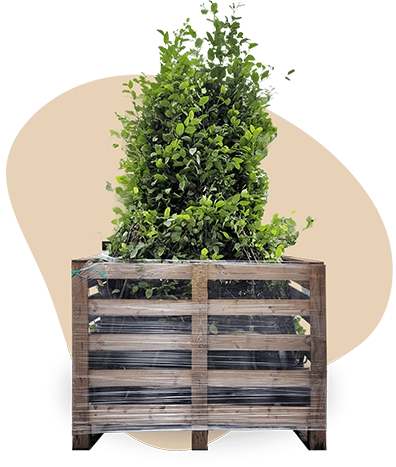
Pallet
Hedge plants, trees, large plants and grass

If you have ordered large-sized plants or trees, we deliver them on sealed pallets and place them around your house or driveway. The pallets are sturdy and provide optimal protection for large-sized plants.

Verpakkingen
Small to medium-sized plants

We deliver small or medium-sized plants in boxes. The size of the box depends on the size of the plant. We always make sure that the plant has enough space but still stands firmly in the box, so it cannot be damaged during transport.

The ideal variety for you

Buy Acer palmatum 'Sumi-nagashi' shrub 200-250 cm C70

Acer palmatum 'Sumi-nagashi' is a striking Japanese maple shrub with finely cut foliage, vivid red spring colour and beautiful autumn tones. Its upright, bushy growth makes it an attractive specimen for a Japanese garden, patio or container. Order this distinctive maple online for your garden.
Personal advice from
our specialists?
We are happy to help you!
Helpdesk