Description
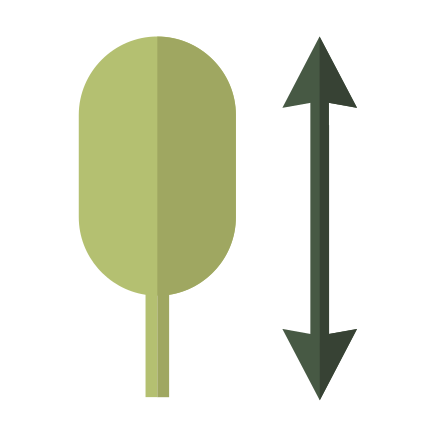
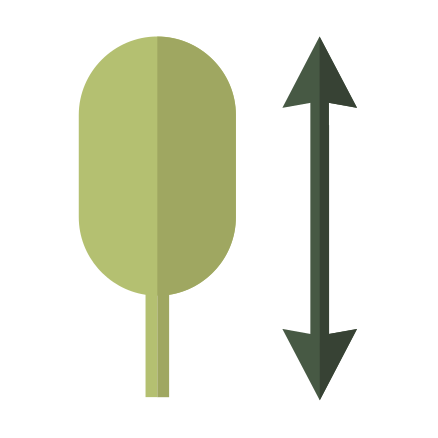
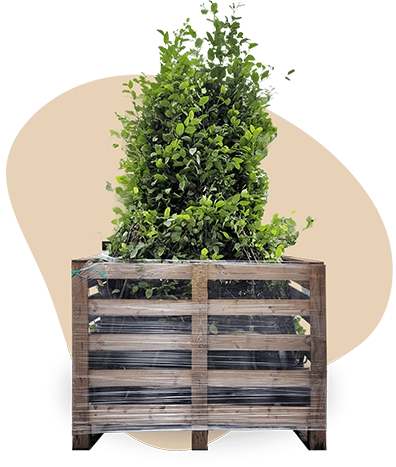
Acer palmatum 'Trompenburg' shrub 200-225 cm C70 | Japanese maple
A Japanese maple shrub brings a strong ornamental shape and rich seasonal colour to the garden. Acer palmatum 'Trompenburg' is supplied as a shrub, with an upright, bushy and vase-shaped habit. This gives it the full silhouette of a substantial ornamental shrub rather than a different trained tree form. It can reach approximately 5 m at maturity, depending on growing conditions. The deciduous foliage is one of its main features, opening in red tones and developing dark red, orange and scarlet-red colour through the seasons. Its autumn colour adds further interest before the leaves fall. Red to purplish-red flowers appear in April and May, although flowering is not the main ornamental feature. Fruit-bearing is recorded, but this plant is valued mainly for its foliage, form and seasonal display. In a UK garden, protection from drying conditions and strong winds is important, as the shrub is sensitive to strong winds. Its upright shape makes it useful as a specimen for a smaller garden, while its shrub form also suits a patio or container. As part of the wider acer group, it offers a distinctive Japanese maple character with a fuller garden presence and clear visual structure.
Key features of Japanese maple (Acer palmatum 'Trompenburg')
- Striking foliage and flowering: The red foliage is the main ornamental feature, with dark red, orange and scarlet-red tones adding seasonal colour. Red to purplish-red flowers appear in April and May, but they remain secondary to the foliage display.
- Position and soil: Choose partial shade or sun, with a sheltered position preferred in the UK, especially where strong winds or drying conditions occur. The shrub performs best in well-drained, humus-rich and lightly moist soil that is acidic to neutral. Good drainage and an open soil structure are important, and the root environment should not be allowed to dry out.
- Shrub growth and form: This Japanese maple shrub develops an upright, bushy and vase-shaped silhouette, reaching approximately 5 m at maturity. Its naturally fuller structure works well as a specimen and can also give a container a strong focal shape. It is a suitable choice within the wider range of shrubs for gardens where foliage form is as important as flower colour.
Uses of the Japanese maple shrub in the garden
- Specimen planting: The full, vase-shaped shrub habit creates a clear ornamental silhouette when used as a specimen. It adds structure without presenting the appearance of a standard or multi-stem tree. This makes it suitable for a smaller UK garden where one plant needs to provide strong visual focus.
- Flexible garden use: Use this Japanese maple shrub in a border, a Japanese-style garden, on a patio or in a container. Its upright, bushy shape gives a fuller and lower garden presence than a trained tree form, while the red foliage adds colour and seasonal structure around the planting area.
- Hardiness and placement: The supplied winter-hardiness range is approximately -23.3°C to -12.2°C, corresponding to USDA zones 5 to 8. This should not be treated as a guarantee for every UK microclimate. A sheltered position remains important, particularly in exposed gardens affected by strong winds or drying conditions.
- Combining with other plants: Pair it with plants that appreciate similar well-drained, humus-rich and lightly moist soil conditions, with an acidic to neutral reaction. The main garden value comes from the contrast between its strong shrub silhouette, red foliage and rich autumn colour.
This Japanese maple shrub is a distinctive choice for adding red foliage and seasonal colour to a sheltered UK garden, patio or container.