Description
Actinidia chinensis 'Hayward' staked 50 cm C2 | Kiwi
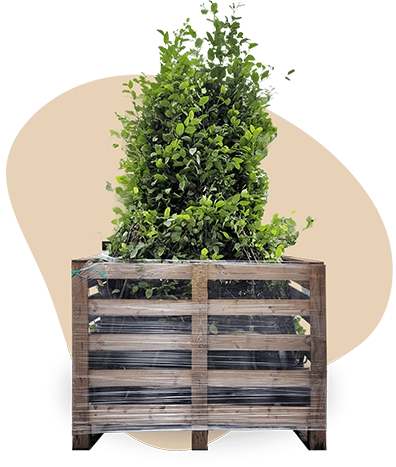
This standard kiwi plant brings the distinctive form of Actinidia chinensis ‘Hayward’ into a clear, elevated garden structure. Also known simply as kiwi, it is supplied as a standard-trained plant rather than as an untrained climber. The raised framework gives the plant a defined silhouette, while the twining shoots develop above the stem and can be guided across a sturdy pergola or trellis. Green leaves form the main canopy, followed by decorative white flowers and edible fruit. As a deciduous climbing plant, it changes with the seasons and offers both foliage and flowering interest. The growth is vigorous, with a mature height of approximately 8 metres when space and support allow. A standard-trained kiwi plant still needs firm support, as the elevated structure does not remove its natural climbing habit. Regular pruning is also required to manage the growth and maintain its shape. In a UK garden, choose a position in sun or partial shade, with fertile, humus-rich and well-drained soil that remains slightly moist. A sheltered site is helpful, especially where late frosts or severe winter conditions may occur. For more plants with climbing growth, explore actinidia.
Key features of Kiwi (Actinidia chinensis ‘Hayward’) in standard form
- White flowers appear in May and June. They add a decorative flowering display to the raised canopy and give the plant interest before the fruit develops.
- The foliage is green and deciduous. The leaves create a fresh canopy above the clear framework, giving this standard-trained kiwi plant a stronger vertical presence than a plant growing without a defined form.
- Vigorous climbing and twining growth is a key feature. The shoots need regular pruning and a strong pergola, trellis or similar support to guide them securely through the garden.
- Position the plant in sun or partial shade, preferably in a sheltered part of the garden. This is useful in the UK, where late frosts and severe winter conditions can affect growth.
- Use fertile, nutrient-rich and humus-rich soil with good drainage. The soil should remain lightly moist, but excess moisture should be able to drain away freely.
- The elevated standard structure creates a defined framework for the climbing canopy. This makes the plant different in appearance from an untrained kiwi plant and gives it a more organised garden silhouette. It is a natural choice for the climbing plants category.
Uses of the standard kiwi plant in the garden
- A standard kiwi plant can be used as a structured feature beside a pergola, trellis or fruit wall. The raised framework lifts the canopy above ground level, while the twining shoots can be guided across strong support.
- It suits a fruit garden where a clear vertical feature is needed. It can also be grown as a structured specimen in a suitable position, provided there is enough room for its vigorous climbing growth and mature height of approximately 8 metres.
- The stated hardiness range is approximately -17.8°C to -12.2°C, equivalent to USDA zone 7. Even so, late frosts and severe winter conditions can still be problematic, so a sheltered position and suitable protection are important where necessary.
- The standard-trained form adds height and a clear focal point without losing the character of a climbing plant. Green foliage, white flowers and the elevated framework work together to create structure through the growing season.
- Combine it with compatible climbing plants or structural garden planting only where there is sufficient room and support. Avoid combinations that compete excessively for the same framework or reduce the space available for the climbing canopy.
- This form combines the ornamental presence of a trained garden feature with vigorous climbing growth and edible fruit production. It is not presented as a self-fertile plant, so a suitable pollination partner should be considered where fruit production is desired.
This standard-trained kiwi is especially suitable for gardeners seeking a structured climbing feature for a pergola, trellis or fruit garden. Allow enough space, provide strong support and choose a suitable pollination partner for the best fit in the garden.