Description
Actinidia deliciosa 'Boskoop' trained 80-100 cm C2 | Kiwi vine
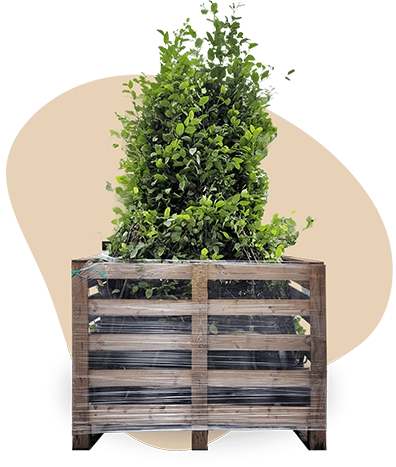
A standard-trained kiwi vine is Actinidia deliciosa 'Boskoop', presented in a carefully structured standard-trained form. Also known as Kiwi vine, this climbing plant has a defined stem structure with trained upper growth, giving it a more deliberate vertical silhouette than a freely growing vine. It develops a climbing and twining habit and can reach approximately 5 metres when mature, depending on its support, pruning and growing conditions. The large, broad green leaves are decorative and create a strong leafy presence during the growing season. As a deciduous plant, it loses its leaves for winter. White flowers appear in May and June, adding seasonal interest to the structured form. The plant also produces edible fruit, but its value in the garden is not limited to this feature. Its form makes it suitable for a pergola, trellis or wall where the stem-led structure can help define the space. Support remains important because this is still a vigorous climbing vine. A sheltered position is advisable in a UK garden, as late frosts and strong winds can cause damage. Actinidia deliciosa 'Boskoop' is not a low-maintenance choice, since suitable support and regular formative maintenance are necessary. This plant belongs to the climbing plants group and is suited to gardeners looking for a fruiting climber with a clear, ornamental structure.
Key features of Kiwi vine (Actinidia deliciosa 'Boskoop')
- Seasonal flowering: White flowers are a notable feature in May and June. They add a clear seasonal moment above the stem structure and contribute to the ornamental value of the plant.
- Decorative foliage: The large, broad leaves are green and have a strong decorative appearance. They form the main leafy display during the growing season, before the deciduous foliage falls in autumn.
- Light and shelter: Choose full sun or partial shade, preferably in a sheltered position. Protection from strong winds is important, as the plant is sensitive to exposed conditions. A protected aspect is also useful in areas where late frosts may occur.
- Soil requirements: The soil should be fertile, humus-rich and well drained, while remaining slightly moist. Avoid waterlogged conditions, but do not allow the plant to lack moisture during the growing season. Good drainage and an open soil structure support the needs of this vigorous climber.
- Growth and structure: The standard-trained form gives the plant a defined stem-led structure and a clear upper silhouette. It remains a strong climber, so suitable support and regular formative maintenance are needed to keep the intended garden shape.
Uses of a standard-trained kiwi vine in the garden
- Feature planting: Use this standard-trained kiwi vine as a feature plant near a pergola, trellis or wall. The defined stem and trained upper growth create a vertical focal point, while the climbing habit continues to bring height and movement to the support.
- Fruit garden: It can form part of a fruit garden where a climbing plant with a more deliberate outline is wanted. The standard-trained structure gives it a clear presence rather than the looser appearance of an untrained vine.
- UK winter conditions: Hardiness is approximately -12.2°C to -6.7°C, corresponding to USDA zone 7. This does not mean the plant is fully protected from winter damage. Late frosts can still cause harm, so a sheltered position away from strong winds is advisable.
- Combining with other plants: Combine it with climbing plants or structural garden plants that tolerate similar sunny or partially shaded conditions. Choose plants suited to fertile, well-drained soil that remains slightly moist, so the planting has compatible growing needs.
- Ornamental value: The main garden appeal comes from the large green leaves, white flowers and structured vertical silhouette. This standard-trained form gives a climbing fruit plant a more space-defining role and can create a strong accent near suitable support.
This standard-trained kiwi vine combines the presence of a structured garden feature with the seasonal interest of a climbing fruit plant.