Description
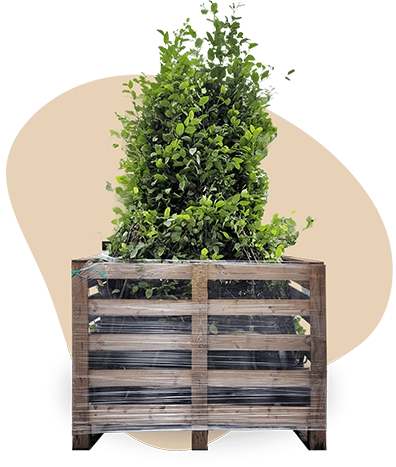
Abies nordmanniana shrub 80-100 cm C25 | Nordmann fir
The Nordmann fir shrub is the supplied shrub form of Abies nordmanniana struik, also known as the Nordmann fir or Caucasian fir. It creates a dense, upright and conical outline, giving the garden a clear vertical shape from an early stage. Unlike a general description of a Nordmann fir as a tree, this product is offered specifically in shrub form for use as a structured garden plant. Its dark green needles remain evergreen throughout the year and provide steady colour in a UK garden. The natural conical growth habit also means that it usually needs little shaping to keep its outline. Yellow-green flowering structures appear in May and June, but these are secondary to the foliage and form. The plant is fruit-bearing according to the product data, although the fruit is not its main ornamental feature. At maturity, it may reach approximately 3000 cm in height, so it needs the space of a large garden and should not be chosen for a restricted setting. A sunny or partially shaded position is suitable, while prolonged drought should be avoided. As a hardy, evergreen conifer with strong specimen value, this shrub form can bring lasting structure to spacious planting designs. It belongs to the genus Abies.
Key features of Nordmann fir (Abies nordmanniana)
- Evergreen foliage: The Nordmann fir has dark green evergreen needles that keep the plant visually present through every season. Their short, flat fir-needle character supports the dense appearance of the supplied shrub form, while the foliage remains more important than the flowering display.
- Flowering period: Yellow-green flowering structures can appear in May and June. Flowering is not the main ornamental feature of this conifer. The year-round needles, upright habit and conical silhouette provide most of its garden value.
- Aspect and shelter: Choose full sun or partial shade. A sheltered position can be helpful in an exposed UK garden, but no specific wind resistance is claimed. Avoid highly exposed sites where the plant may be subject to difficult conditions.
- Soil requirements: It prefers humus-rich, well-drained and slightly moist soil with an acidic to neutral pH. Good drainage and an open soil structure are important. The ground should hold reliable moisture without becoming waterlogged, and prolonged drought should be avoided.
- Growth and form: The shrub form presents a dense, upright and conical evergreen structure. It gives a strong vertical silhouette and clear specimen presence, while its natural shape reduces the need for regular shaping. The plant can become very large, so allow substantial space from the start. This makes it a suitable choice within the conifers category for larger gardens.
Uses of the Nordmann fir shrub in the garden
- Specimen planting: Use the Nordmann fir shrub as a specimen conifer in a large garden. Its dense, upright form draws the eye upwards and creates a firm vertical focal point. The conical outline gives a composed shape without needing a trained or multi-stemmed form.
- Group planting: The shrub form can also be used for group planting where a strong evergreen structure is needed. Several plants can help create depth and rhythm in a spacious garden composition, provided there is enough room for their mature size.
- Hardiness: This is a hardy Nordmann fir, suitable for temperatures of approximately -29°C to -17.8°C. This corresponds broadly to USDA hardiness zones 4 to 7. In UK conditions, aspect, shelter and well-drained soil remain important for reliable garden performance.
- Year-round structure: Dark green evergreen needles keep the plant present in winter as well as summer. The graceful conical silhouette adds height and definition to a large border, a woodland-style setting or another spacious garden composition.
- Plant combinations: Combine it with evergreen shrubs, woodland plants and other large-garden structural planting. These companions should suit moisture-retentive yet well-drained ground. The shrub form works best where surrounding planting supports its vertical shape rather than hiding it.
The Nordmann fir shrub is best suited to gardeners seeking a hardy evergreen focal plant with room to develop in a large garden.