Description
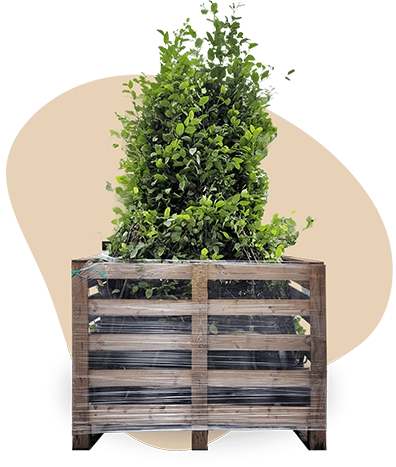
Celastrus orbiculatus 'Diana' trained plant 70 cm C2 | Oriental bittersweet
Staked Oriental bittersweet brings the vigorous climbing habit of Celastrus orbiculatus 'Diana' to the garden in a clearly supported form. Also known as Oriental bittersweet or Asiatic bittersweet, this plant is supplied as a staked climber, giving it an initial upright structure rather than presenting it as a free-standing tree. Its growth can later be guided onto a suitable pergola, trellis or fence. The green foliage is deciduous, so the plant changes with the seasons and develops attractive autumn colour before the leaves fall. Modest green to yellow-green flowers appear in May and June. They are not the main ornamental feature, but they add seasonal interest. Decorative orange-red fruits can follow, although fruiting requires a pollinating partner. When mature, the climber can reach approximately 10 metres, depending on the support available and the growing conditions. Its vigorous habit means that suitable support and enough space are important. Once established, it is generally low maintenance, although its strong growth still needs sensible management. In a UK garden, position this Oriental bittersweet in sun or partial shade, preferably where the support is secure. As part of the celastrus genus, it is a useful choice for gardeners looking for a hardy, deciduous climber with a defined vertical starting point.
Key features of Oriental bittersweet (Celastrus orbiculatus 'Diana')
- Seasonal interest: The green to yellow-green flowers open in May and June. They are modest rather than the main ornamental feature, while the later orange-red fruits and attractive autumn colour provide stronger visual interest.
- Foliage and habit: The plant has green, deciduous foliage and a vigorous climbing growth habit. It is not evergreen, so the supported form changes noticeably through the seasons.
- Aspect and soil: Choose full sun or partial shade in a UK garden. It prefers well-drained, humus-rich and lightly moist soil with an open structure. Avoid permanently waterlogged ground and aim to retain even moisture.
- Staked presentation: The young climber is supplied trained on a stake, creating an initial upright structure. This helps establish a clear starting point, but the vigorous shoots still need suitable support as the plant develops. A sheltered position can be helpful where the support needs extra protection.
- Growth and garden role: This is a vigorous climber and can outgrow nearby plants if it is not given suitable support and management. Its hardy character and low-maintenance nature make it a practical option within Climbing plants, provided there is enough room for its mature growth.
Uses for a staked Oriental bittersweet in the garden
- Pergolas and trellises: The staked presentation gives this vigorous climber a clear upright starting structure. From there, its growth can be guided onto a pergola or trellis to create vertical interest in a considered way.
- Fences and boundaries: It can be used against a suitable fence where there is enough space for its eventual growth. The stake provides initial guidance, while the fence must offer appropriate support as the climber becomes larger.
- Hardiness: This hardy Oriental bittersweet tolerates approximately -29°C to -23.3°C and is rated as USDA zone 4. This makes it suitable for a wide range of UK garden conditions, subject to a suitable aspect, well-drained soil and secure support.
- Combinations: Combine it with plants that tolerate vigorous growth and do not compete closely with the support structure. Compatible climbers or structural garden planting can help create a balanced setting, but sufficient space should remain around the plant.
- Ornamental value: The strongest features are the staked vertical presentation, green foliage, attractive autumn colour and decorative orange-red fruits. Fruiting requires a pollinating partner, so the fruit display should not be assumed from a single plant alone.
This staked Oriental bittersweet is a strong choice for gardeners who want vertical structure, seasonal colour and decorative fruits from a vigorous climber. Give it suitable support and enough space, and it can provide an organised starting form for a pergola, trellis or fence while retaining its natural climbing character.